

A city that keeps rewriting itself, yet where the old creek and the souks still hold the pace of life before the skyscrapers.
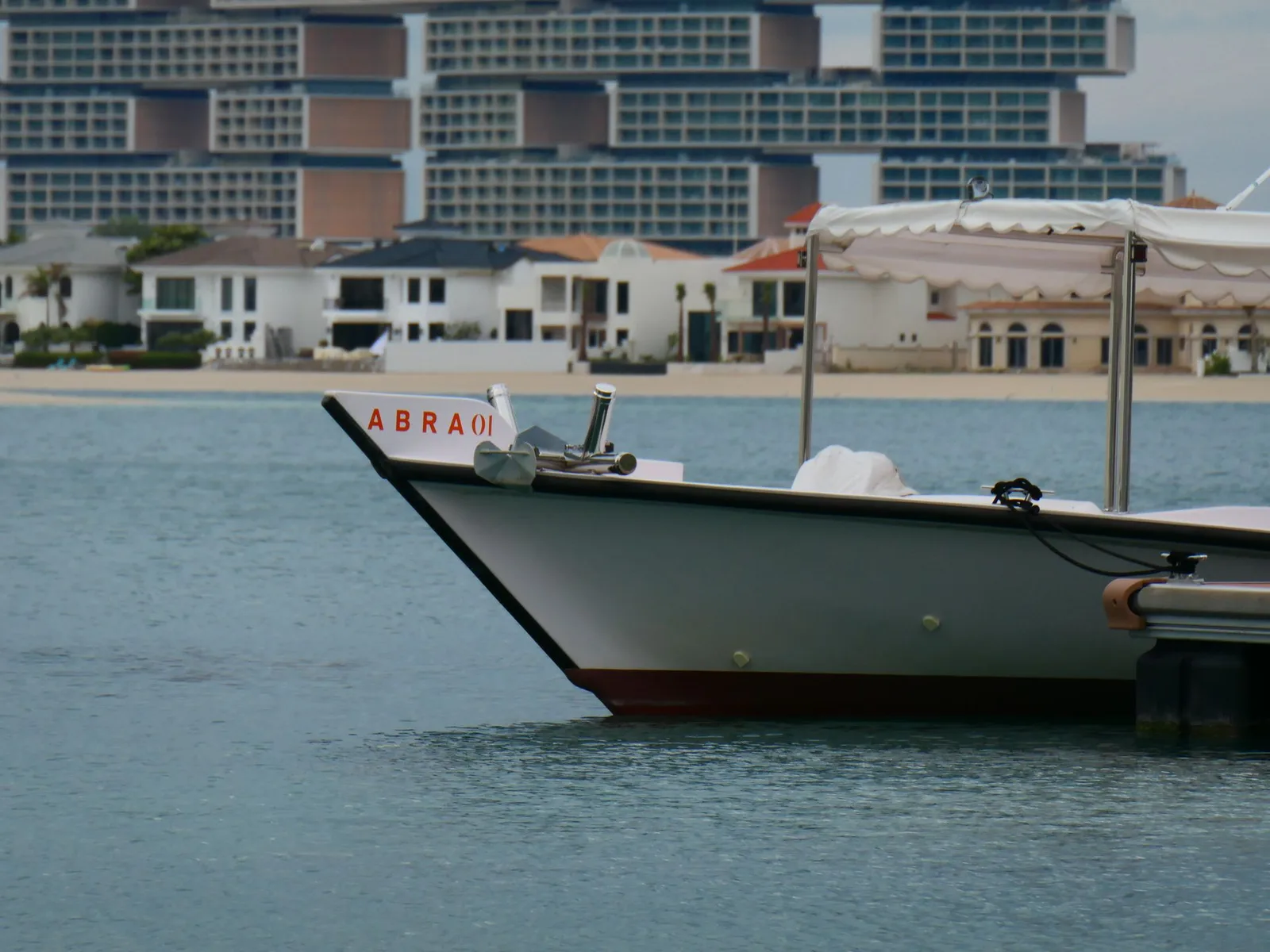
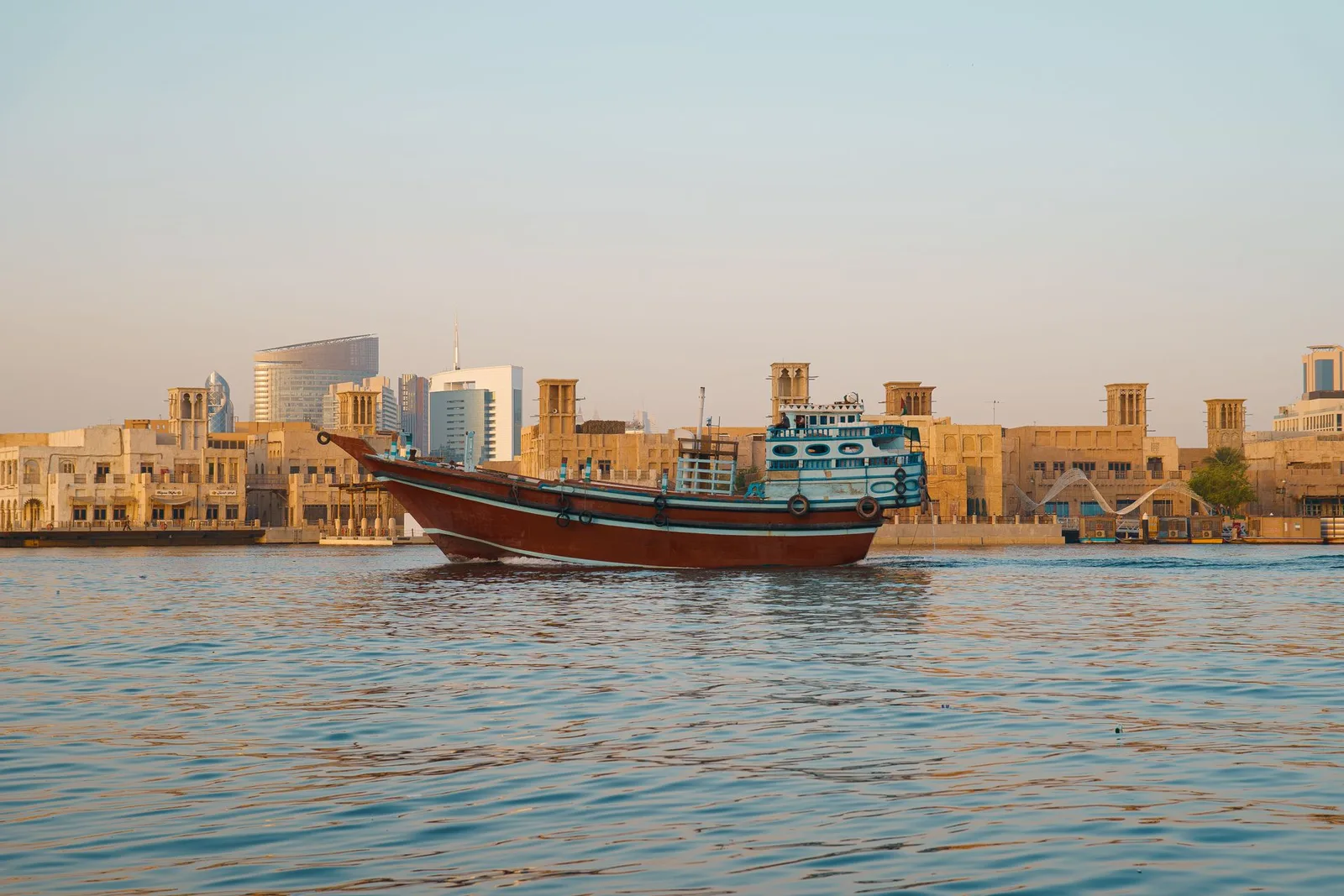
Dubai is usually presented as a city without memory: desert yesterday, a new record tomorrow. That's true of the skyline around Sheikh Zayed Road, but not of the city that stood here before the first cranes arrived. Across Dubai Creek, the natural inlet that splits the city in two, the same wooden abra still crosses that once ferried traders when Dubai was a trading post for pearls, spices and textiles.
Walk through Bur Dubai and Deira, through the narrow lanes of Al Fahidi, past the gold and spice souks, and you notice that the pace there is still set by haggling, drinking tea and waiting for the next crossing. QualiMundi builds trips that take both sides of Dubai seriously: the city looking forward, and the city that has never quite forgotten what came before.
In short
Best time to go
From November to March days are pleasant, with afternoons between 24 and 31 degrees, and evenings are cool. April, May and October are already warm, and from June to September daytime temperatures reach 40 degrees or more.
How long
Four to five days for the creek, the old districts, Al Quoz and a morning in the desert. To add Hatta, Sharjah or Abu Dhabi, allow a week.
Who it suits
Travellers who want to know the trading districts around the creek as well as the modern city, look for galleries in Al Quoz, and want to add the desert and the Hajar Mountains at Hatta.
What sets it apart
Unlike spacious Abu Dhabi, Dubai grew up around a trading creek, where wooden abras still cross between Bur Dubai and Deira. Further out stands the Burj Khalifa, at 828 metres the tallest building in the world.
A city of neighbourhoods, not one skyline
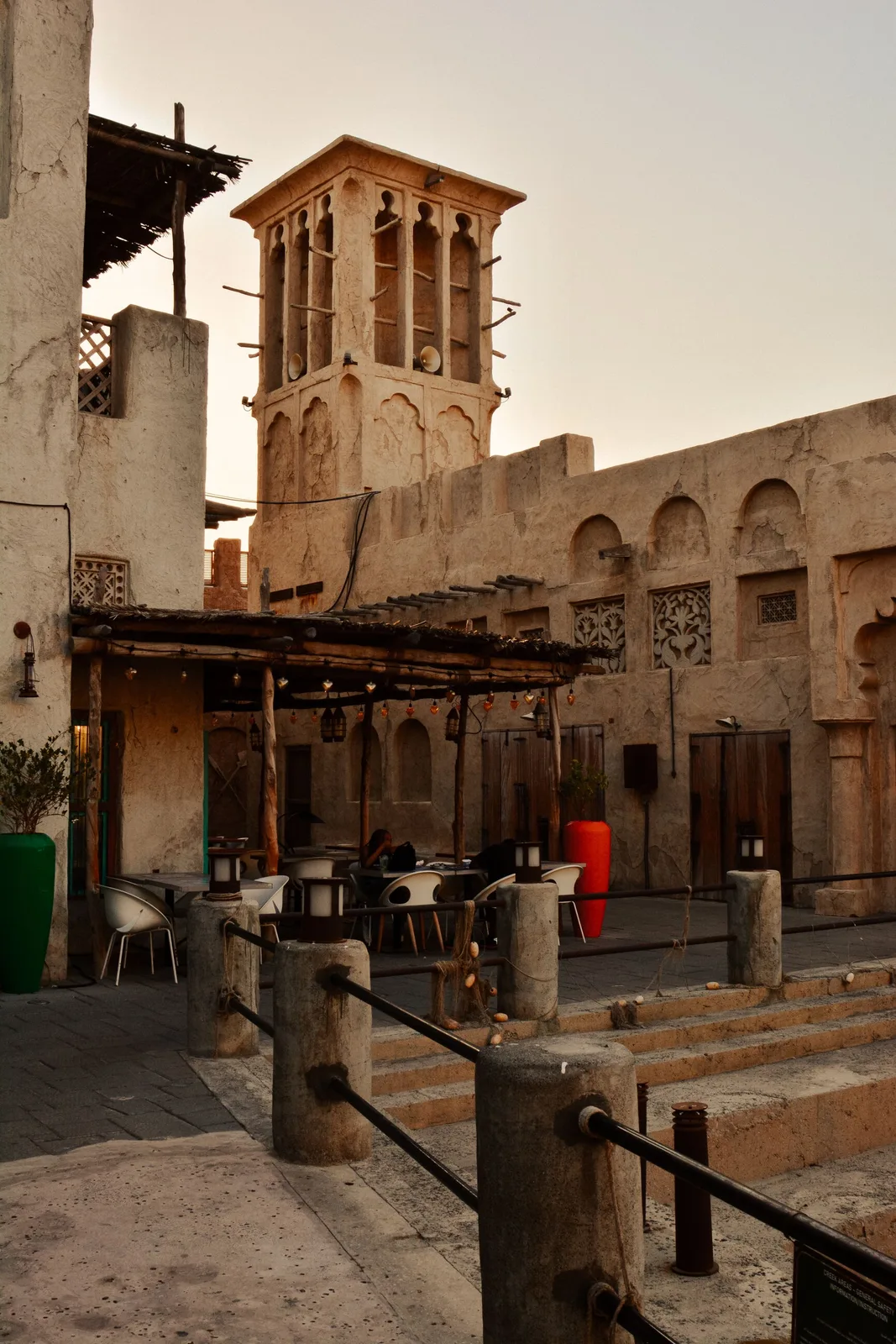
Dubai can't be captured in a single glance. Every district has its own rhythm, from the wind towers of Al Fahidi to the stillness of the dunes half an hour away.
Al Fahidi
Dubai's oldest quarter, with coral-stone houses and wind towers that have provided cooling for centuries. Narrow lanes, small museums, a stillness found nowhere else in the city.
Deira
The trading quarter across the creek: gold souk, spice souk, textile streets where prices are still negotiated rather than printed.
Jumeirah
The coastline south of the creek, where fishing villages gave way to boulevards, but the early morning still belongs to the fishermen.
Al Quoz
An industrial district where warehouses have been converted into galleries and studios, the Dubai that measures itself against an exhibition rather than a skyscraper.
Al Marmoom
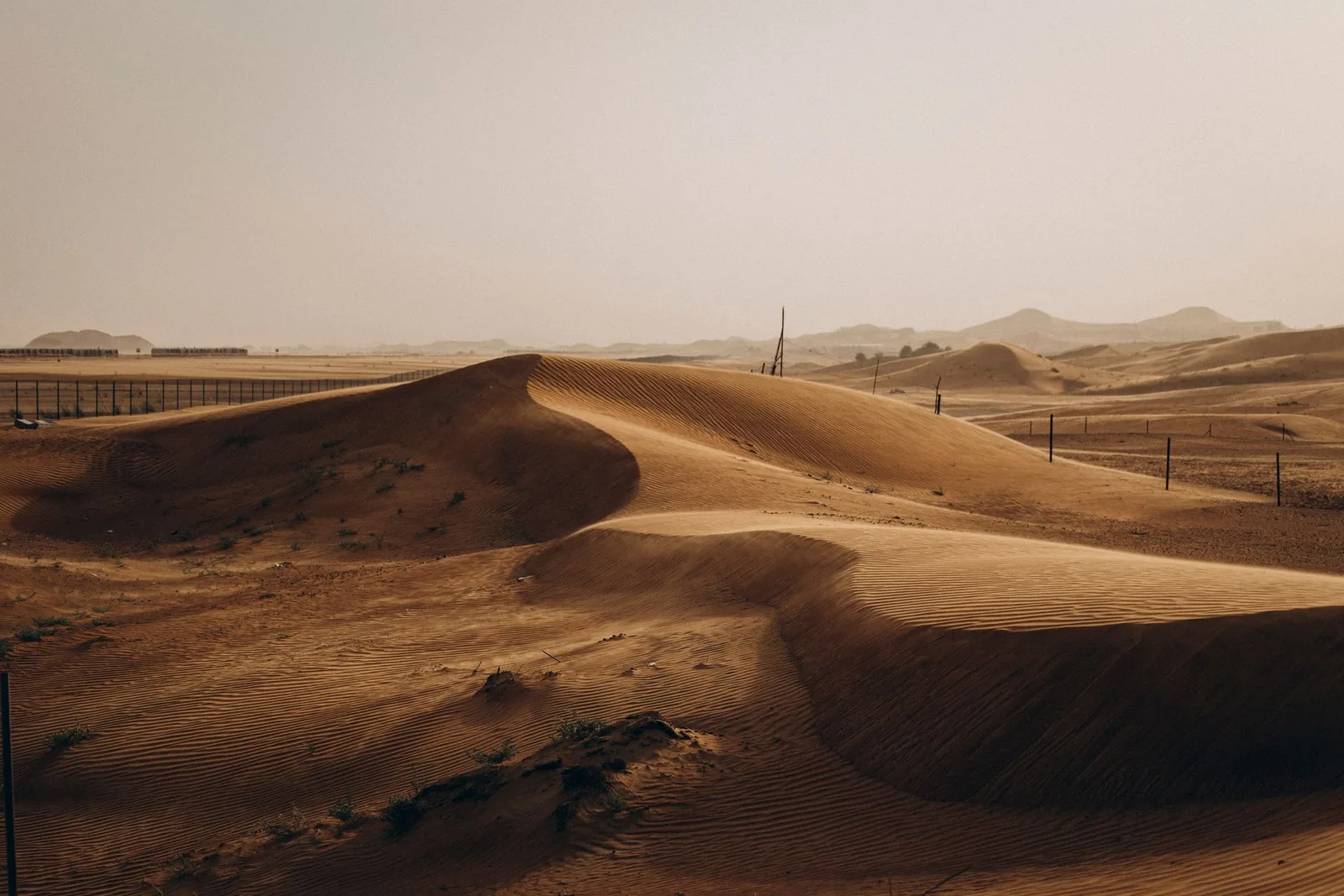
A protected desert reserve half an hour from the skyline, where dromedaries are still trained for racing and the night sky stays undisturbed.
Hatta
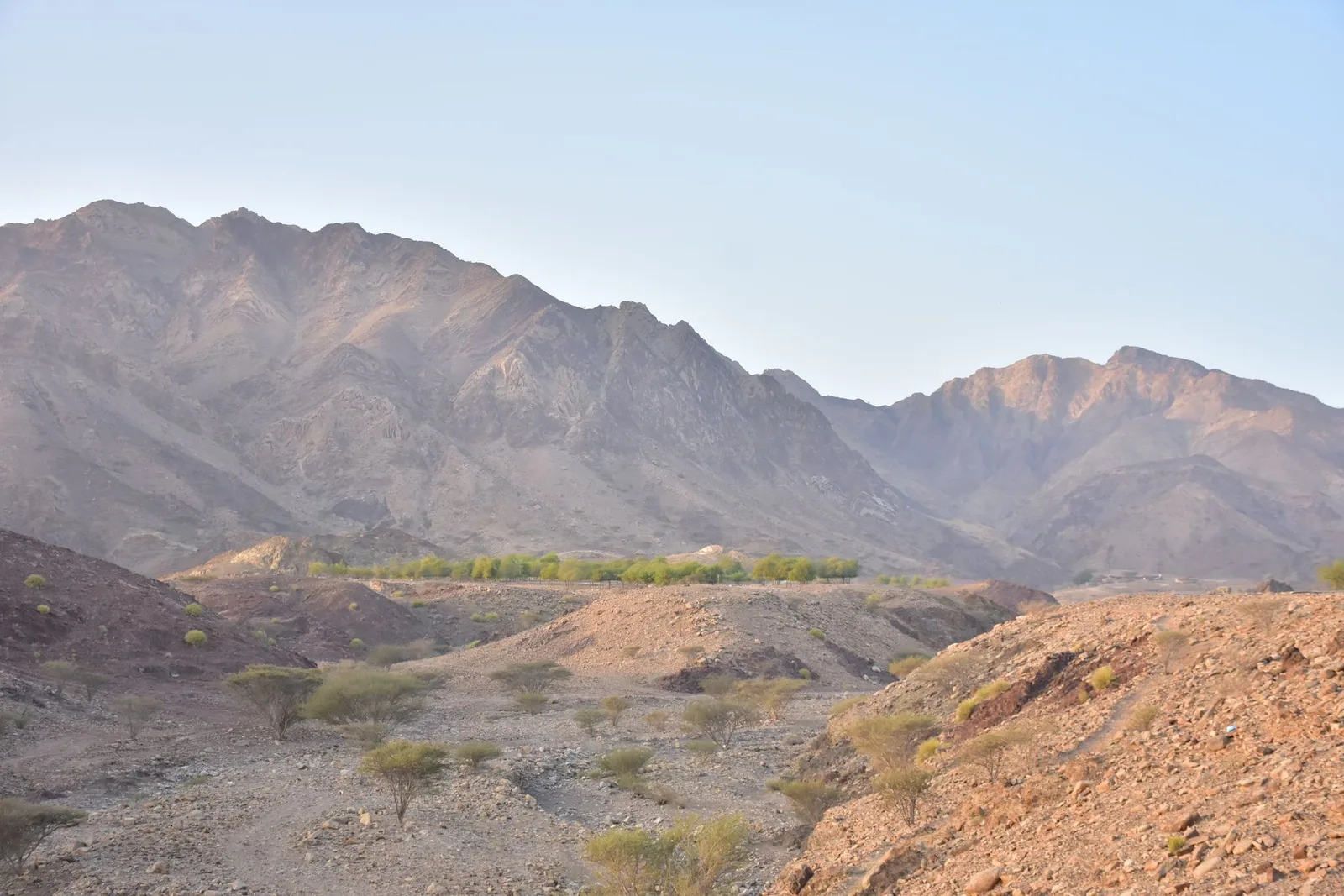
On the border with Oman, the Hajar Mountains rise up, cooler, rougher, with wadis and an old mountain village that has little in common with the rest of Dubai.


Beyond the skyline selfie
Dubai offers more than a viewing platform. It's about moments that show the city as it feels, not as it's photographed.
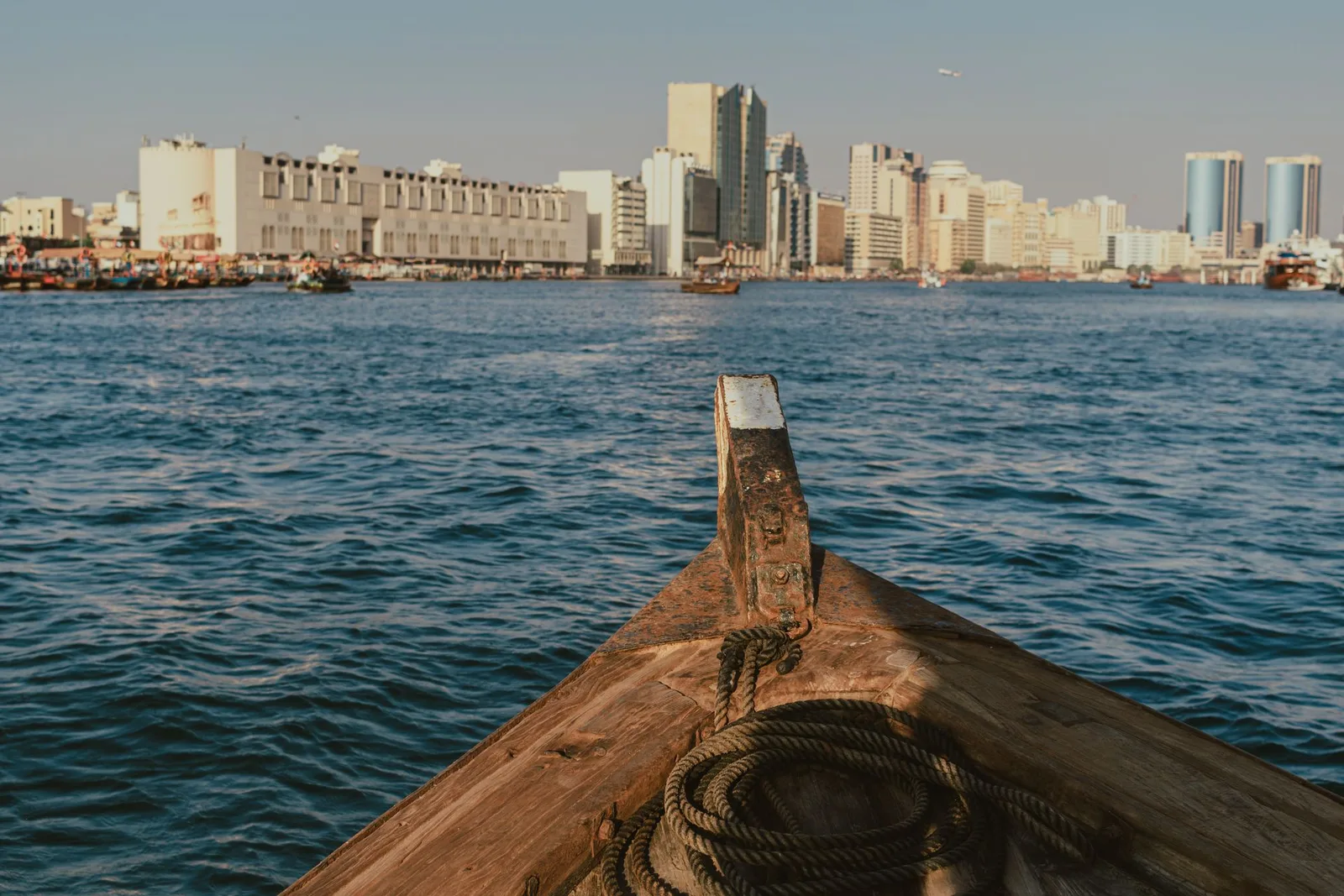
The first crossing of the day
Before the heat and the crowds arrive, the first abra is already sailing. Five minutes that sum up the rhythm of the old city.
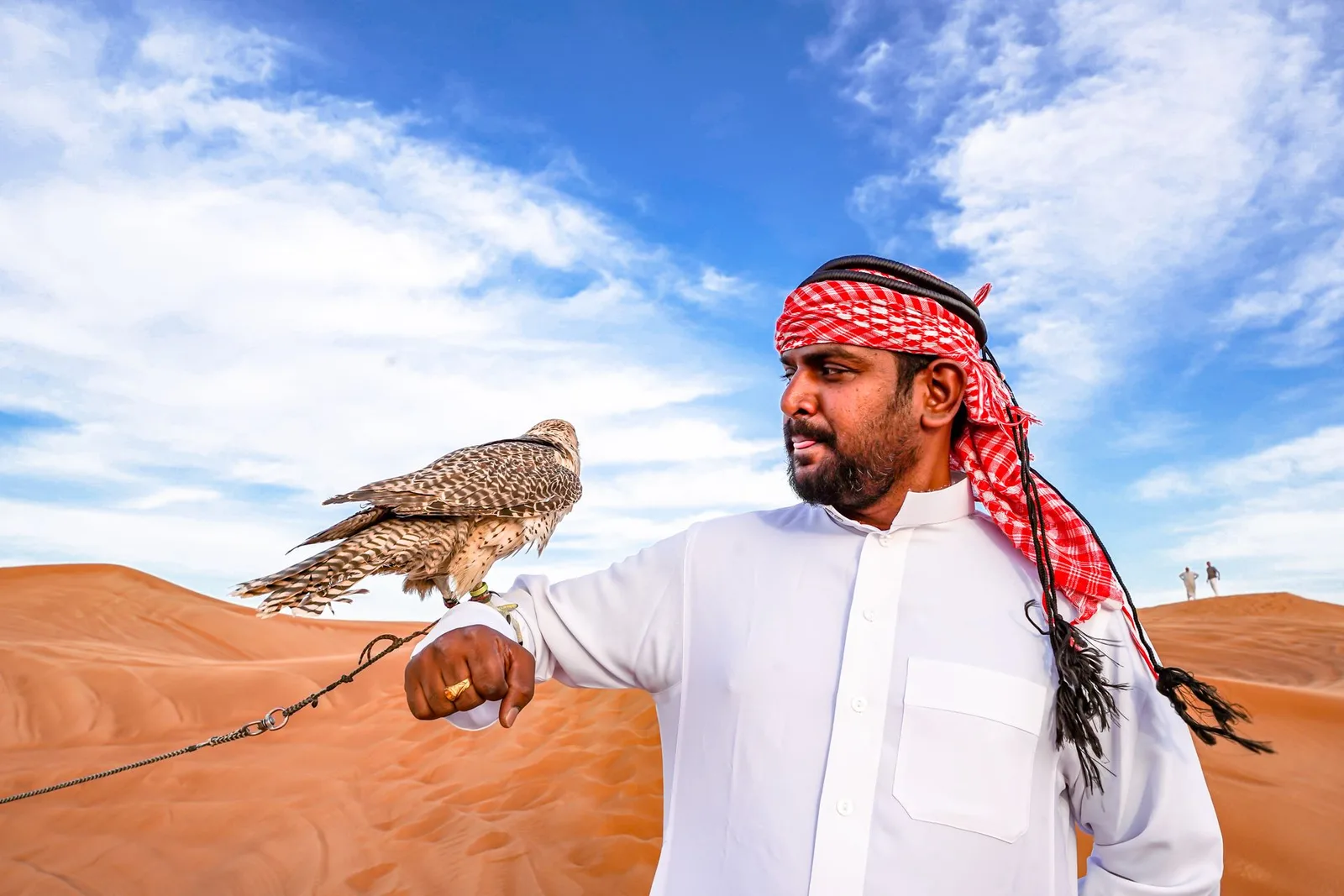
Falconry in the desert
A tradition older than the oil industry: falconers training their birds at sunrise, with Saluki dogs in the background.
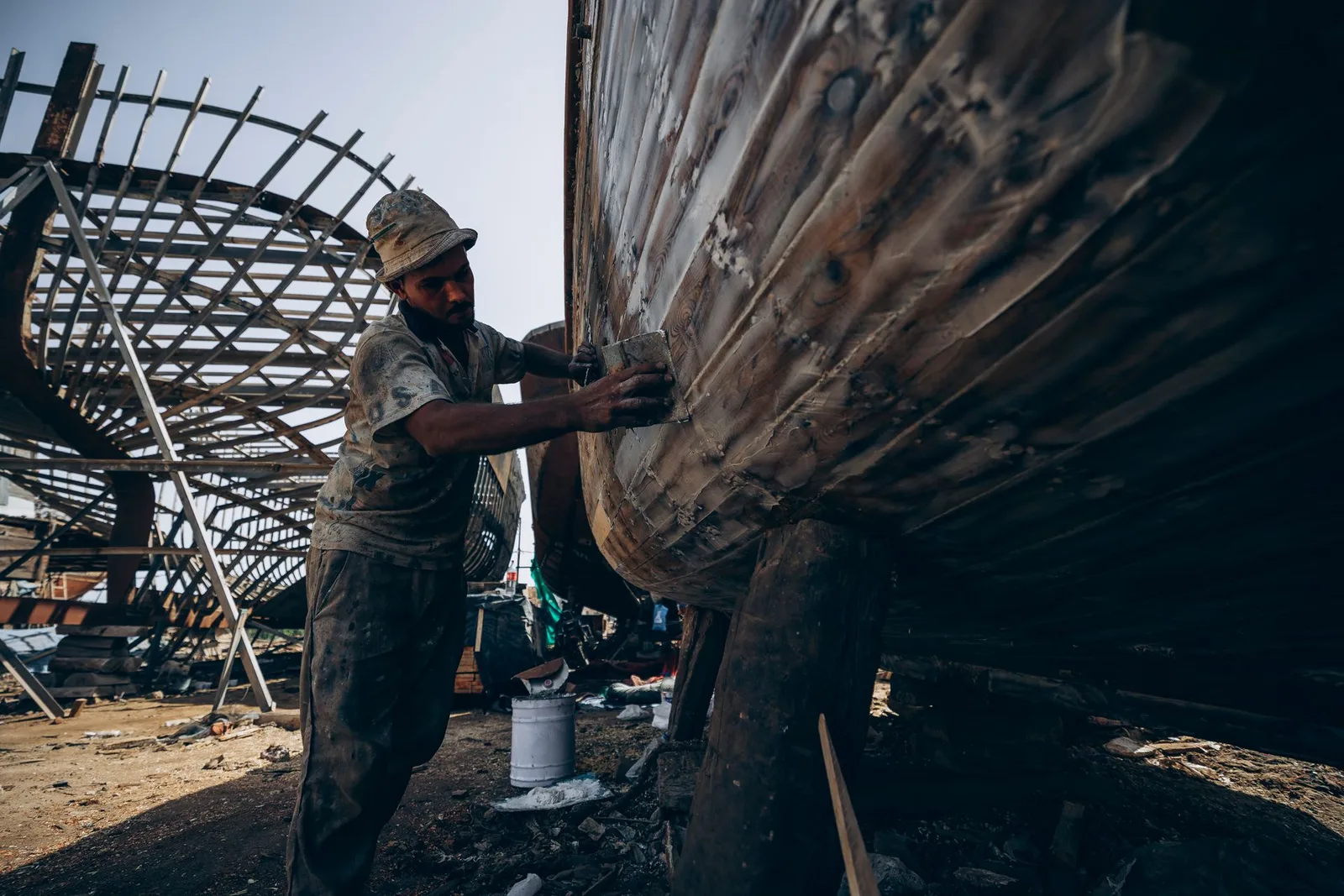
Building dhows in Al Jaddaf
One of the last yards where dhows are still built entirely by hand, plank by plank, as has been done for generations.
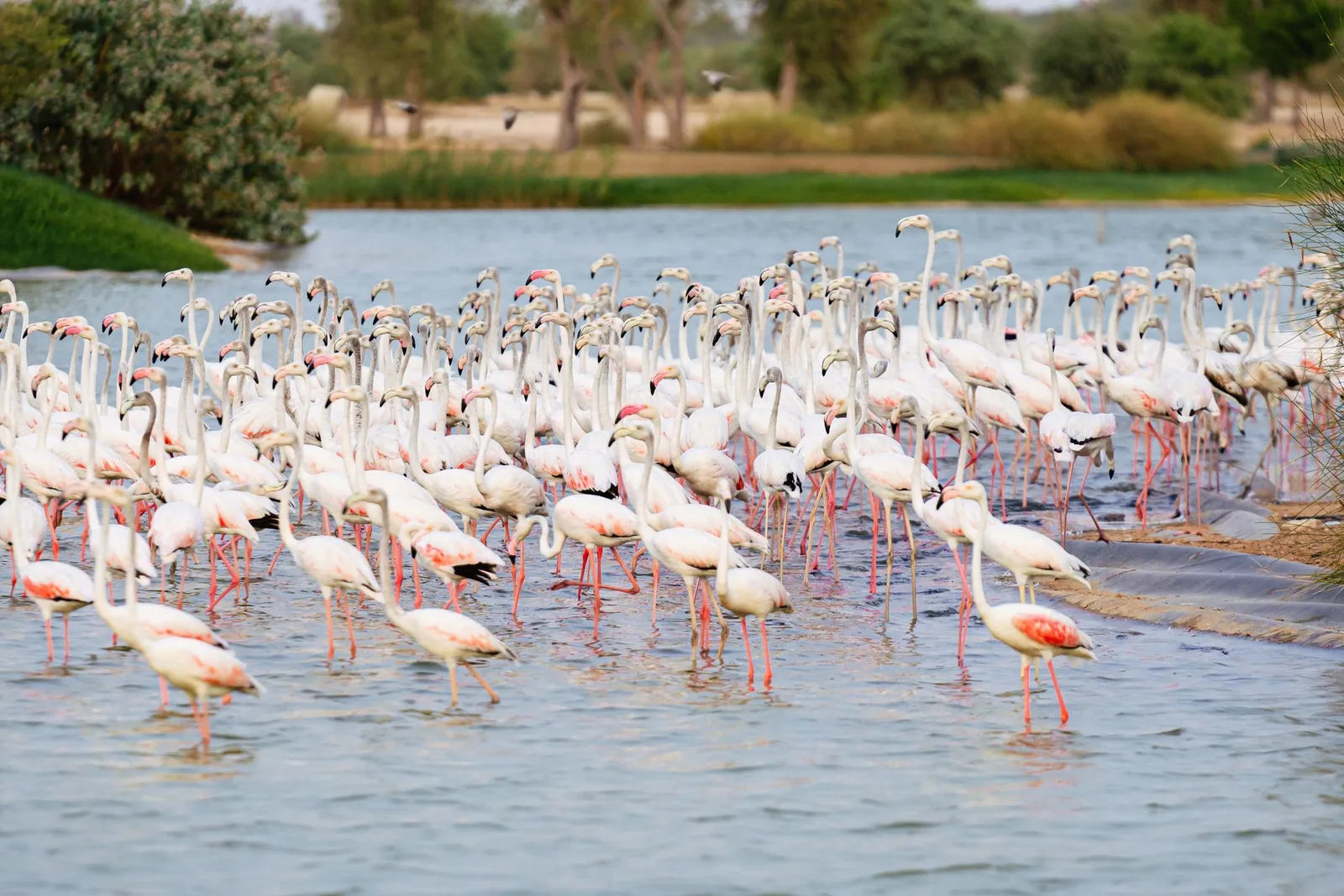
Flamingos in the middle of the city
The Ras Al Khor wildlife sanctuary lies within the city limits, yet feels like an entirely different landscape: thousands of flamingos, within walking distance of the office towers.
None of these moments is fixed in a programme. They're woven into the rhythm that suits you.
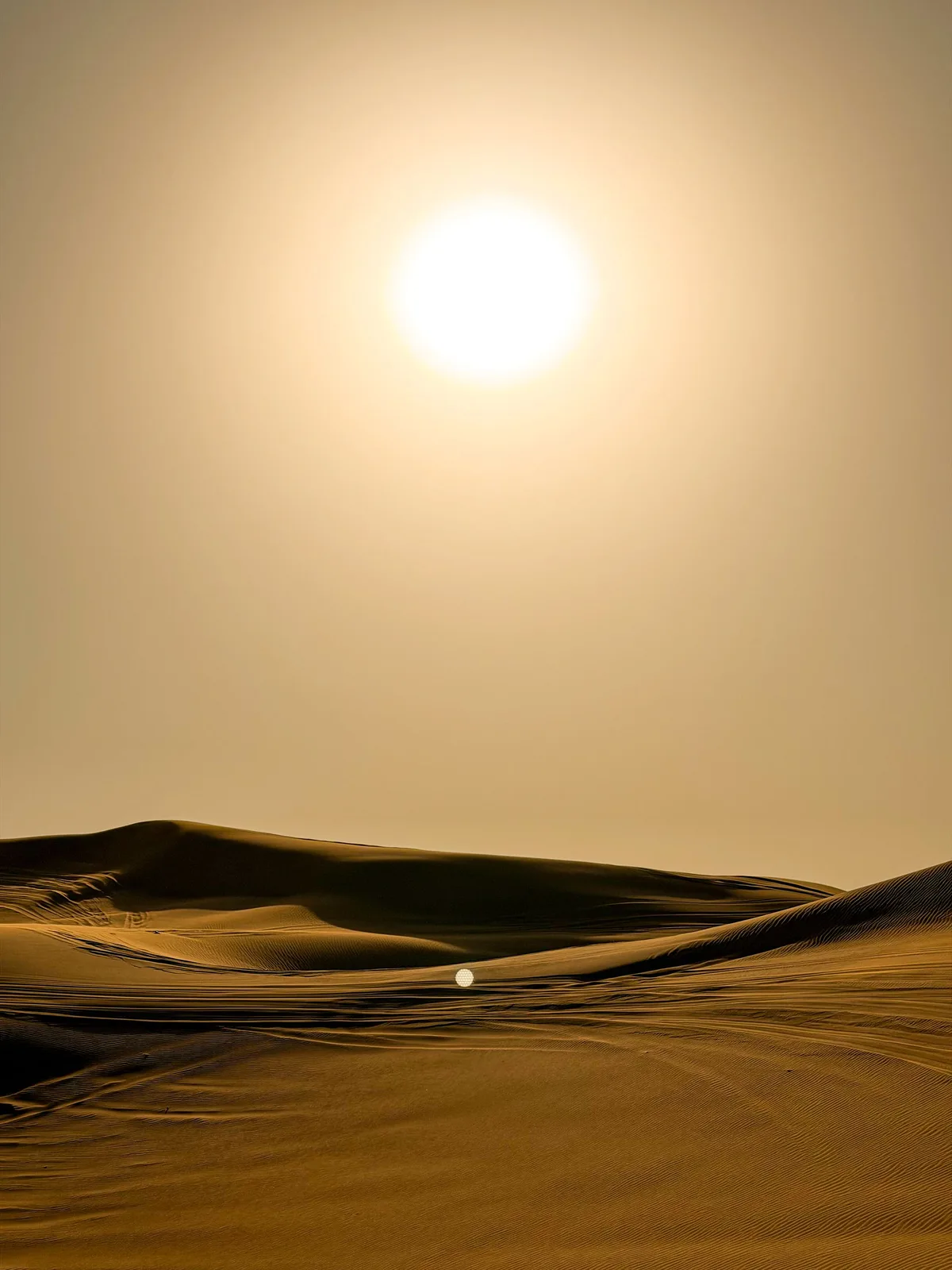
The dunes of Al Marmoom, half an hour from the skyscrapers.
A table that speaks more languages than the menu reveals
Emirati cuisine itself stays invisible to many visitors, tucked behind the international restaurants of the malls. Machboos, spiced rice with meat or fish, harees and sweet luqaimat are found mostly with local families or in simple eateries in Deira and Satwa, not on every street corner.
What Dubai's table does let you feel everywhere is its trading history: Keralan fish lunches, Iranian grill restaurants, Levantine mezze, all within walking distance of each other. That layer of the city, where hospitality and trade have coincided for centuries, says as much about Dubai as the skyline does.
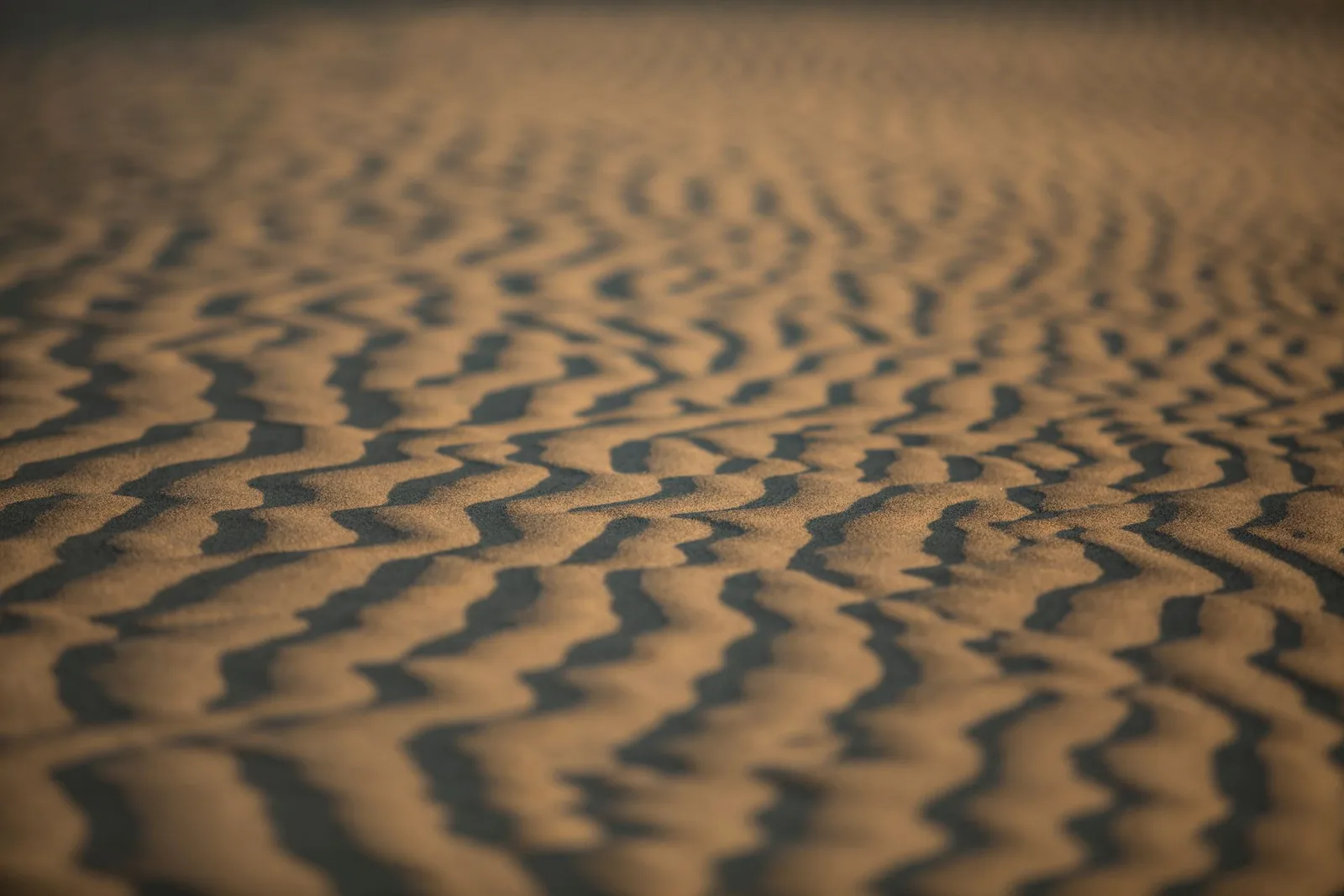
Water and sand, half an hour apart.
When to travel to Dubai
From June to September, daytime temperatures climb to forty degrees or more and life shifts indoors or to the early morning. That's not the Dubai you want to explore on foot.
November to March is the city at its best: pleasant temperatures by day, cooler evenings, and the right weather to explore both the creek and the dunes of Al Marmoom on foot.
Best time to visit Dubai
Who else is at their best in these months?
January February March November December
Use the contact form to discuss your travel dates and preferences with us.
Practical, without the noise.
A few practical details that make the difference between a smooth trip and a frustrating one.
Visa
Which travel documents you need depends on your nationality, and entry rules change regularly. We go through the current requirements with you before you leave.
Dress
In Al Fahidi, mosques and certain public buildings, modest, covering clothing is expected; elsewhere the dress code is relaxed.
Ramadan
During the fasting month, opening hours are adjusted, and eating and drinking in public during the day is avoided.
Getting there
Direct flights from Brussels; the metro and taxis cover the rest of the city well.
Pace
From April to October, the heat dictates a different daily rhythm: early mornings, quiet afternoons, active evenings.
Dubai builds upward.We look at what has stayed underneath.
Frequently asked questions about Dubai
What travellers ask us most often before they leave.
Isn't Dubai just a stopover on the way elsewhere?
It doesn't have to be. Between the creek, the old quarters, Al Marmoom and the mountains at Hatta, there's enough to treat Dubai as a destination in its own right, not just a layover.
Can Dubai be combined with other emirates?
Yes. Sharjah, the Hajar Mountains at Hatta and Abu Dhabi are all within reach and give a broader picture of the region.
Isn't it always extremely hot?
Mainly from June to September, though May and October are already hot. From November to March, the climate is mild enough to explore the city and the desert on foot.
Do you need to dress conservatively everywhere?
No, but in Al Fahidi, mosques and religious sites, covering clothing is appreciated. Elsewhere the dress code is relaxed.
- Flight time
- Direct flights of about 7 hours from Brussels
- Languages
- Arabic is the official language, English is usable everywhere
- Time difference
- 2 to 3 hours ahead of Belgium, depending on the season
- Currency
- United Arab Emirates dirham (AED)
- Best time to visit
- November to March, once the heat breaks