
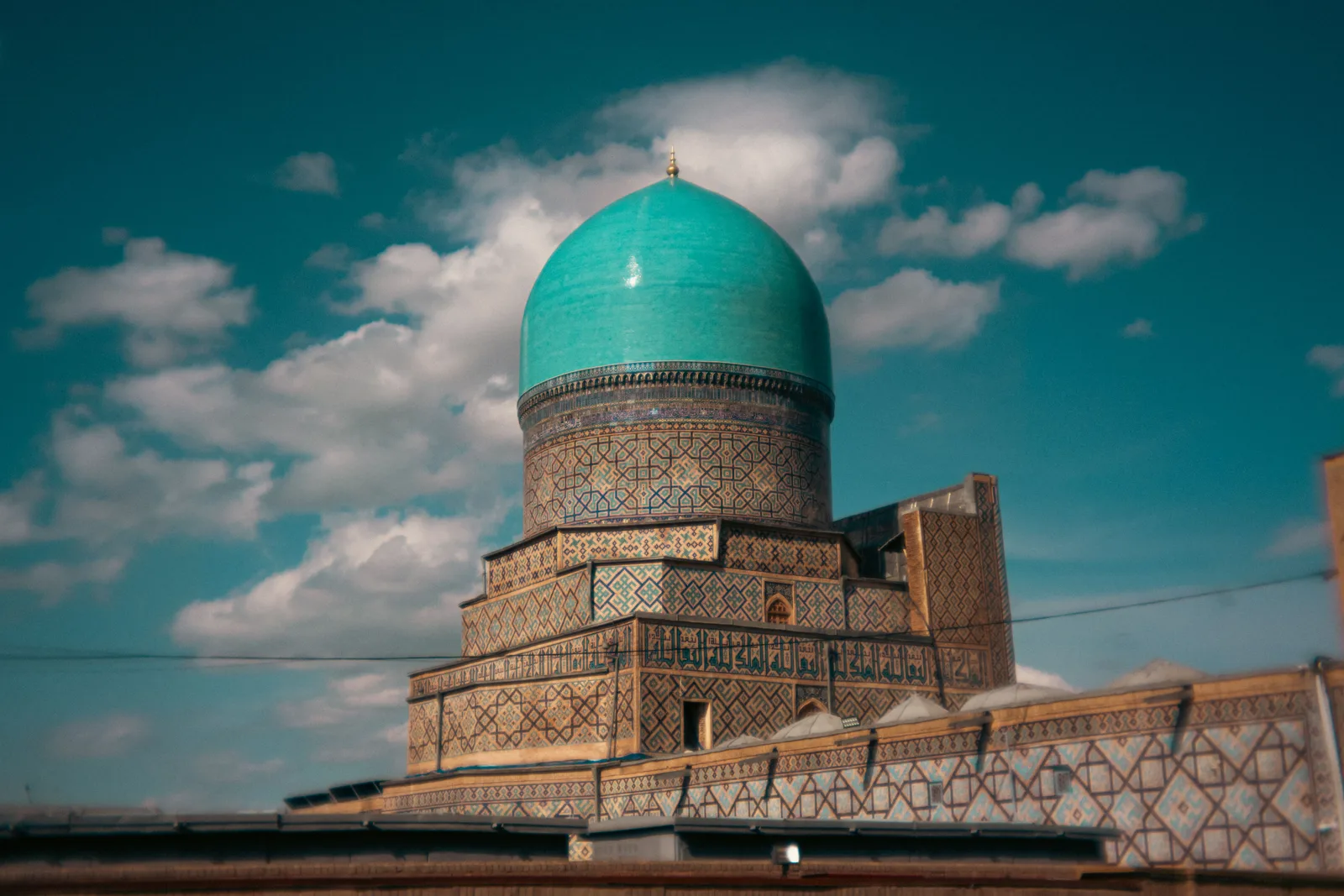
Turquoise domes and quiet caravanserais that still tell the story of where the Silk Road once converged.
A route that never really stopped moving.
For centuries, caravans carrying silk, paper, spices and ideas crossed here, not by accident, but because Samarkand, Bukhara and Khiva sat exactly where east and west were bound to meet. What was once a trade route is now a country that refuses to be reduced to three cities and a list of monuments.
The domes are still there, their tilework giving off that particular turquoise-and-cobalt glow from a hundred metres away. But stay a few days longer and the story keeps going: in an ikat weaver's workshop in Margilan, at Bukhara's morning market before the first coach arrives, in the silence of the Kyzylkum desert where the caravans once camped for the night.
In short
Best time to go
April and May, September and October, with mild days for cities and desert. In July and August Samarkand averages highs of 34 degrees and Bukhara even more, and winters are cold.
How long
Ten days to two weeks for Tashkent, Samarkand, Bukhara and Khiva, a little longer with the Fergana Valley or a night in the desert. Allow for train journeys and travel days.
Who it suits
For travellers who love architecture, craft and history and want to take the Silk Road cities slowly, with room for a host family in the Fergana Valley or a yurt camp by Lake Aydarkul.
What sets it apart
Four historic cities are on the World Heritage List: Khiva, Bukhara, Shakhrisabz and Samarkand. A high-speed train links Tashkent with Samarkand and Bukhara.
Five faces of the same route.
Each city carried a different part of the trade, and each kept a different character because of it.
Samarkand
Amir Timur's city looks monumental, yet it still works as an ordinary city: a market, washing lines strung between the madrasas, children playing football on a square that was once a caravanserai.
Bukhara
Smaller and more intimate than Samarkand, with an old town you can cover on foot. Behind the facades sit workshops where silversmiths and woodcarvers still work the way their grandfathers did.
Khiva
The walled Itchan Kala is compact enough to see in a day trip. But stay the night and you'll see the city settle back into its true, quiet pace after sunset.
Tashkent
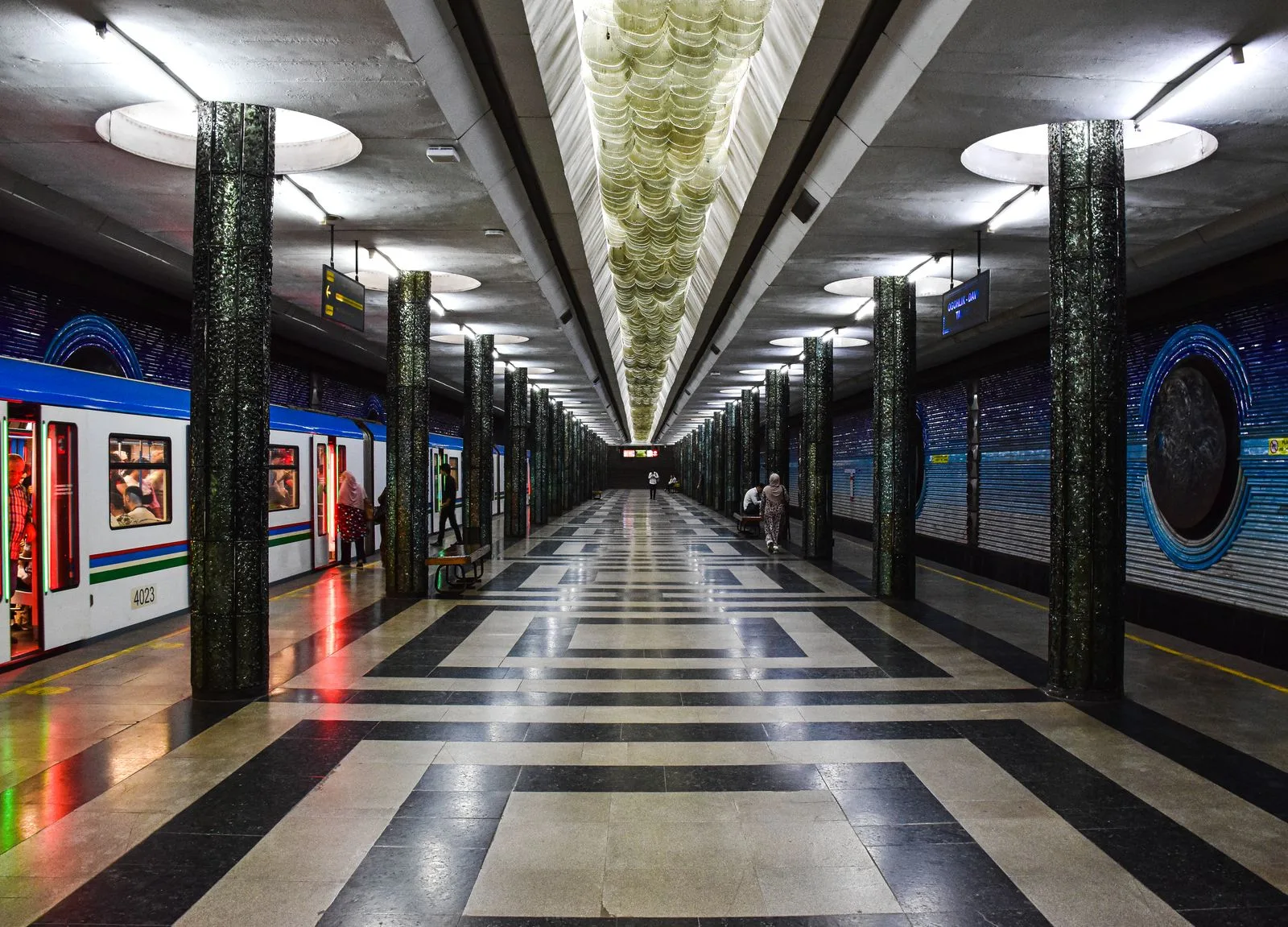
Rebuilt after the 1966 earthquake, with broad Soviet-era avenues and a metro where every station was given its own theme. Right beside it, the Chorsu Bazaar keeps the older rhythms alive.
Fergana Valley
Reached over a mountain pass or by a short flight, and instantly a different country: fertile, densely populated, with Margilan and Rishtan as its centres of silk and ceramics.



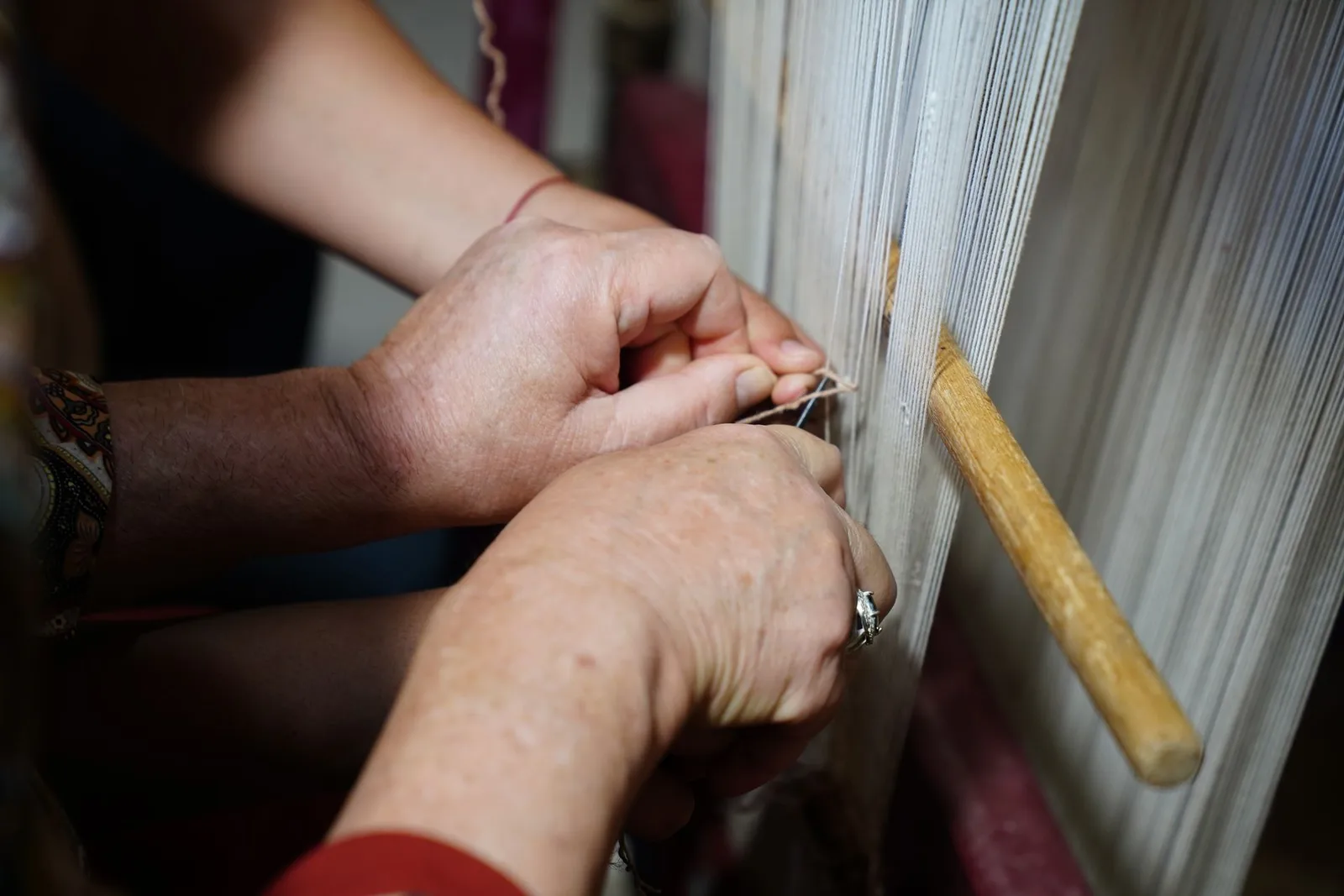
Hands passing a technique down through generations.
In Margilan, silk is still dyed using the ikat technique: threads are bound, dipped and bound again before weaving, so the pattern only takes its final form on the loom. It's precision work that tends to stay within the same family for generations.
A day's journey on, in Rishtan, local clay combined with a cobalt glaze gives the ceramics their recognisable blue-green colour, a shade that shifts slightly from village to village depending on the kiln and the clay dug locally.
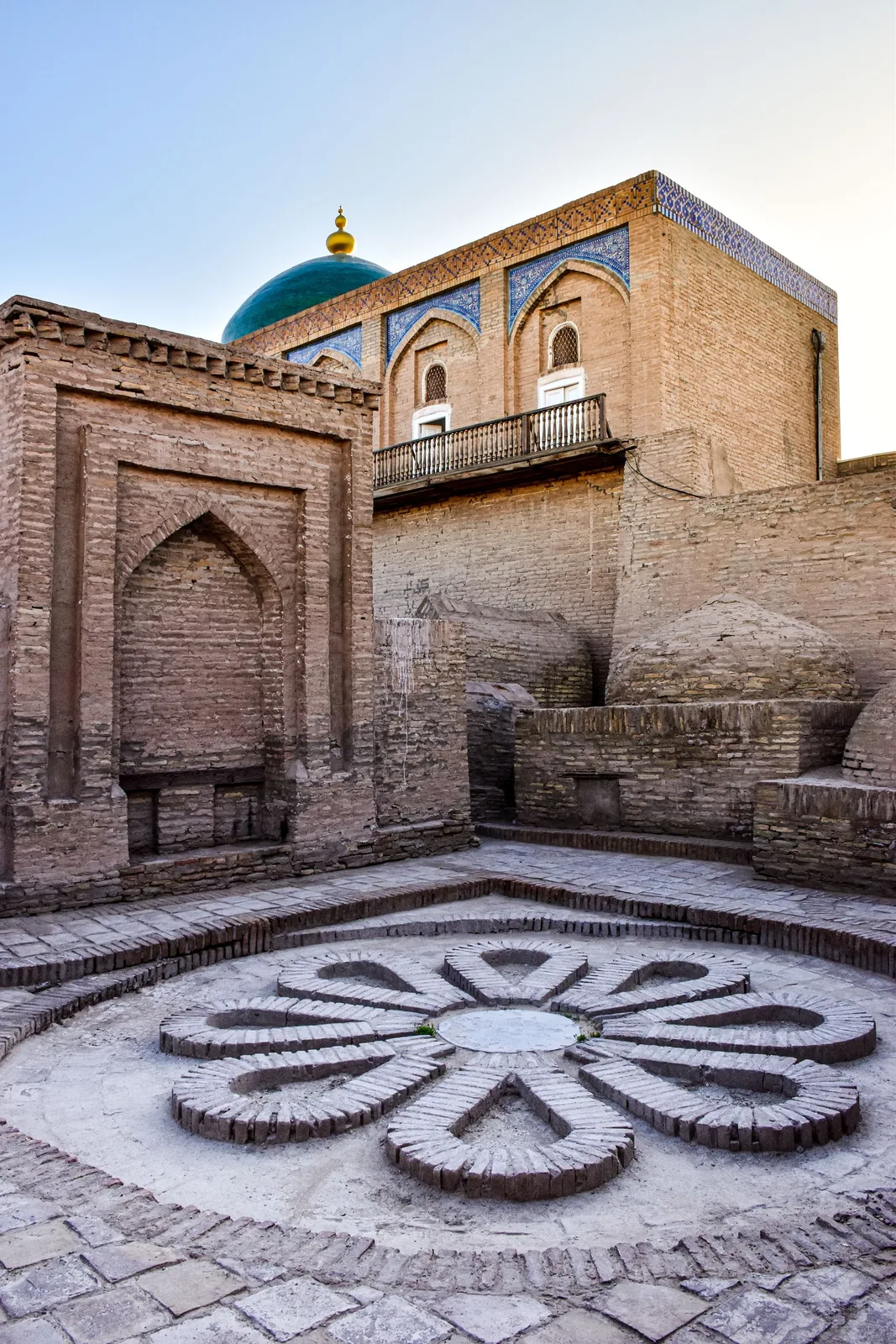
A caravanserai in the evening light, somewhere between Bukhara and Khiva. Once a resting place for merchants, now a quiet stop along a road that has changed little.
Beyond the domed cities, the land opens up and grows quieter.
The Silk Road didn't run through cities alone. Between Bukhara and Khiva, hundreds of kilometres of desert stretch out, and north of Samarkand the first mountain ranges begin.
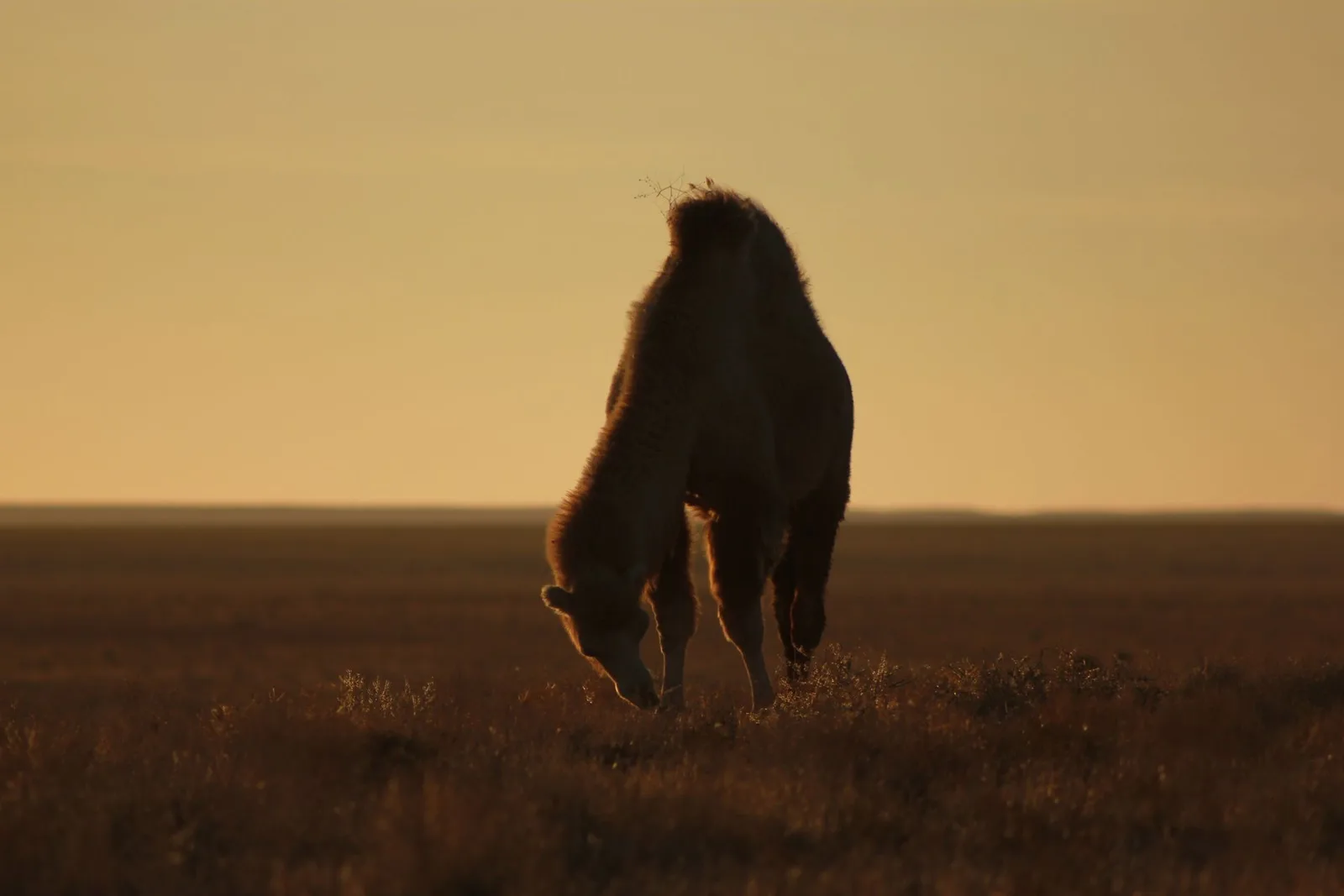
Kyzylkum Desert
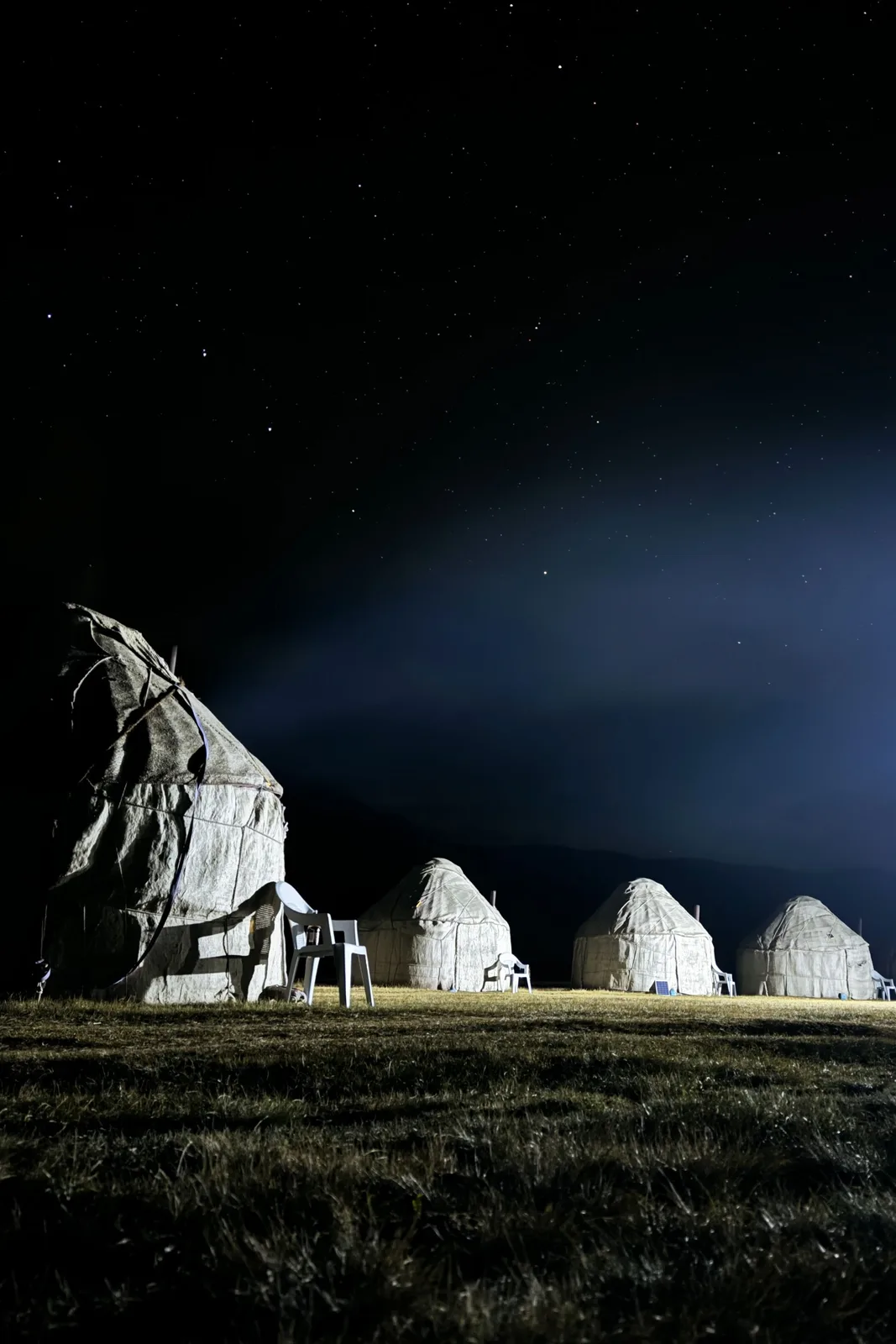
At Lake Aydarkul you sleep in a yurt camp with a community of camel herders, far from any city light. The night sky alone is reason enough to stay.
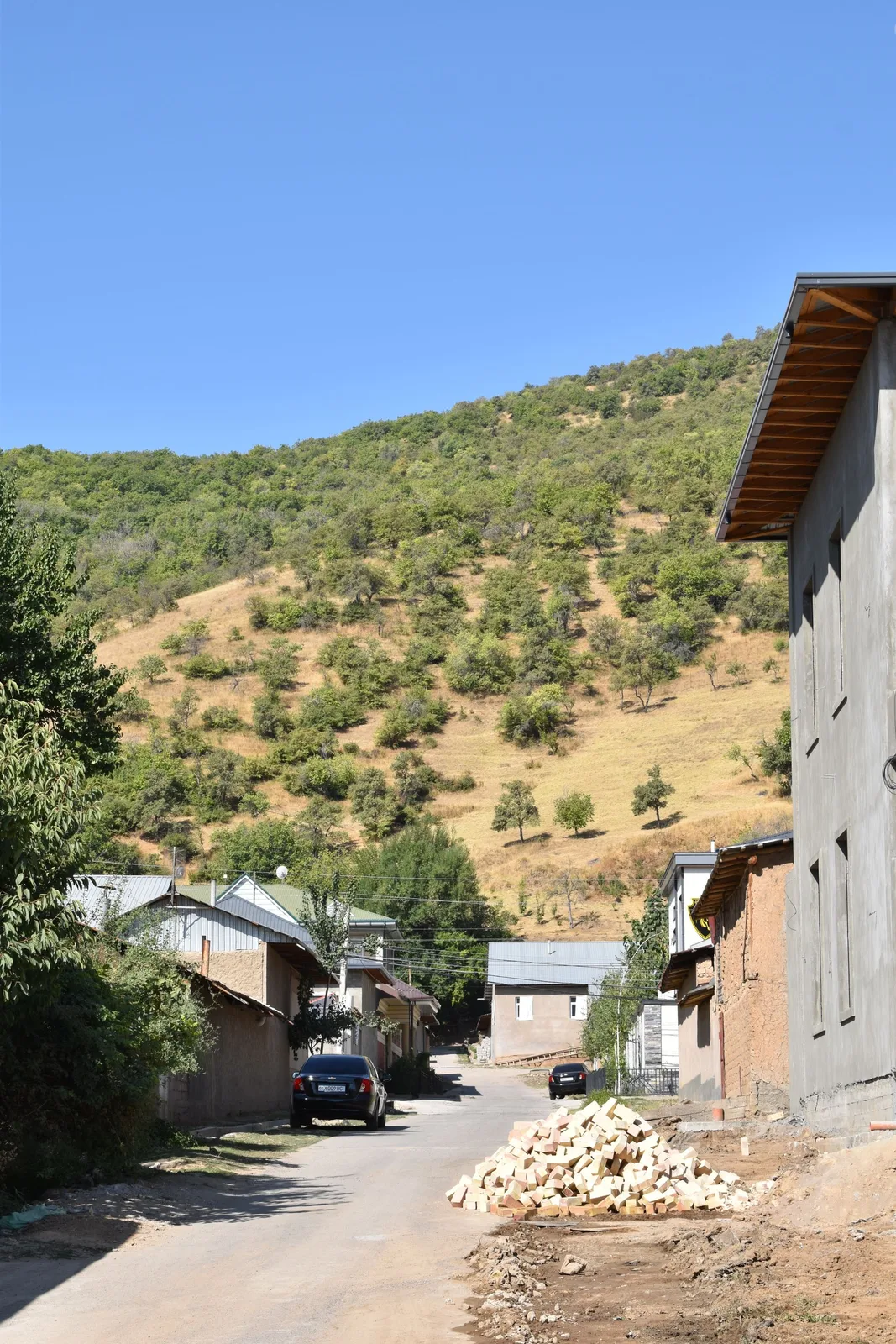
Nuratau Mountains
Small villages here live off sheep and apricot orchards. Walking routes between the hamlets pass host families who have welcomed travellers for years, without it ever turning into an attraction.
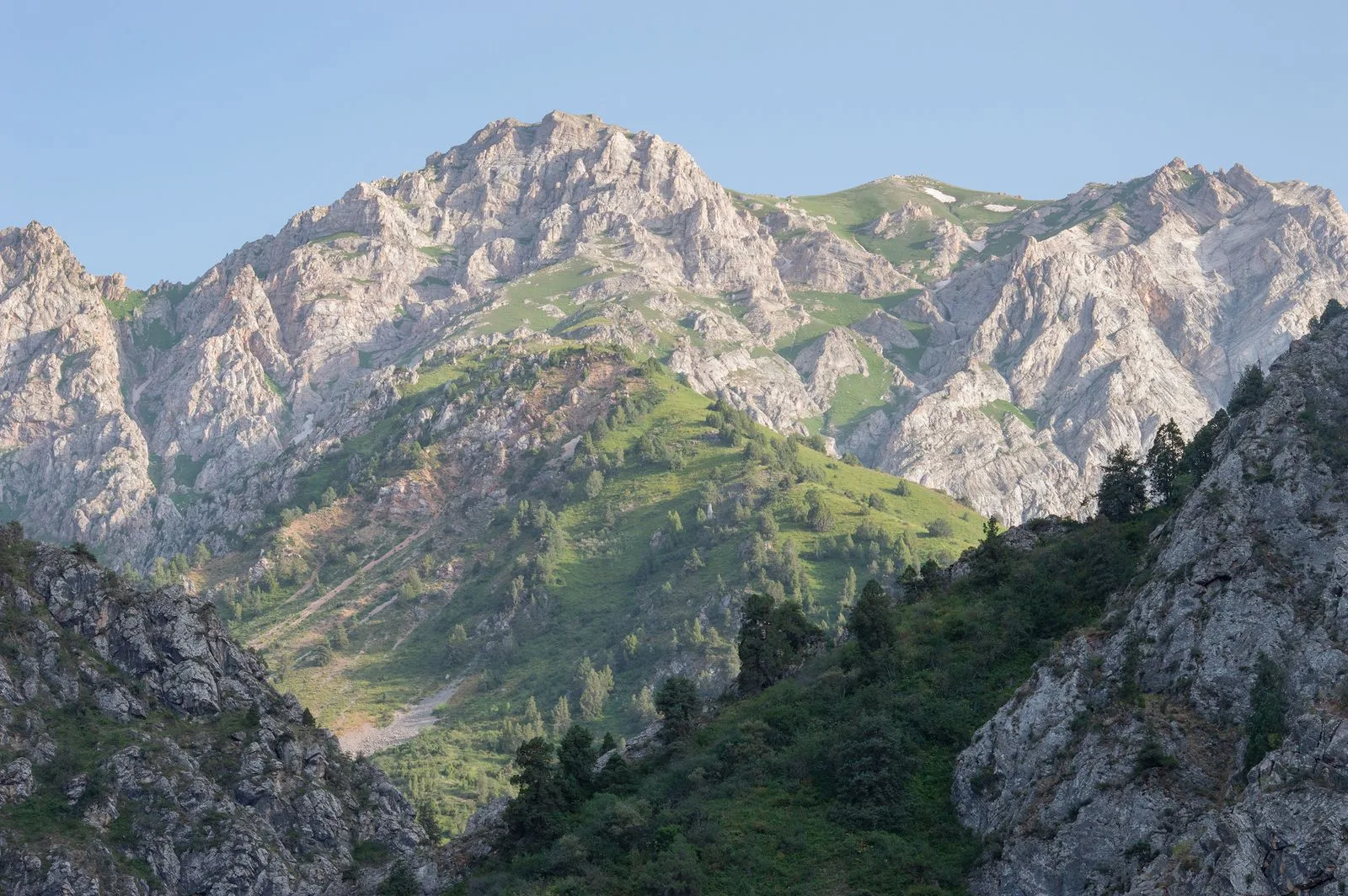
Chimgan and surroundings
Barely two hours from Tashkent the scenery changes completely: green slopes, cooler air and villages where the capital suddenly feels far away.
Possibilities, not a fixed programme
These aren't days lifted from an itinerary, but the building blocks we use to put together your route.
A night with a host family in the Fergana Valley
Eating whatever lands on the table that day, helping bake bread in the tandoor, and simply staying at the table come evening.
Riding the night train between the cities
Covering the distance between Samarkand and Bukhara while you sleep, and waking up on a new platform instead of a motorway.
A morning with an ikat weaver in Margilan
Watching thread being bound and dyed before a single thing has been woven. At that point, the pattern still exists only in the weaver's head.
A night in a yurt at Lake Aydarkul
An evening off the grid, with a family of camel herders who knew the lake long before it became a destination.
Early at the bazaar, before the city wakes
An hour when traders set up their stalls and the bazaar still belongs to the neighbourhood, not to the coaches that arrive later.
Combine, reorder or leave something out. It's your route, not ours.
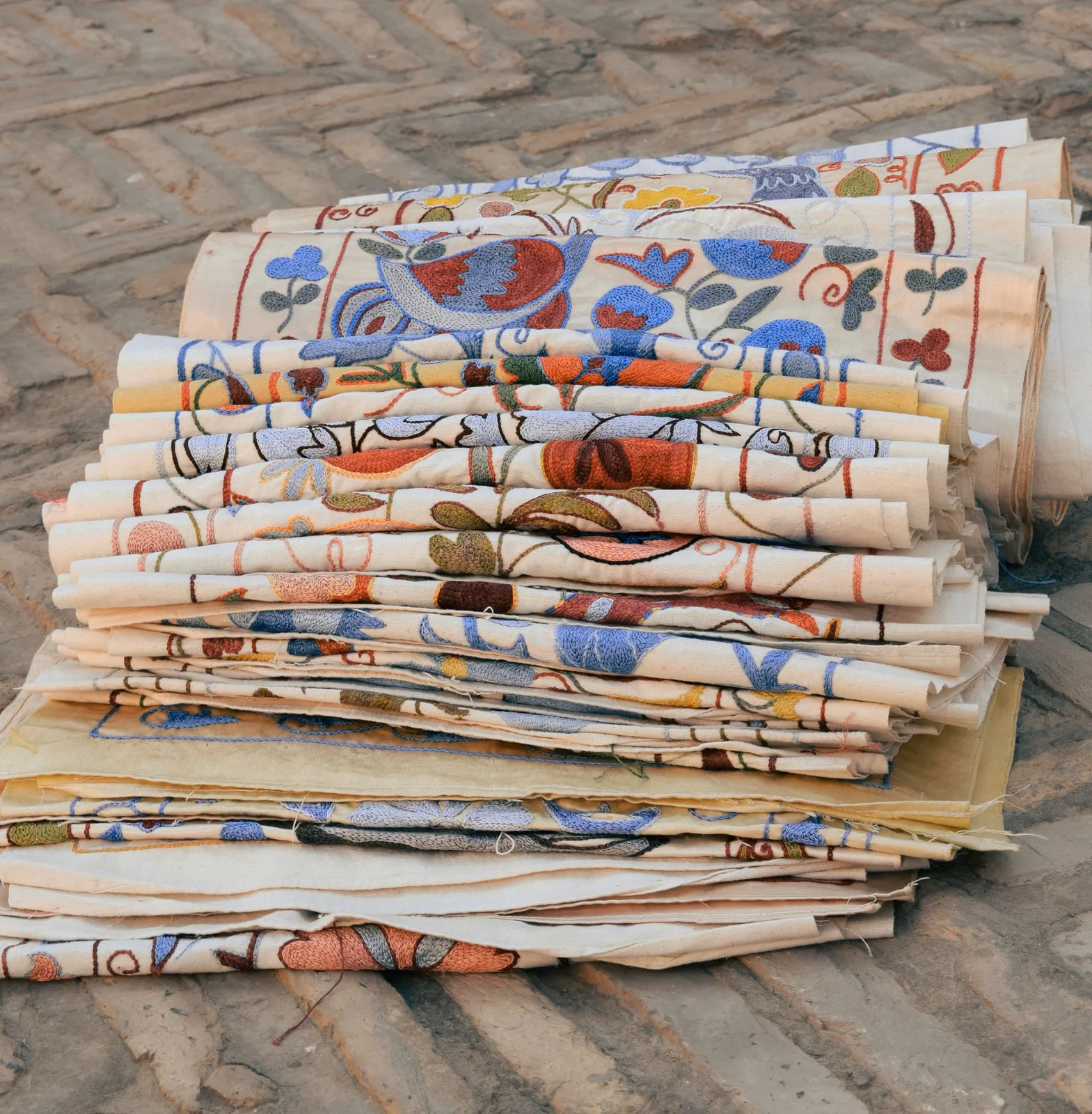
Colour made not for the photograph, but for the winter after.




Practical, without the noise.
Practical matters that make travelling easier.
Visa
Which travel documents you need depends on your nationality, and entry rules change regularly. We go through the current requirements with you before you leave
Arrival
Usually via Tashkent, with a domestic flight or train onward into the country
Distances
Tashkent, Samarkand, Bukhara, Khiva and the Fergana Valley are spread across a large country. Factor in travel days, not just sightseeing days
Health
No mandatory vaccinations, though the usual caution with tap water and street food applies
Pace
Alternate cities with days that have no programme. The distance itself is part of the journey, not just the arrival
When to go
Summer is unforgiving in Bukhara and Khiva: temperatures above 40 degrees are no exception in July and August. Spring and autumn are more pleasant, and spring also coincides with Nowruz, the New Year festival celebrated across the country in late March.
Winter is cold, especially in Tashkent where it can snow, but travel then and you get the domed cities almost to yourself, in a low winter light that gives the tilework an entirely different tone.
Best time to visit Uzbekistan
Who else is at their best in these months?
April May September October
Use the contact form to discuss your travel dates and preferences with us.
A country you don't visitbut cross.
Questions we often get
Is Uzbekistan safe to travel in?
Yes. Crime against travellers is low and the major cities are well set up for visitors, without the country having lost its own character in the process.
Do I need to speak Uzbek or Russian?
Not necessarily. Russian is widely understood, English is usually spoken in the tourist centres too, and where it isn't, a local guide or driver is on hand.
Is it warm all year round?
No, quite the opposite. Uzbekistan has a strongly continental climate with hot summers and cold winters. The shoulder seasons are usually the most pleasant to travel in.
Can I combine this with another country in the region?
You can, for example with Kyrgyzstan or Kazakhstan, depending on what you're after: mountains, nomadic culture, or more Silk Road cities. We work that out together based on what interests you.
- Flight time
- About 9 to 11 hours, with one stopover
- Languages
- Uzbek and Russian, with English also spoken in the larger cities
- Time difference
- +3 hours versus Belgium in winter, +2 hours in summer
- Altitude range
- From around 400 metres in the Kyzylkum desert to over 4,000 metres in the western spurs of the Tian Shan
- Best time to go
- April and May, September and October