
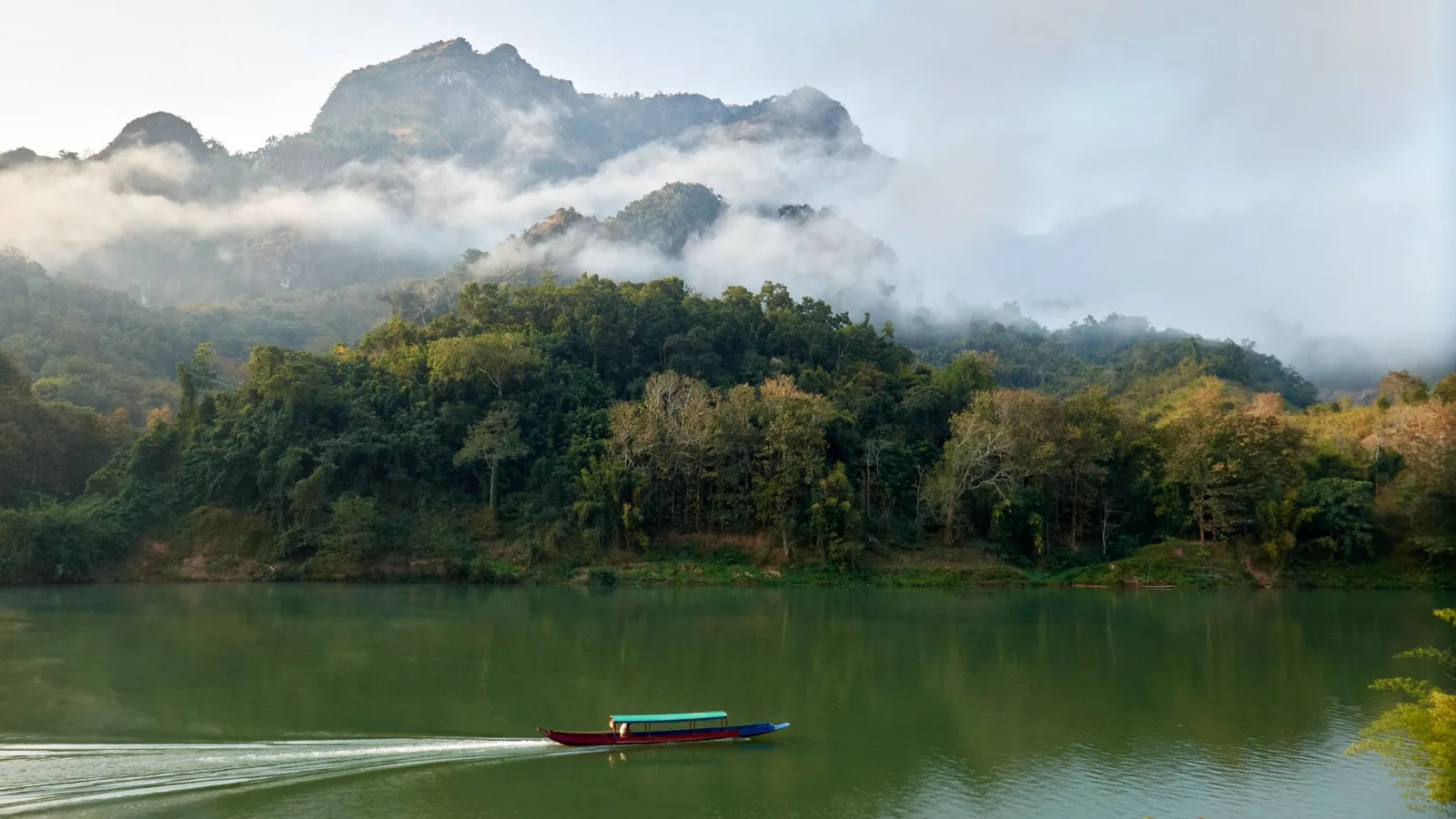
Time that still flows to the river here.
Five borders, no coastline, and a pace its neighbours traded for speed long ago.
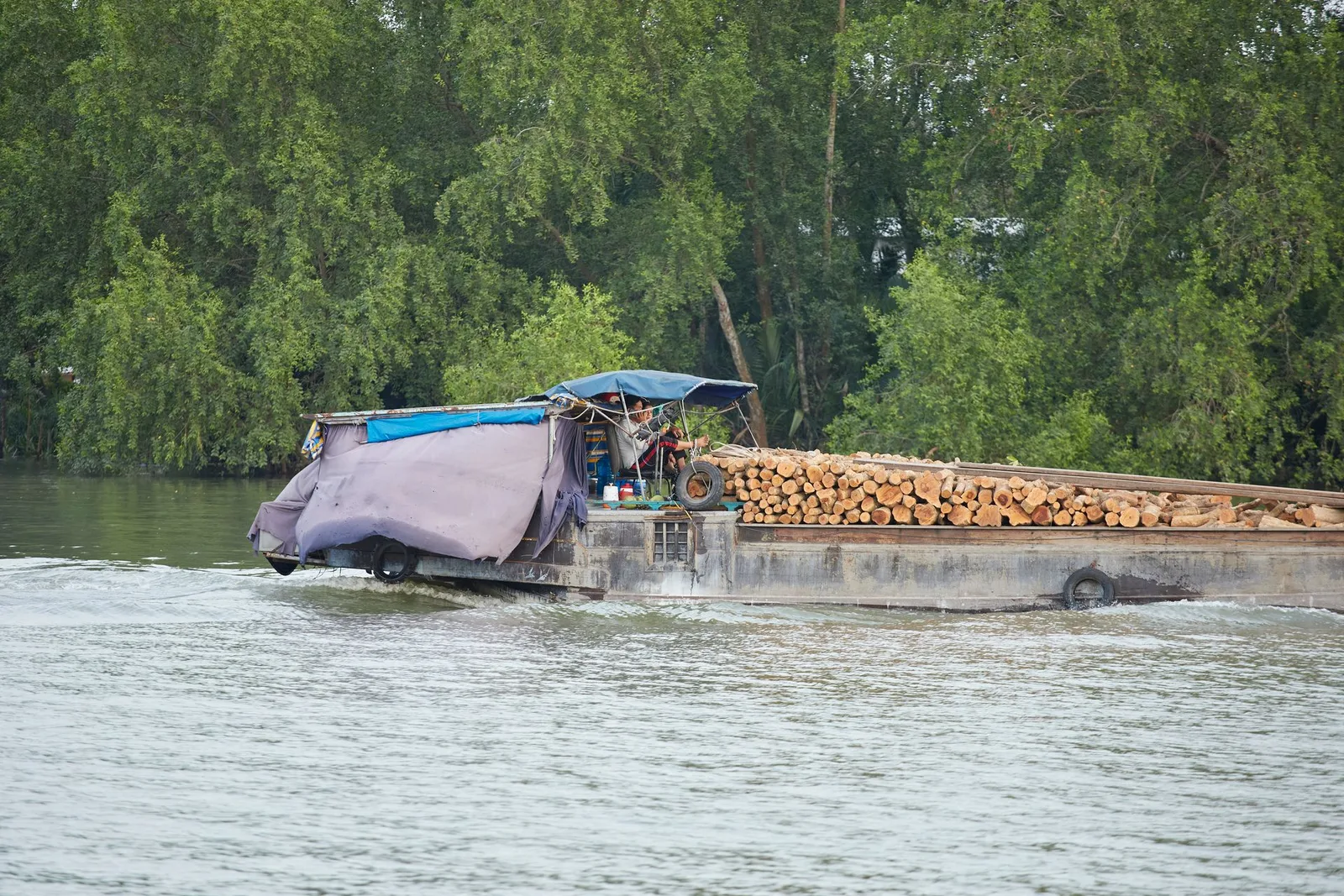
Laos shares borders with five countries and is, alone in the region, without a single metre of coastline. Everything here leads back to the Mekong: the river that connects Vientiane and Luang Prabang, carries fishing boats, and lies hidden under the morning mist until the sun burns it off.
Where Thailand and Vietnam were rebuilt into modern economies within a few decades, Laos largely stayed outside that rush. Not because the country stood still, but because it kept its own pace: monastery schools, rice fields on hillsides, villages that only joined the electricity grid in recent years. That pace is what ultimately shapes a trip here, not a list of sights.
In short
Best time to go
November to February: dry, clear and cooler, with good roads. From March to May it is hot and often hazy from field burning, and in the rainy season until October the land is green, though travel in the north is slower.
How long
Ten days to two weeks, because the mountain roads in the north are slow and winding. That gives you time for Luang Prabang, a stretch of the Mekong by boat and the south around the islands of Si Phan Don.
Who it suits
For travellers looking for the slow rhythm of the Mekong: monasteries and monastery schools, rice fields on the slopes, boat trips on the river, and no hurry to tick off sights.
What sets it apart
Laos is the only country in Southeast Asia without a coastline, and the Mekong is the backbone of travel here. In Luang Prabang the whole old royal town, its temples included, is a World Heritage Site.
One river, several countries along the way.
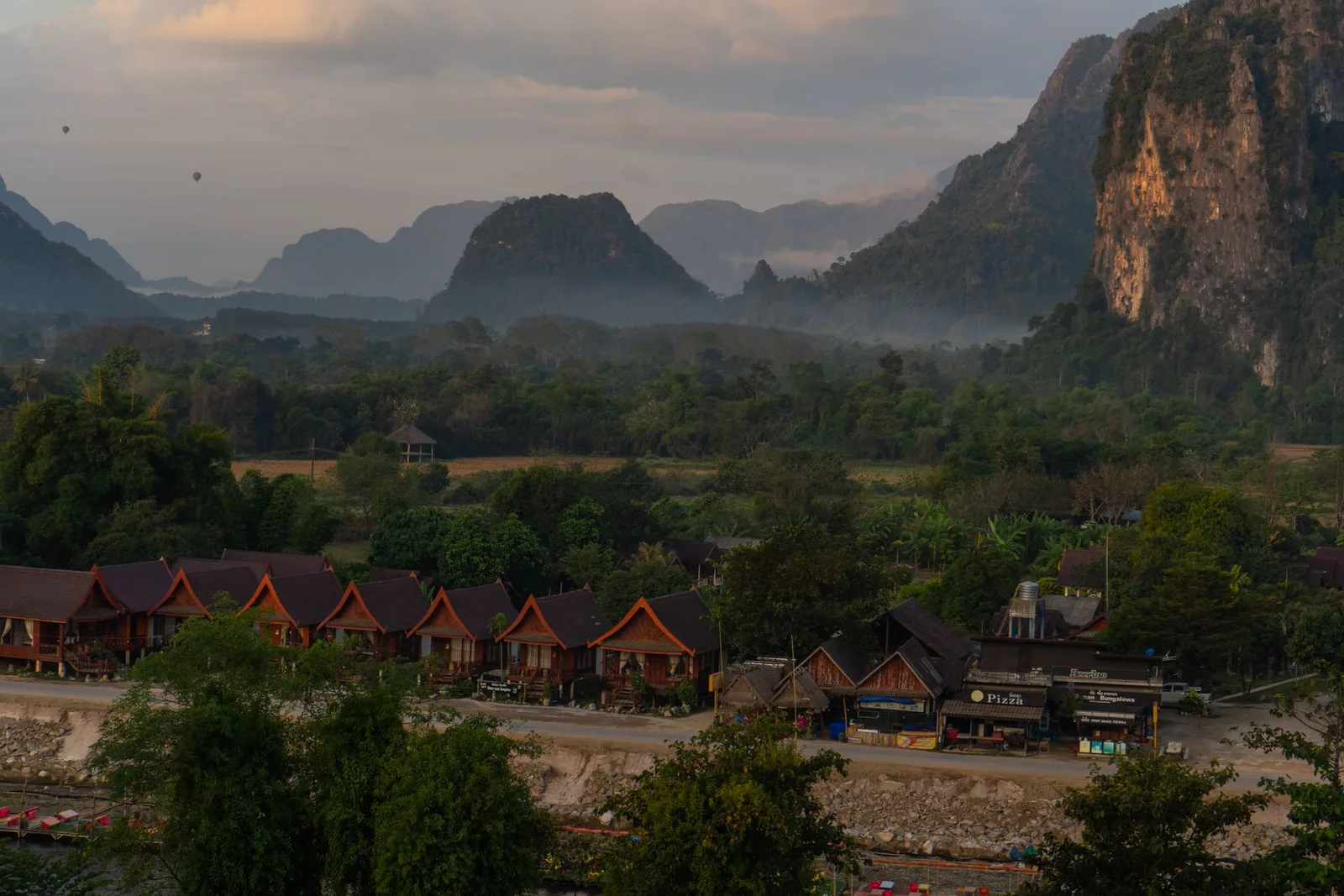
Laos changes character as the Mekong works its way through the country: from colonial streets to rice terraces, from limestone caves to an archipelago in the south.
Luang Prabang and the mountains
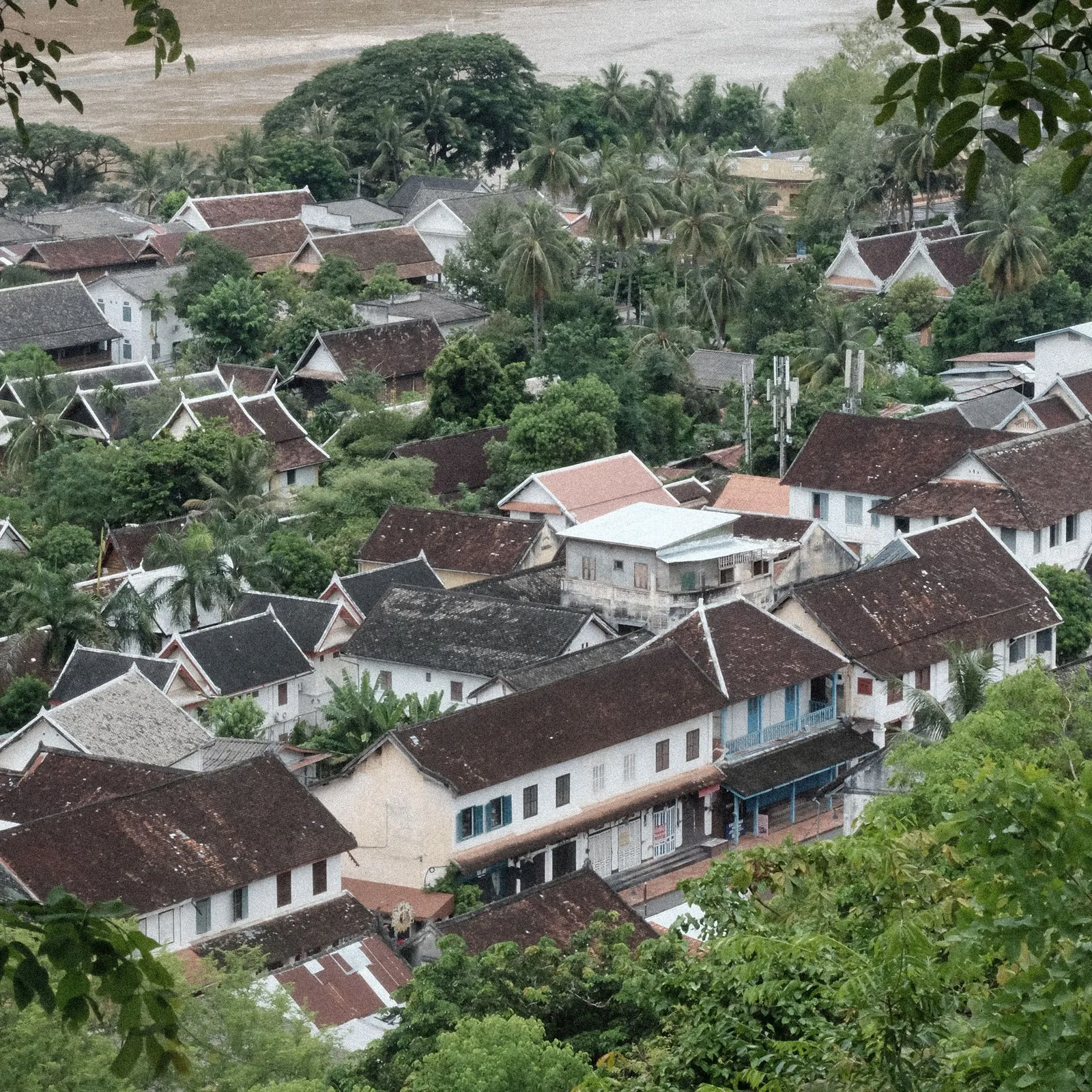
A city of gold-tiled temple roofs and French facades, wedged between the Mekong and the Nam Khan. Around it lie Hmong and Khmu mountain villages, reached by roads that wind around the hillsides.
Vientiane
The quietest capital in Southeast Asia: wide boulevards, a morning market along the river, and a pace that feels more like a provincial town than a seat of government.
Xieng Khouang and the Plain of Jars
Grasslands scattered with hundreds of stone jars over two thousand years old, and no one knows for certain who placed them or why.
The Bolaven Plateau
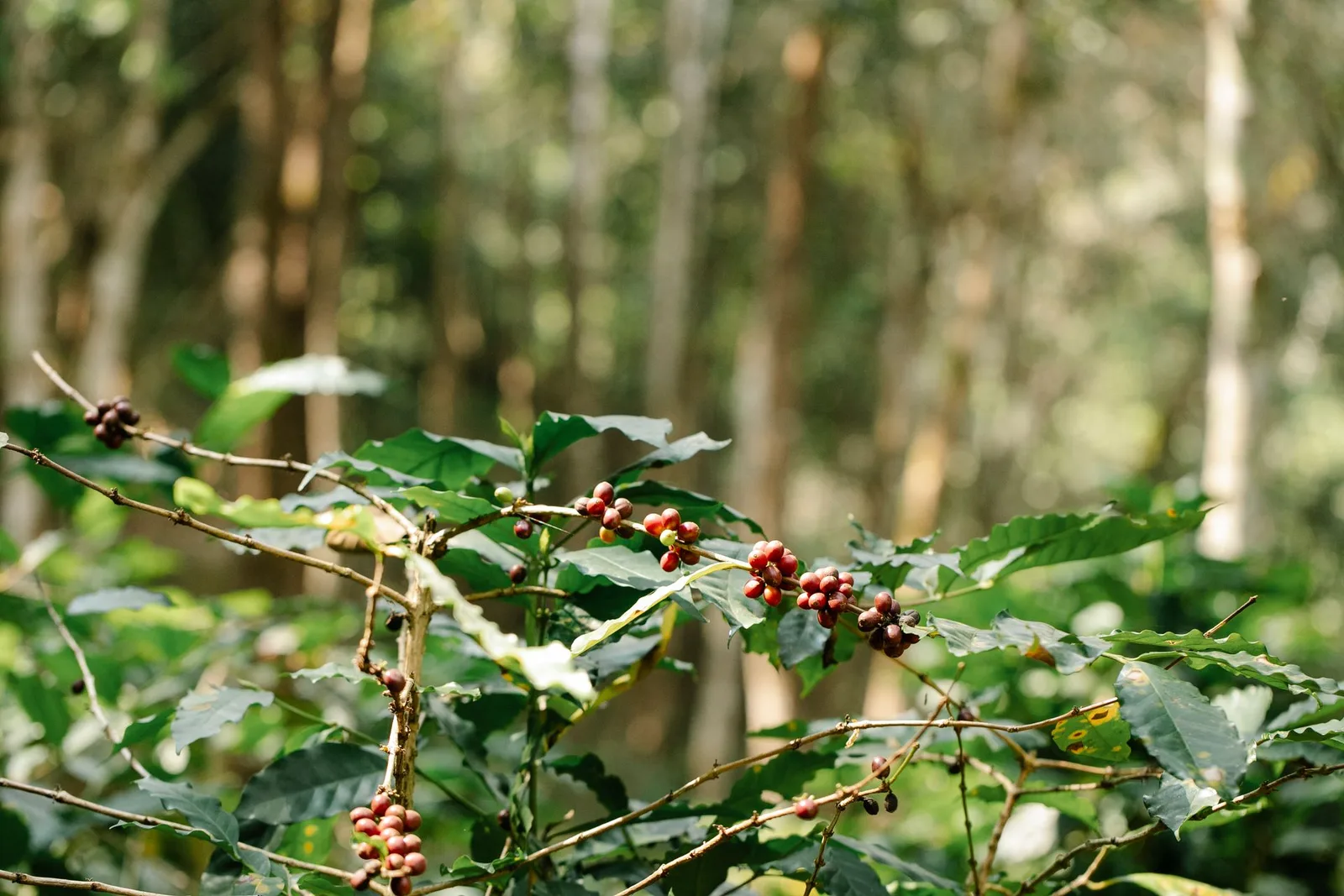
Volcanic soil, coffee plantations and waterfalls that pour over red cliffs after the rainy season. The coolest part of the south, and the least visited.
Si Phan Don, the four thousand islands
Where the Mekong spreads out across an archipelago of sandbanks and islets, and the rhythm is set by fishing boats and the sunset.

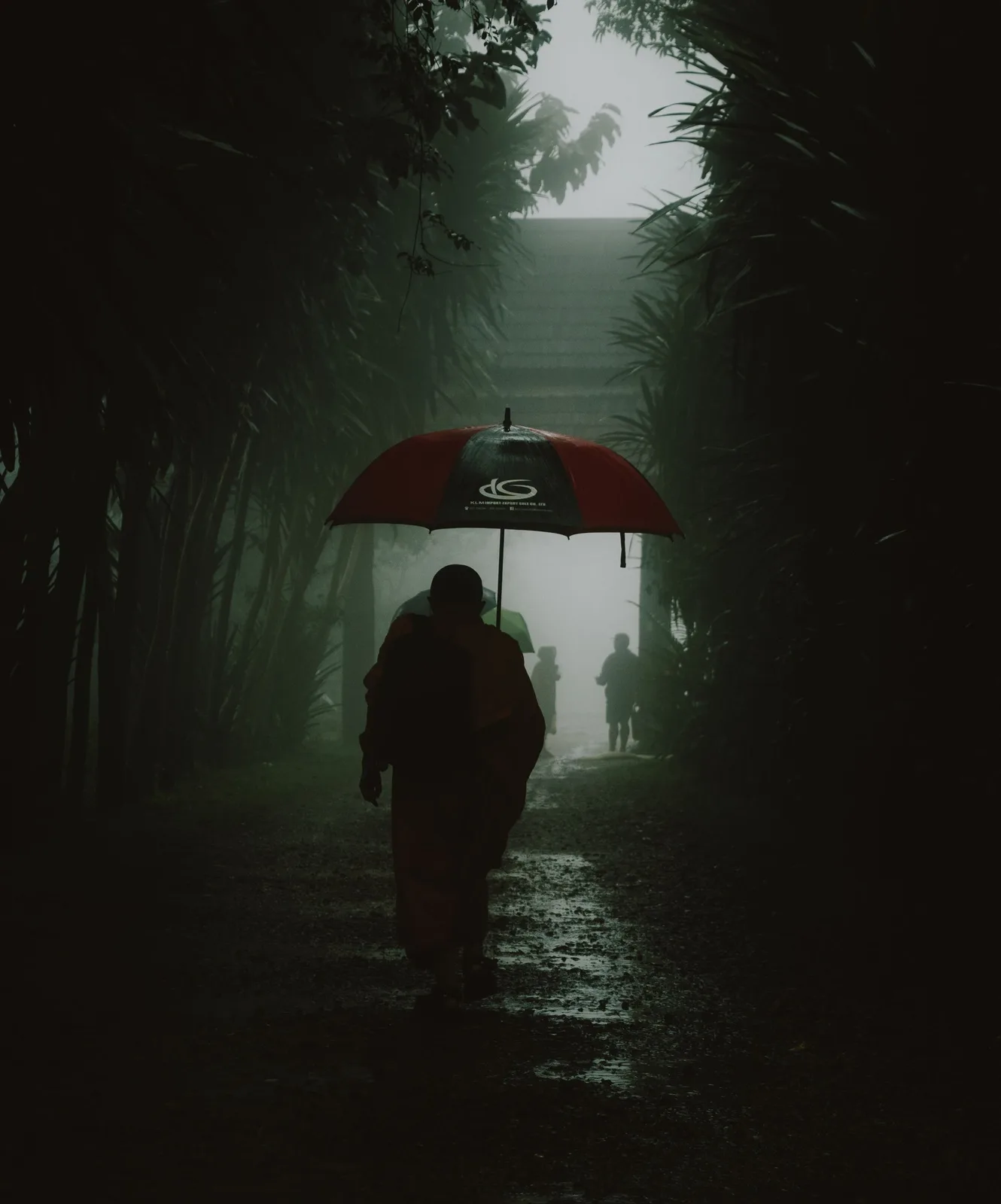
A country that falls quiet each morning for the monastery.
In every town and many villages, Buddhism still shapes the daily rhythm. At first light, monks in orange robes walk the streets for tak bat, the giving of alms. Not a show staged for visitors, but a custom that has continued unchanged for centuries.
Laos is also home to more than fifty recognised ethnic groups, from the Hmong in the northern mountains to the Khmu and Tai Dam along the rivers. Each group has its own language, textiles and way of growing rice, a diversity that shows more clearly in the villages than in the cities.
Limestone, rainforest and a river that connects it all.
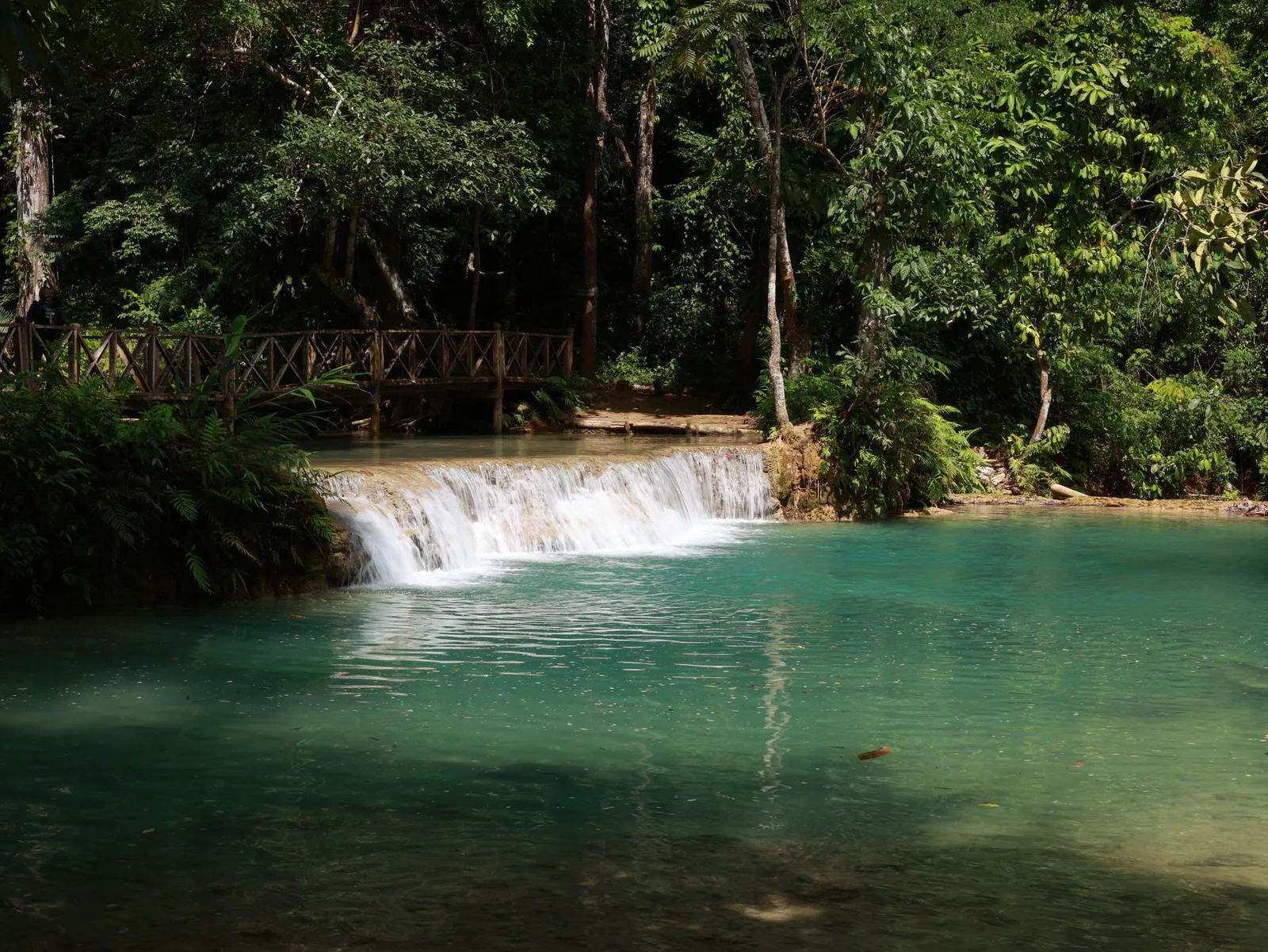
The waterfalls of Kuang Si
Turquoise pools cascading in tiers through the rainforest near Luang Prabang, fed by limestone springs that give the water its colour.
The cave of Konglor
A river that runs seven kilometres straight through a mountain massif, travelled by long boat, in the dark, with only a headlamp for light.
The Mekong itself
Not a backdrop but the main character: the river carries trade, fish, stories and the slow boats that still cross it daily.
Possibilities, not a fixed route.
A trip through Laos doesn't divide neatly into days. These are the experiences we draw on to build a route that matches your pace.
Two days on the Mekong
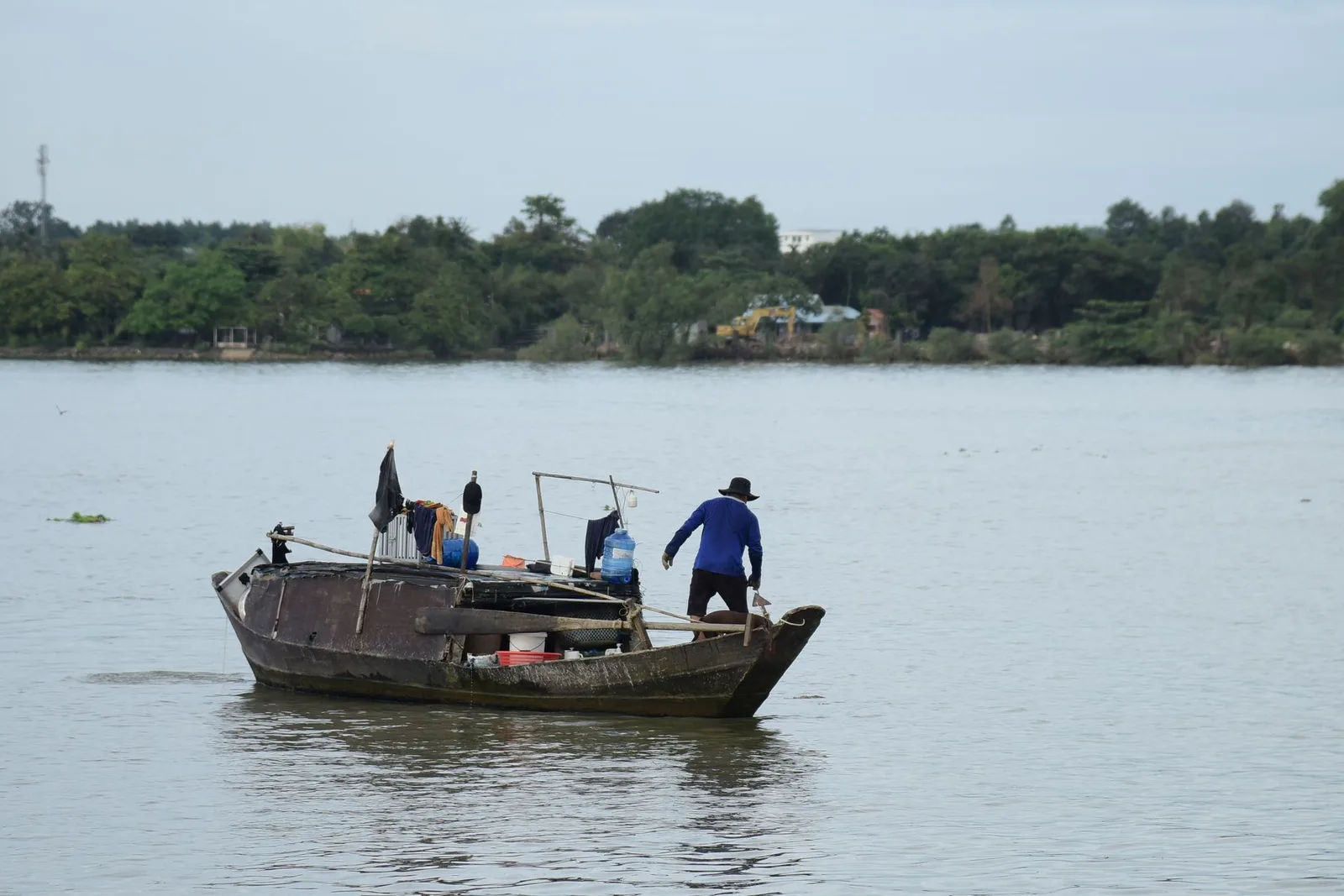
From the Thai border to Luang Prabang, aboard a slow river boat, with an overnight stop in Pak Beng.
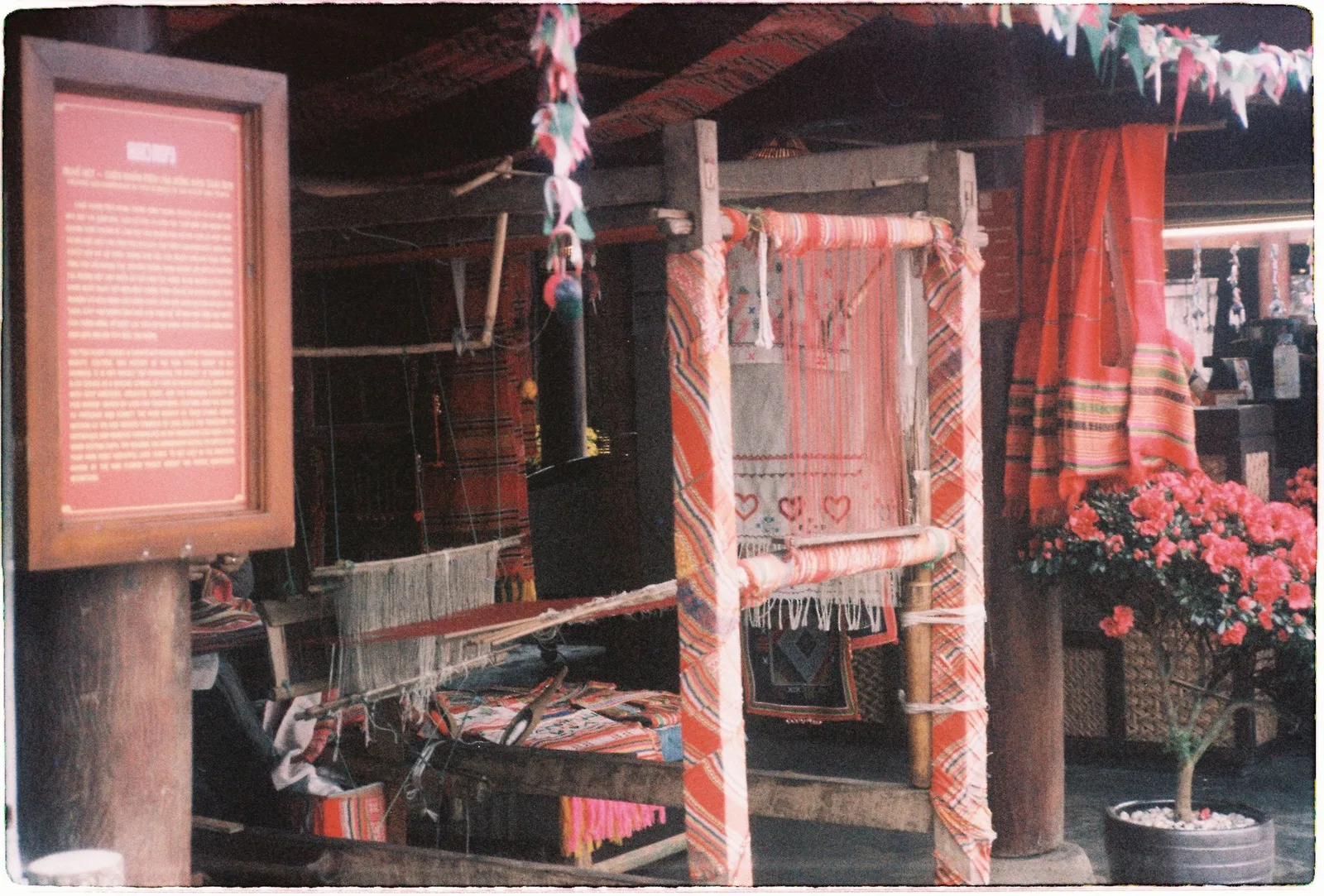
Visiting a weaving village
With the Tai Lue or Hmong, learn how silk and cotton are dyed and woven, in patterns passed from mother to daughter.
Tasting coffee on the Bolaven Plateau
Arabica and robusta from small family plantations, picked on volcanic soil more than a thousand metres up.
Cycling past rice fields
Quiet roads between Vientiane and Vang Vieng, past limestone karsts and villages where life still plays out on the street.
Cooking with laap and sticky rice
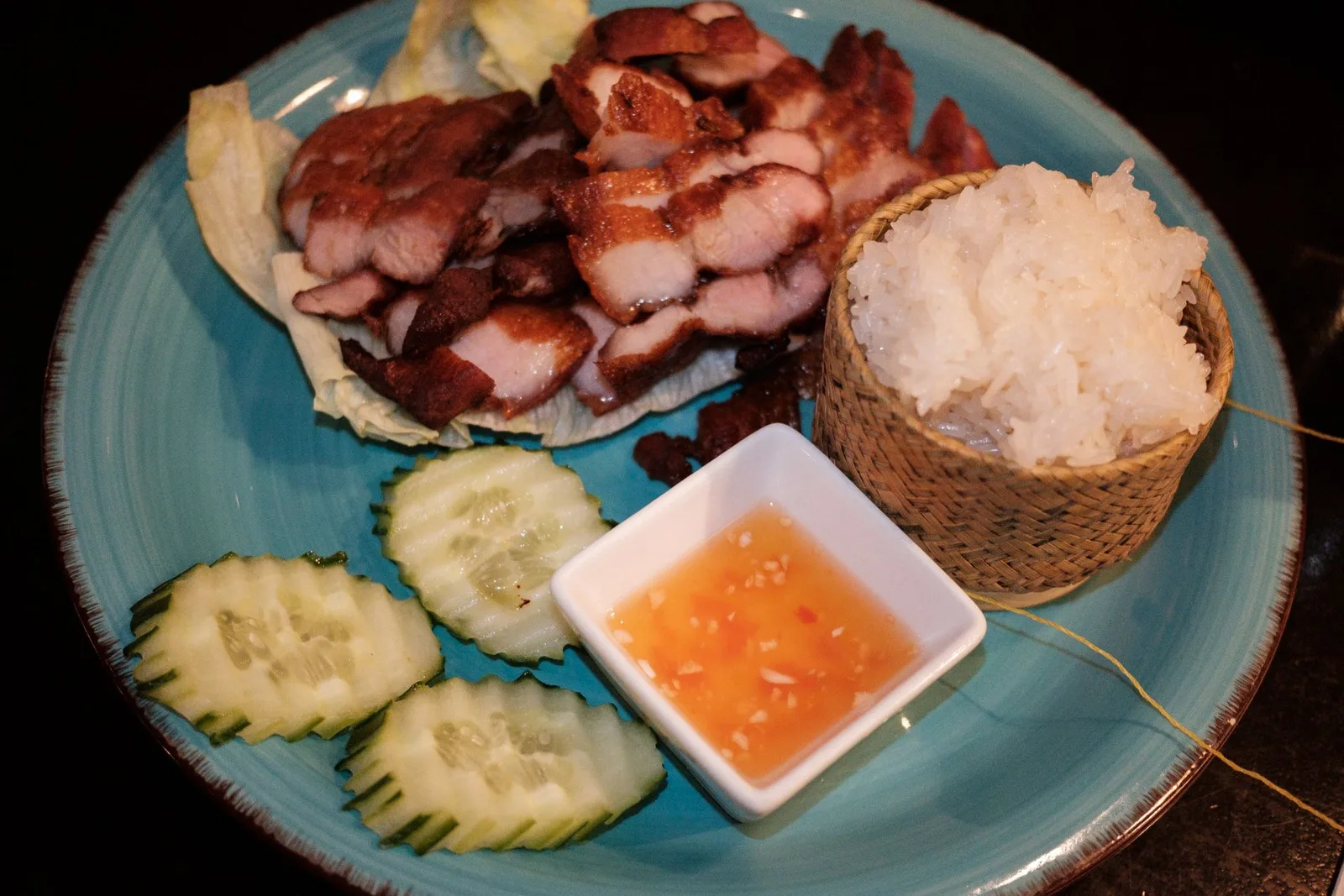
Lao cuisine centres on steamed sticky rice, fresh herbs and laap, minced meat with lime, chilli and toasted rice.
Any one of these experiences can be the core of a route, or an addition to a longer trip through the region.

When to travel to Laos.
The dry season, from November to February, is the most pleasant: clear skies, cooler evenings and roads in good condition. From March, temperatures climb and smoke from field burning often hangs in the air. The rainy season, from June to October, turns the country green and fills the Mekong, but some roads in the north become harder going.
Best time to visit Laos
Who else is at their best in these months?
January February November December
Use the contact form to discuss your travel dates and preferences with us.
Practical, without the noise.
Practical matters that help shape the pace of a trip through Laos.
Getting there
No direct flight from Belgium; usually via Bangkok, Hanoi or Singapore to Vientiane or Luang Prabang.
Documents
Which travel documents you need depends on your nationality, and entry rules change regularly. We go through the current requirements with you before you leave.
Health
Check vaccination advice; malaria prevention may be recommended outside the cities.
Infrastructure
Main roads are good, mountain roads in the north can be slow and winding. Expect longer travel times than the distance suggests.
Connectivity
Mobile internet works well in cities, and drops out in remote villages and on the river.
Laos doesn't ask to be seen.It asks for time.
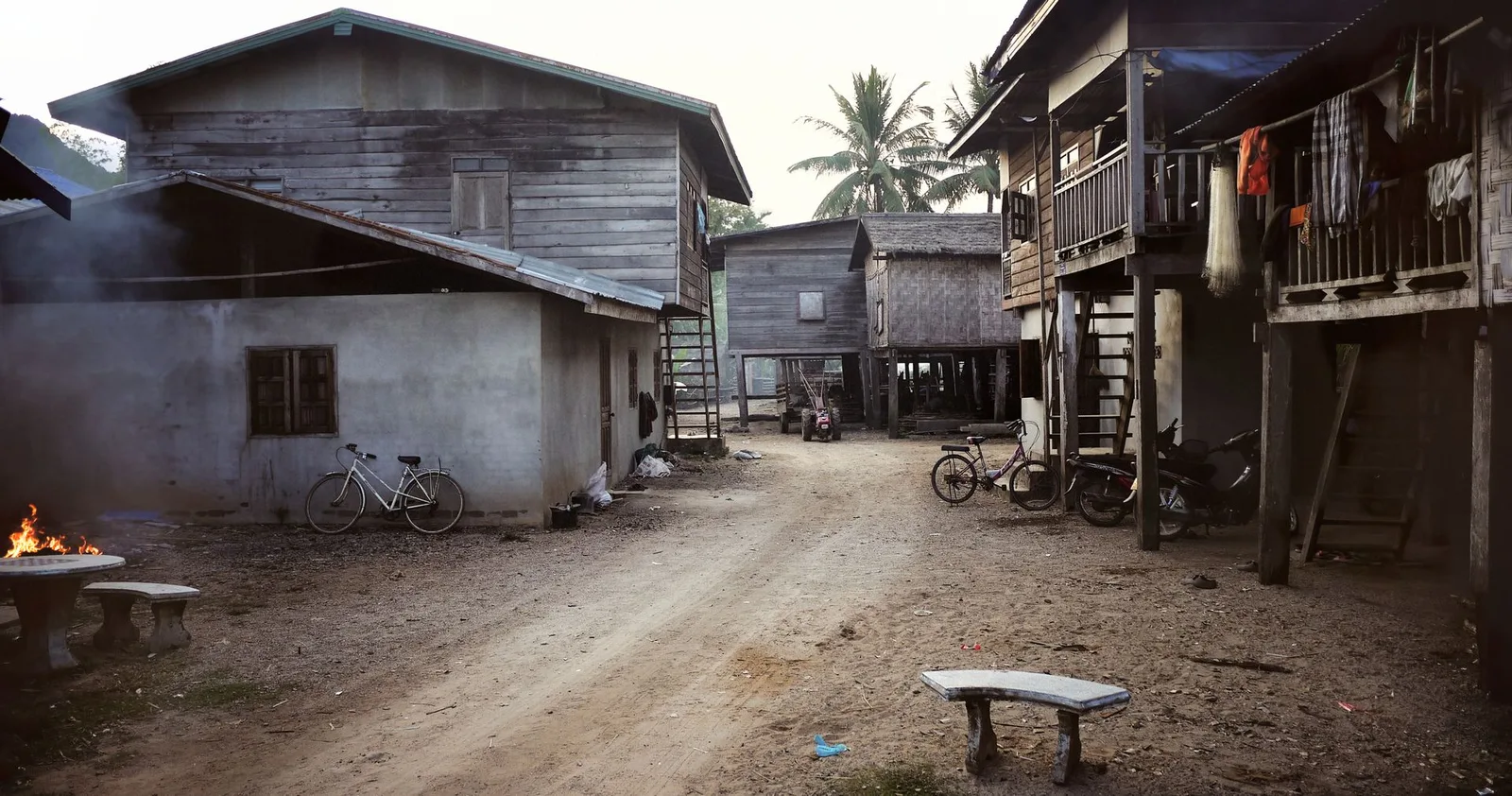
Between two villages here, there's usually no road, just a path.

Frequently asked questions about Laos.
Can Laos be combined with another country in the region?
Yes, often with northern Thailand or northern Vietnam via a land border crossing, or with Cambodia via a flight from Pakse or Vientiane.
How much time do I need for Laos alone?
To do the country justice without constantly moving on, allow at least ten to fourteen days.
Is Laos suitable for a family trip with children?
Certainly, especially the calmer parts such as the Mekong boat trips and the waterfalls near Luang Prabang. Long mountain roads do call for some patience.
What about unexploded ordnance in Laos?
In some remote areas, unexploded bombs from the past still remain. Marked paths and tourist routes give no cause for concern; we take this into account when putting together a route.
- Flight time
- About 13 to 15 hours, with a stopover in Bangkok, Hanoi or Singapore
- Languages
- Lao, with French and English in tourist centres
- Time difference
- Summer +5 hours, winter +6 hours compared to Belgium
- Altitude range
- From the Mekong plain to 2,819 metres on Phou Bia
- Best time to go
- November to February, dry and cooler