
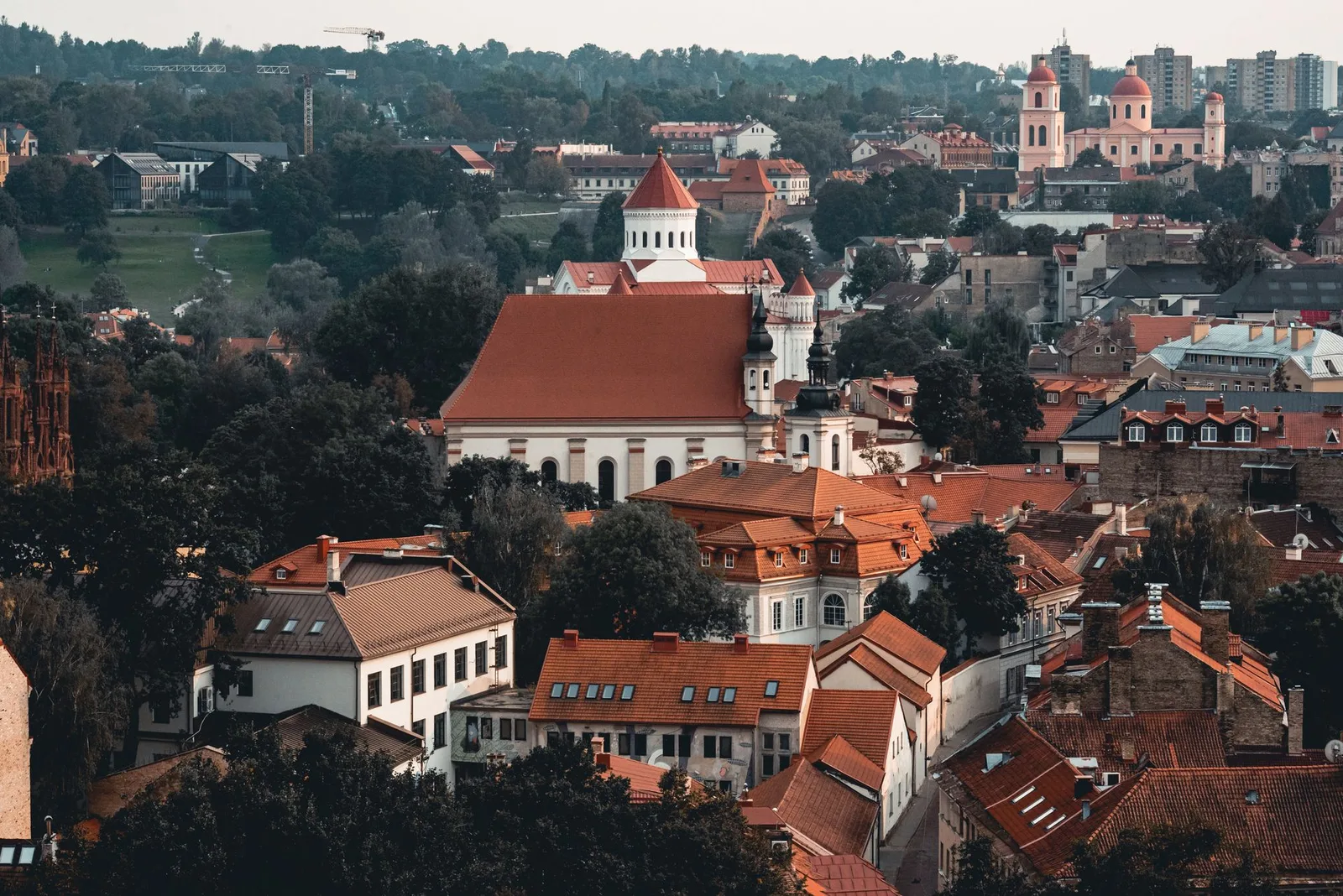
Lakes, forests and a baroque old town that feels surprisingly southern for a Baltic capital.
Lithuania is often mentioned in the same breath as Estonia and Latvia, as if the Baltic states were one experience sampled in three bites. Anyone who actually goes soon finds that's not true. Vilnius has no crisp Hanseatic facades but a lavish baroque old town, with church towers that bring Kraków or Vienna to mind sooner than Tallinn. Lithuanian itself isn't a Finno-Ugric language like Estonian, but one of the most archaic Indo-European languages still spoken, a linguistic fossil that has fascinated linguists for over a century.
The country was once anything but small. As the Grand Duchy of Lithuania, it stretched in the fifteenth century from the Baltic Sea to the Black Sea, at the time the largest realm in Europe. That history leaves its traces: in the architecture of Vilnius, in the fortress town of Trakai on its island in the lake, and in a self-assurance you wouldn't immediately expect from a country of three million people.
Beyond the cities the country falls quiet. More than two thousand lakes, sweeping forests home to storks and elk, and on the coast a peninsula of walking sand dunes that has no equal in Europe.
In short
Best time to go
May, June and September: long light or a quiet late summer, ideal for the lake district and the forests. In July and August the Baltic is at its warmest, but that is also when most visitors head for the coast.
How long
Nine to eleven days for Vilnius, the lake district and the coast. Distances are short, so you can stay a few nights in each place rather than moving every day.
Who it suits
For travellers who want to move calmly between a baroque capital, lakes and forests and the Baltic coast, and who would rather get to know one country well than rush through all three Baltic states.
What sets it apart
The historic centre of Vilnius, a World Heritage Site, is largely Baroque rather than Hanseatic Gothic. And Lithuanian is regarded as one of the most archaic Indo-European languages still spoken.
A country that changes with every hour you drive.
Lithuania is small enough to cross in a few days, and varied enough that you won't want to.
Vilnius
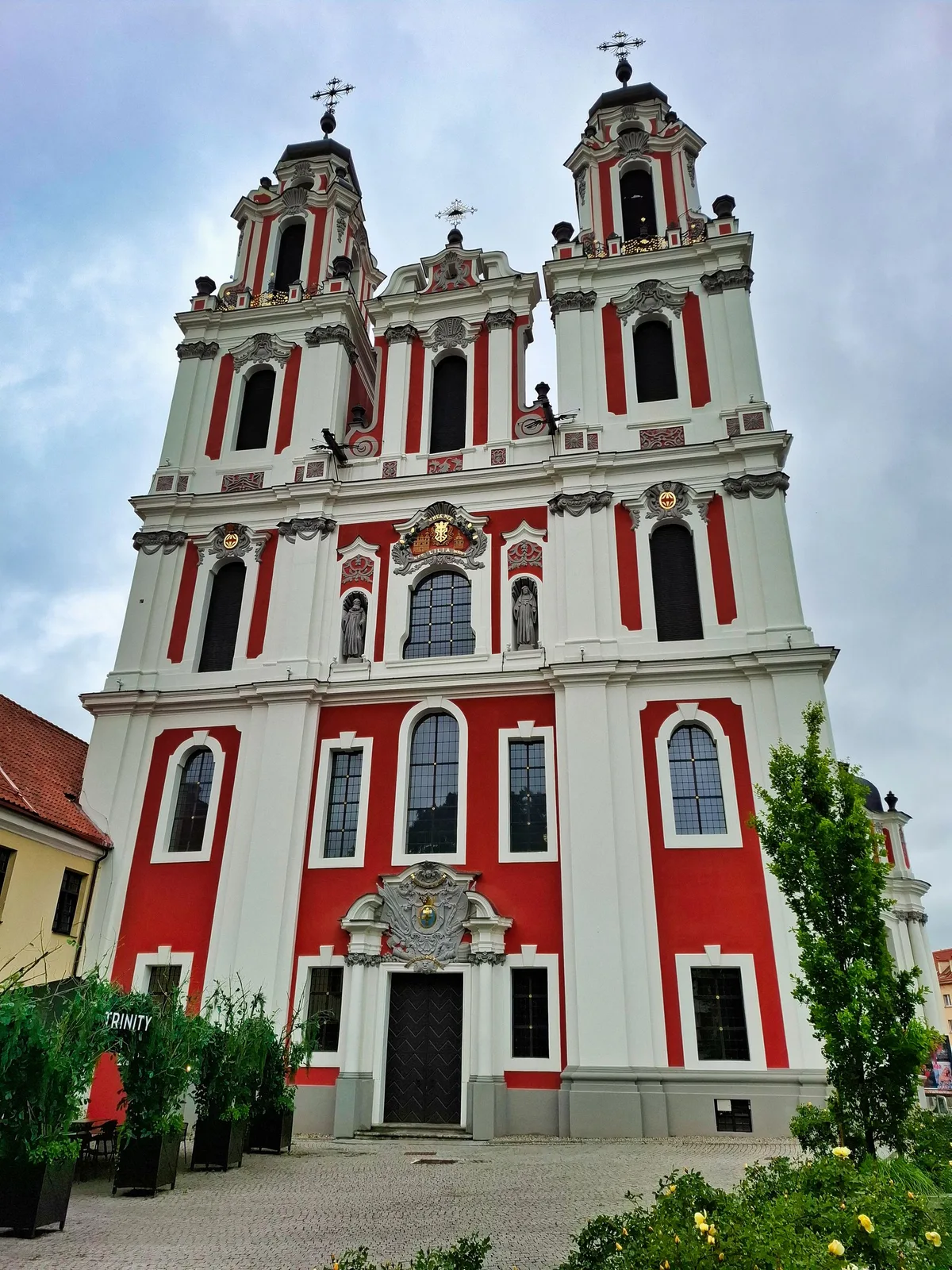
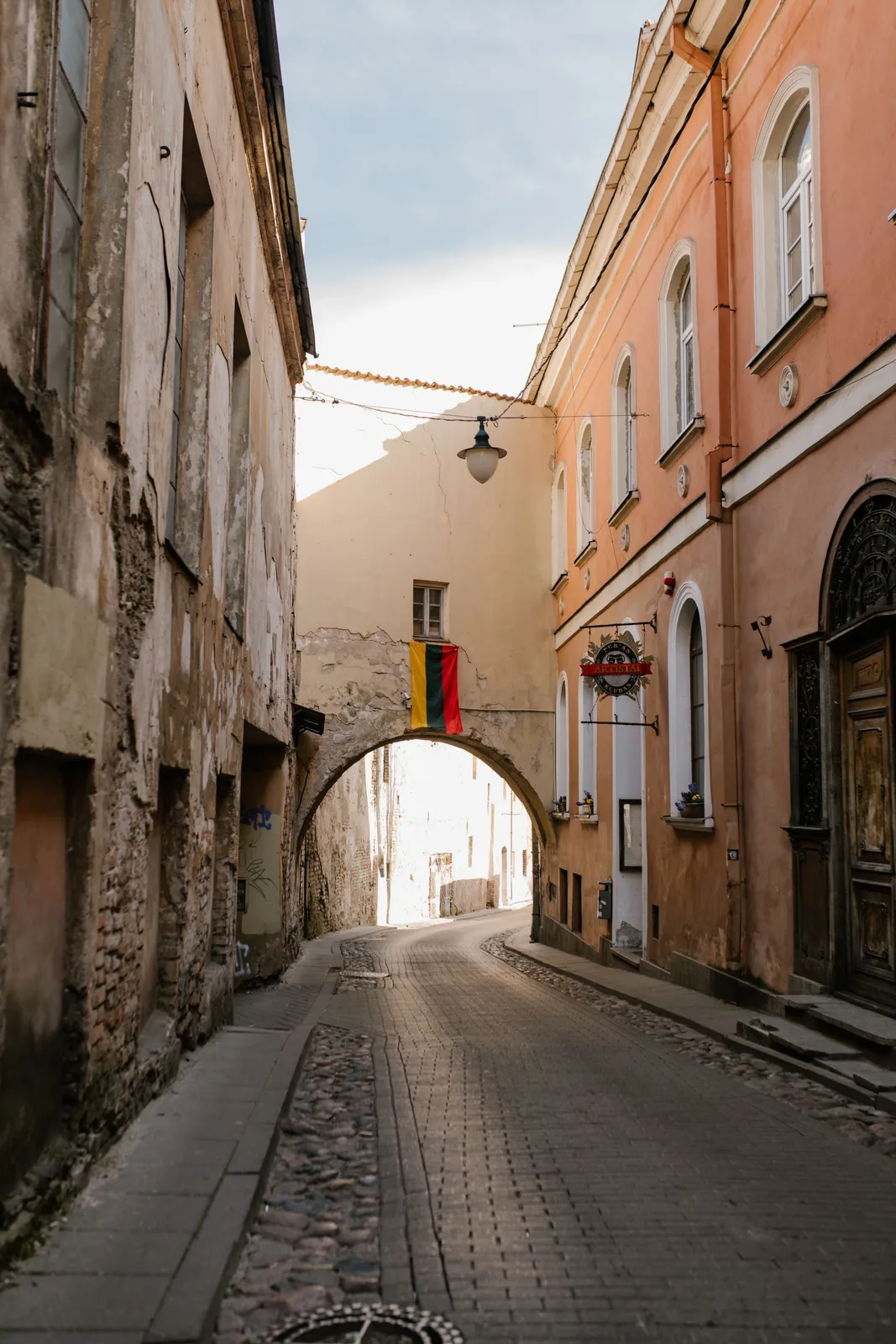
The largest baroque old town in Northern Europe, UNESCO-listed and built by Italian architects for the Lithuanian nobility. Narrow streets, hidden courtyards, and the self-declared artists' republic of Užupis, which once wrote its own constitution on the wall.
Trakai and the lake country
Half an hour from Vilnius stands the red-brick castle of Trakai, built on an island in the lake. The Karaite community that settled here centuries ago still cooks its own cuisine beside the water.
Kuršių Nerija (Curonian Spit)
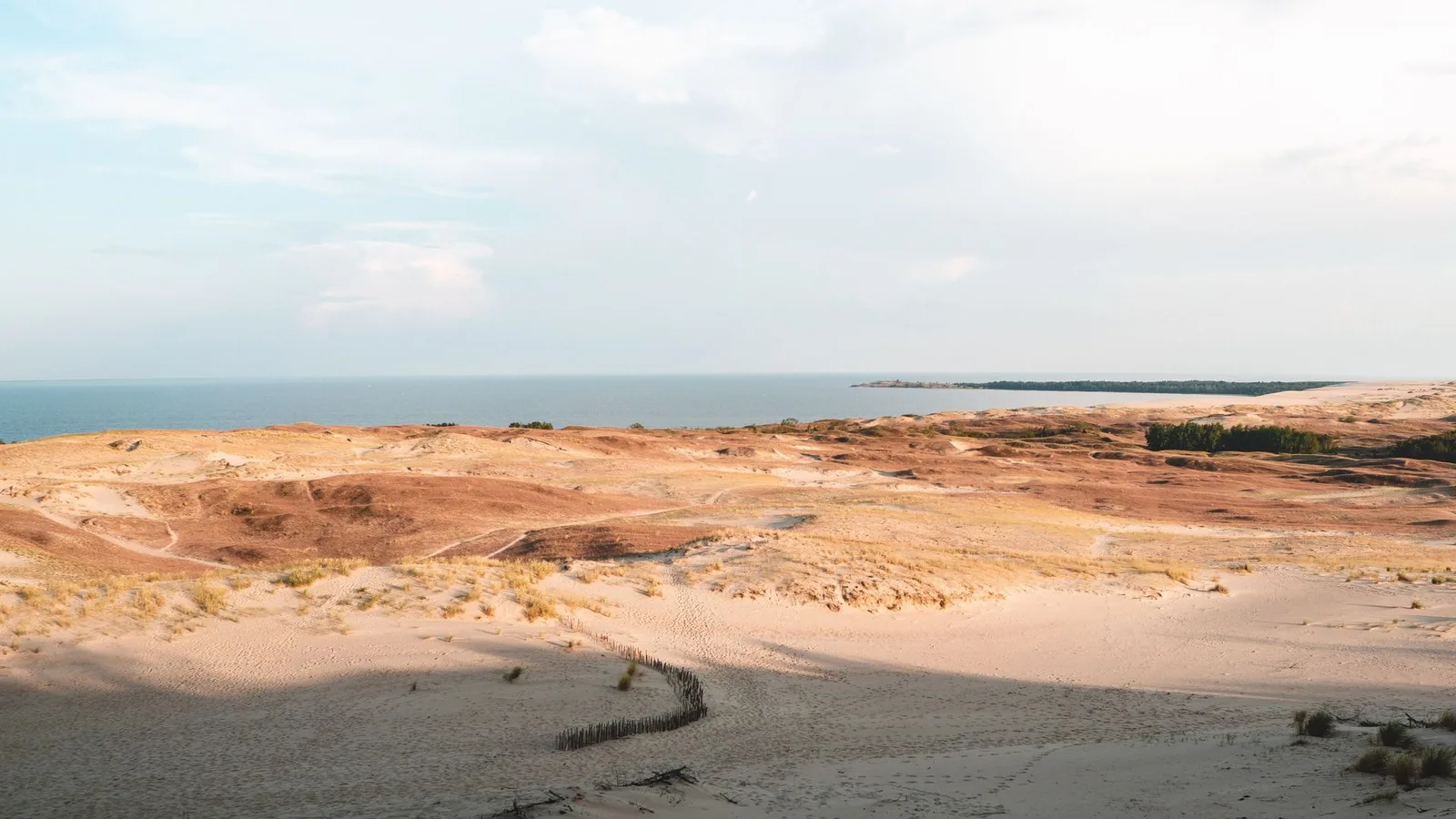
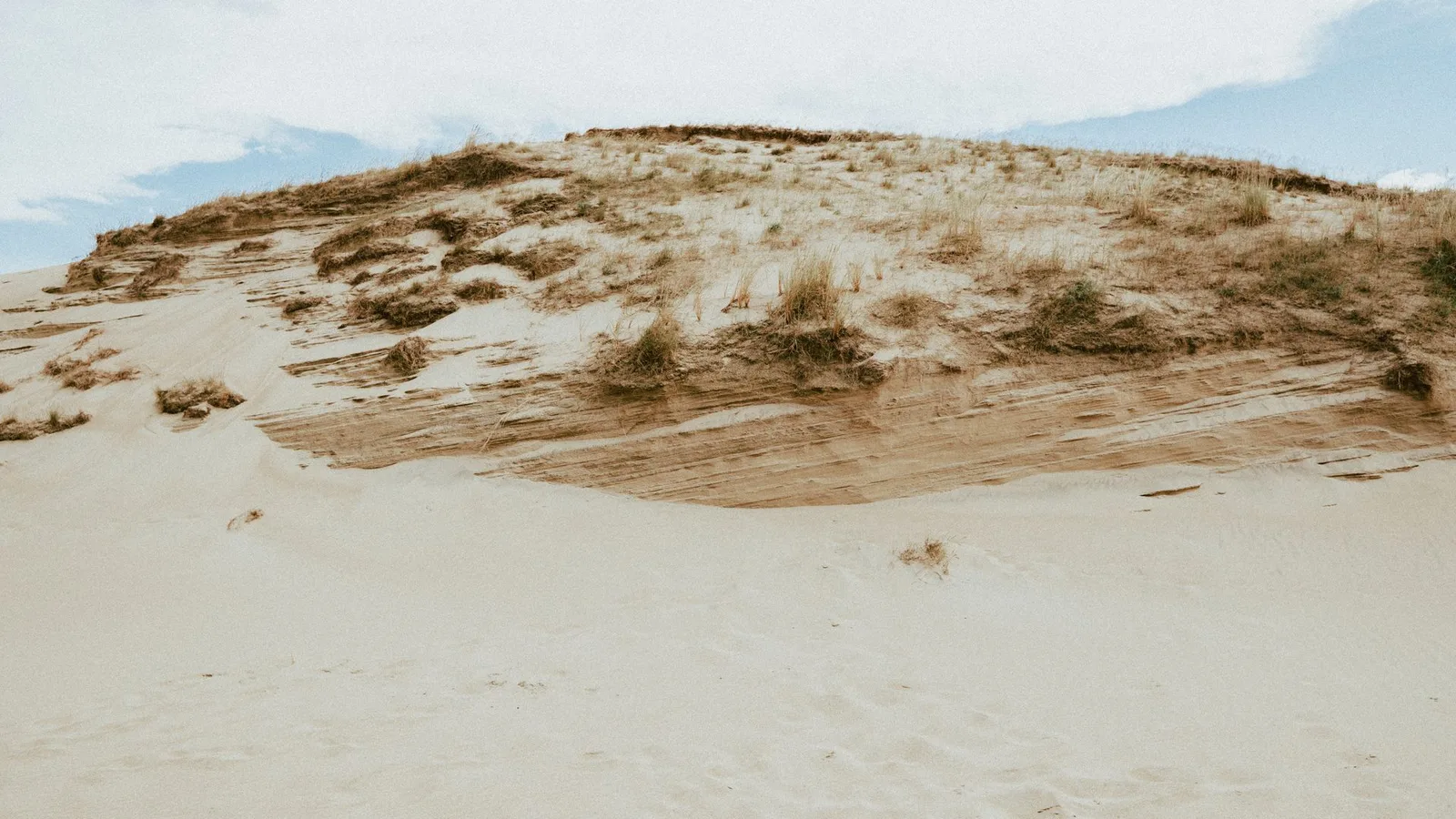
Ninety-eight kilometres of walking dune between the Baltic Sea and the Curonian Lagoon, with fishing villages like Nida that lived off wooden boats until recently. The Parnidis dune above Nida still shifts a little further every year.
Kaunas
Lithuania's second city briefly served as capital between the wars, and in those twenty years built up a collection of art deco buildings that has since gained UNESCO recognition. Less polished than Vilnius, and more honest for it.
Žemaitija and the Hill of Crosses
In the north-west, near Šiauliai, stands a hill holding an estimated hundred thousand crosses, left behind by generations of pilgrims since the nineteenth century. Beyond it stretches the national park of the same name, with lakes, forests and wooden villages that have changed little.

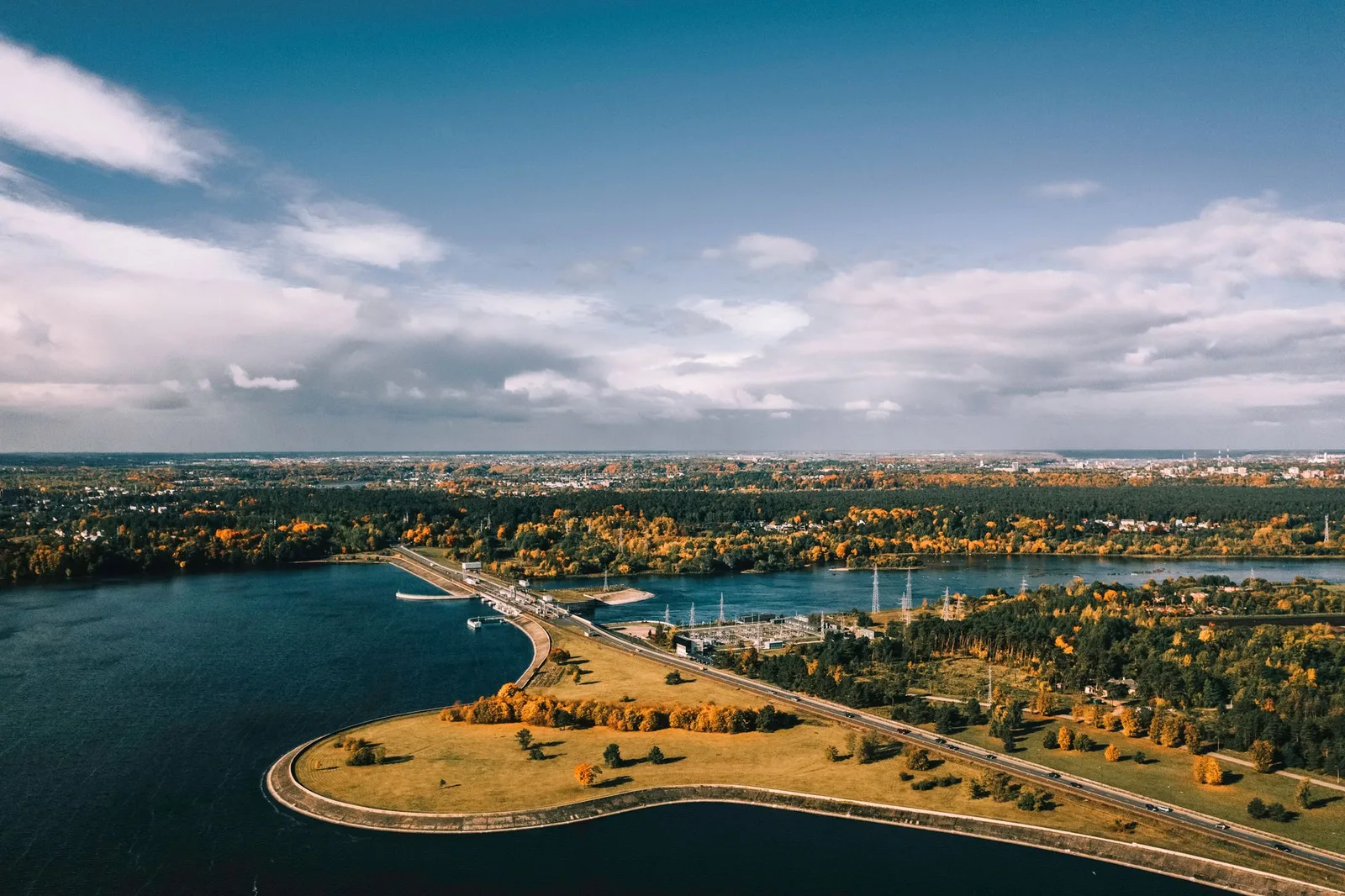
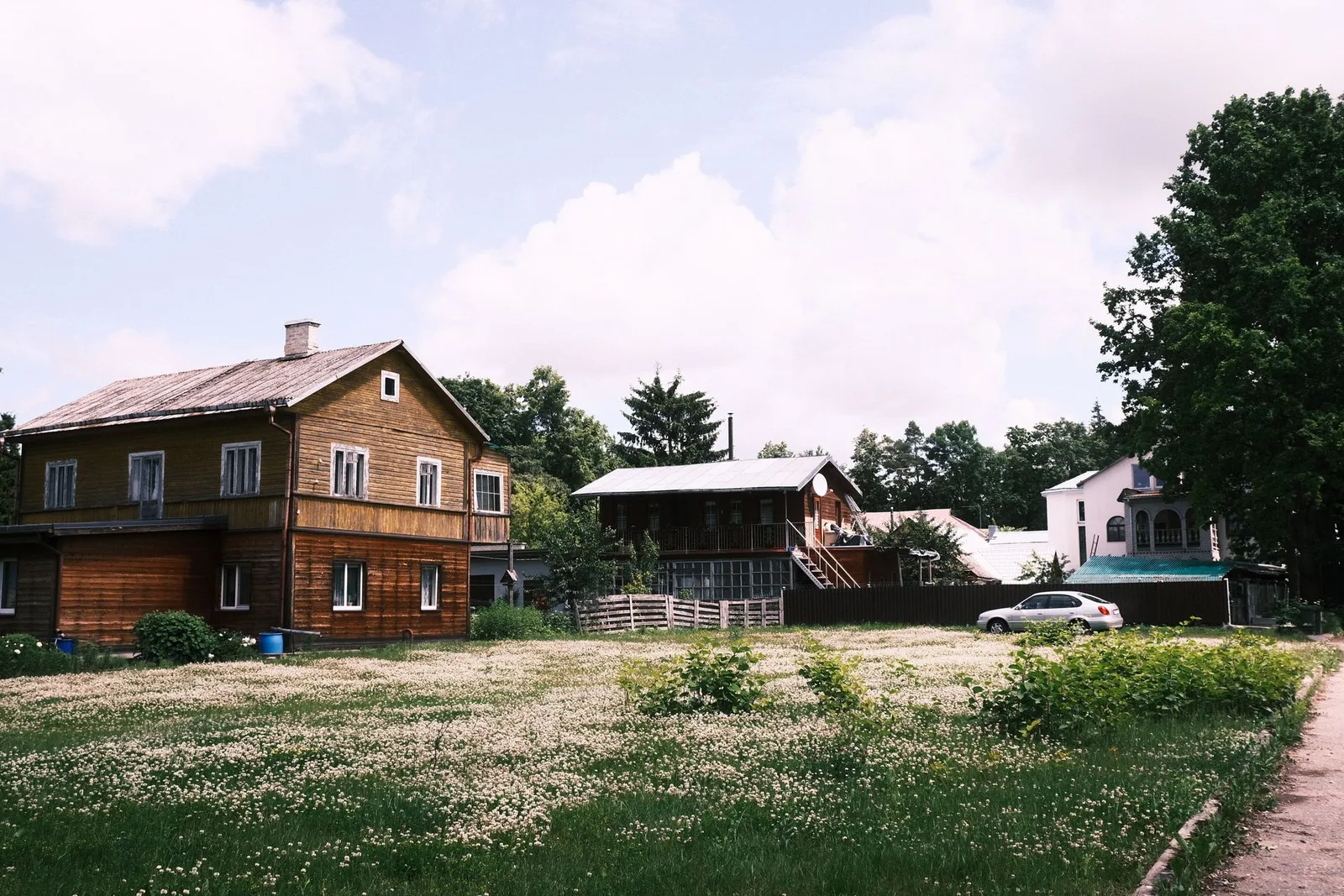
One of the least densely populated countries in the EU, and it shows.
Forests and marshes
A third of Lithuania is forest. In the Nemunas delta and the marshes of Žuvintas, herons, cranes and white-tailed eagles nest, often without another person in sight.
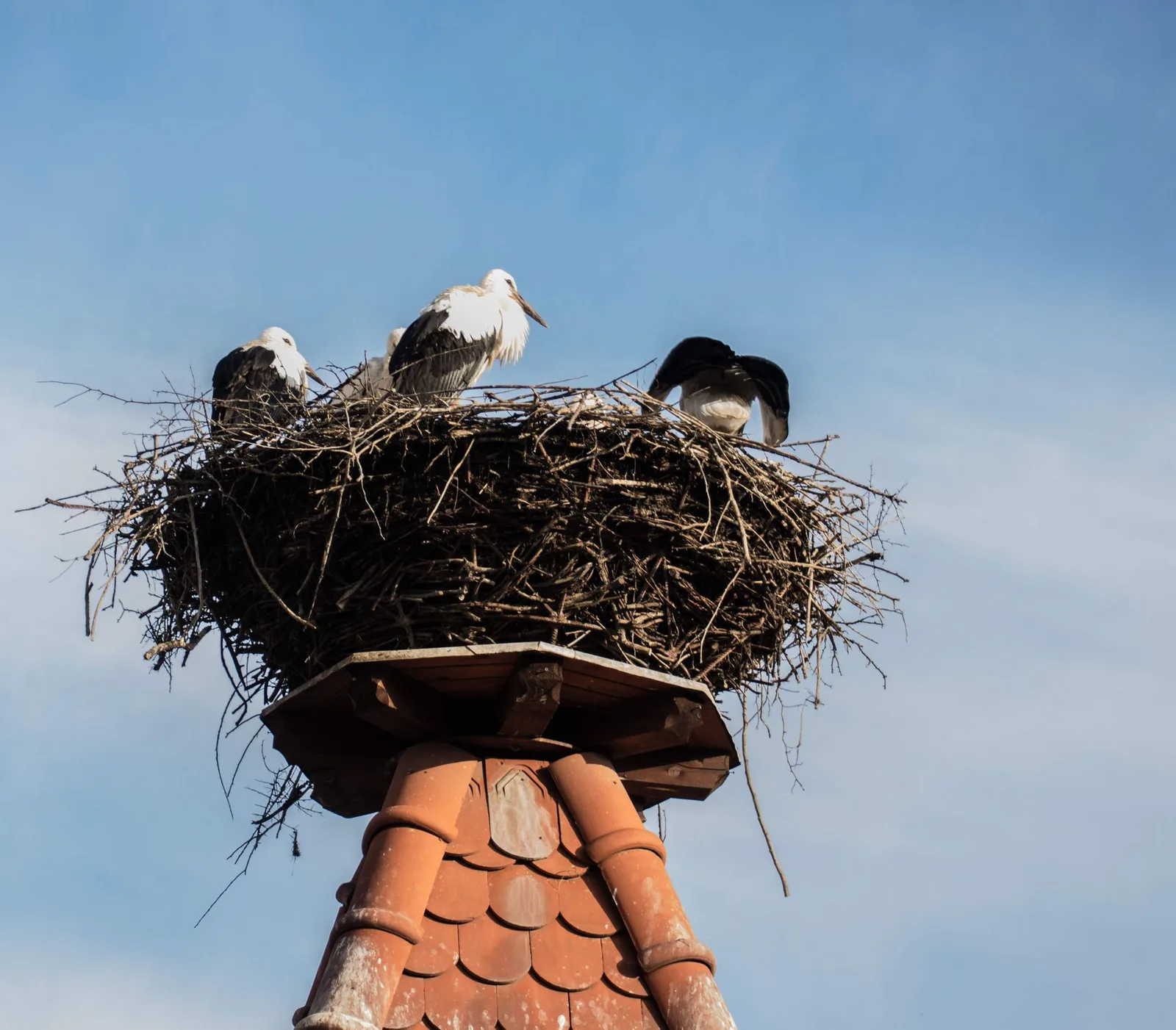
The land of the stork
Lithuania has the highest density of white storks in the world: nearly twenty thousand breeding pairs. Every village seems to have its own nest on a chimney or power pole.
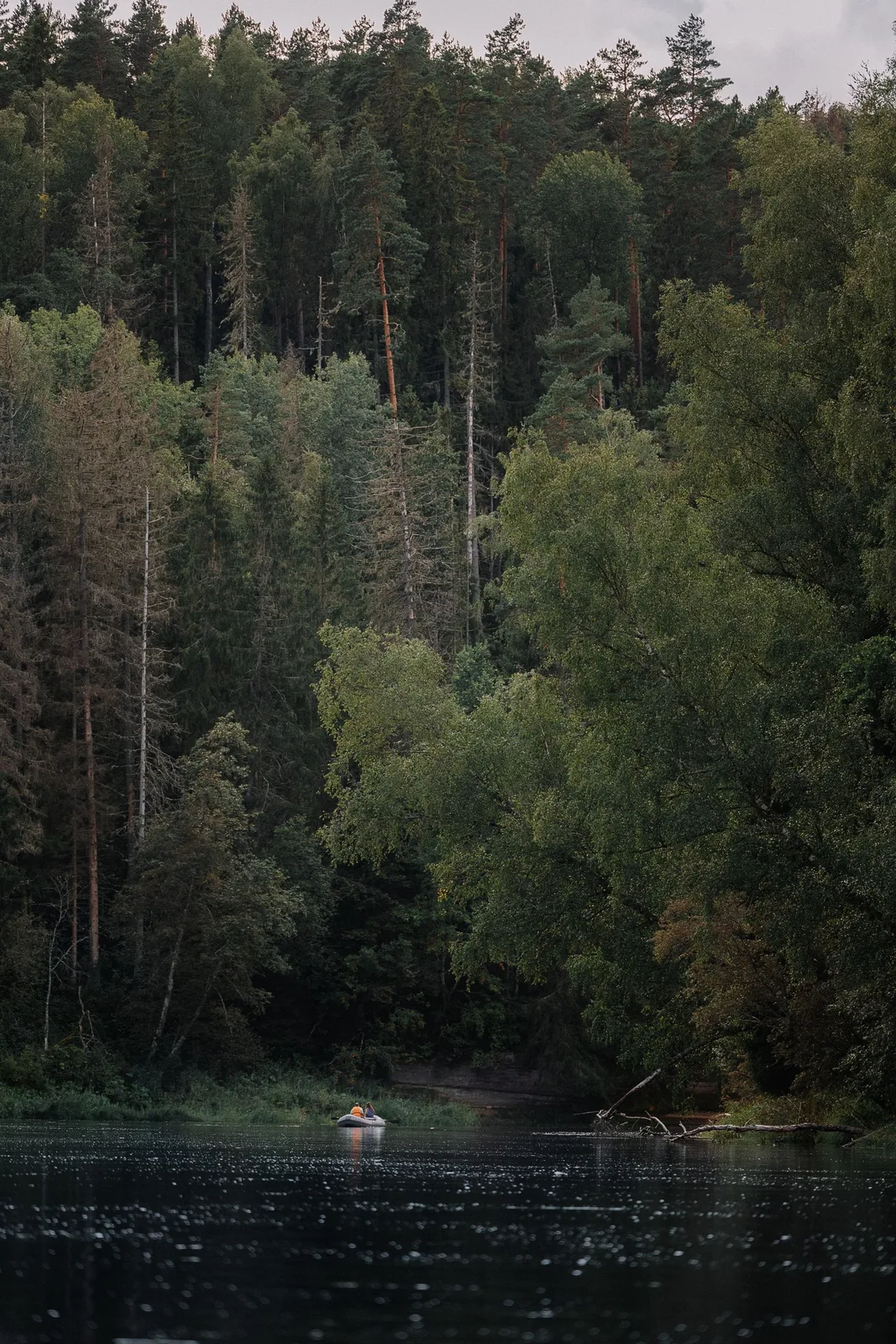
Two thousand lakes
Aukštaitija in the north-east is a patchwork of lakes and pine forest, crossed by canoe routes that can run for days without meeting a road.

No fixed programme, but plenty to choose from.
These aren't days we fill in for you. They're the possibilities we draw on, together with you, to build a route that fits.
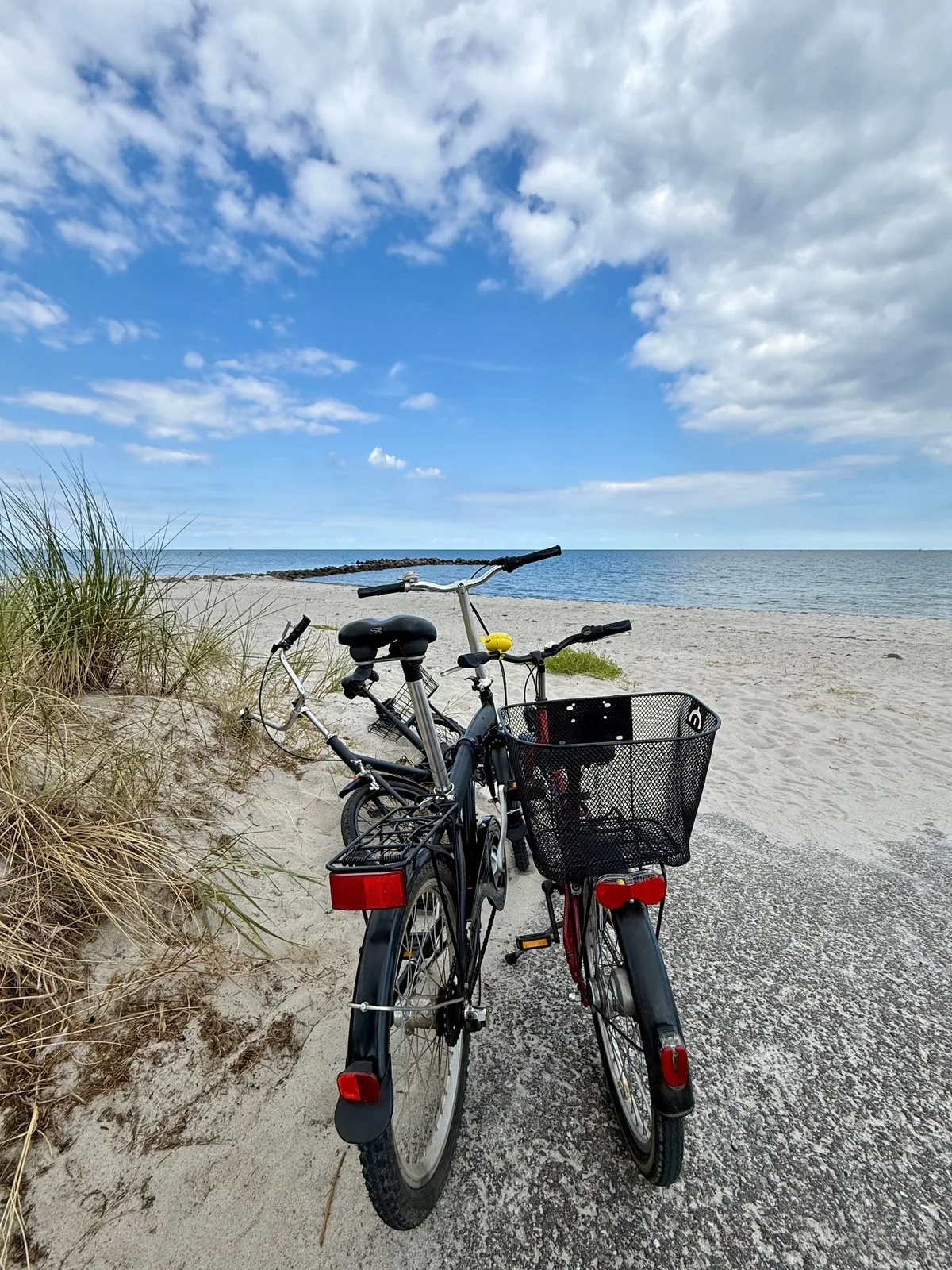
Cycling across the dunes
A cycle path follows almost the entire Curonian Spit, past forest, dune and lagoon, with Nida and Juodkrantė as resting points.
Canoeing the lakes of Aukštaitija
Multi-day canoe trips between campsites and wooden villages, with no sound but the water.
Wandering Vilnius's old town
From the baroque Church of St Peter and St Paul to the artists' republic of Užupis, a city best discovered on foot.
Visiting the Hill of Crosses
One of the country's most striking, quietest places, best experienced early in the day, before the first coaches arrive.
Tasting Lithuanian food
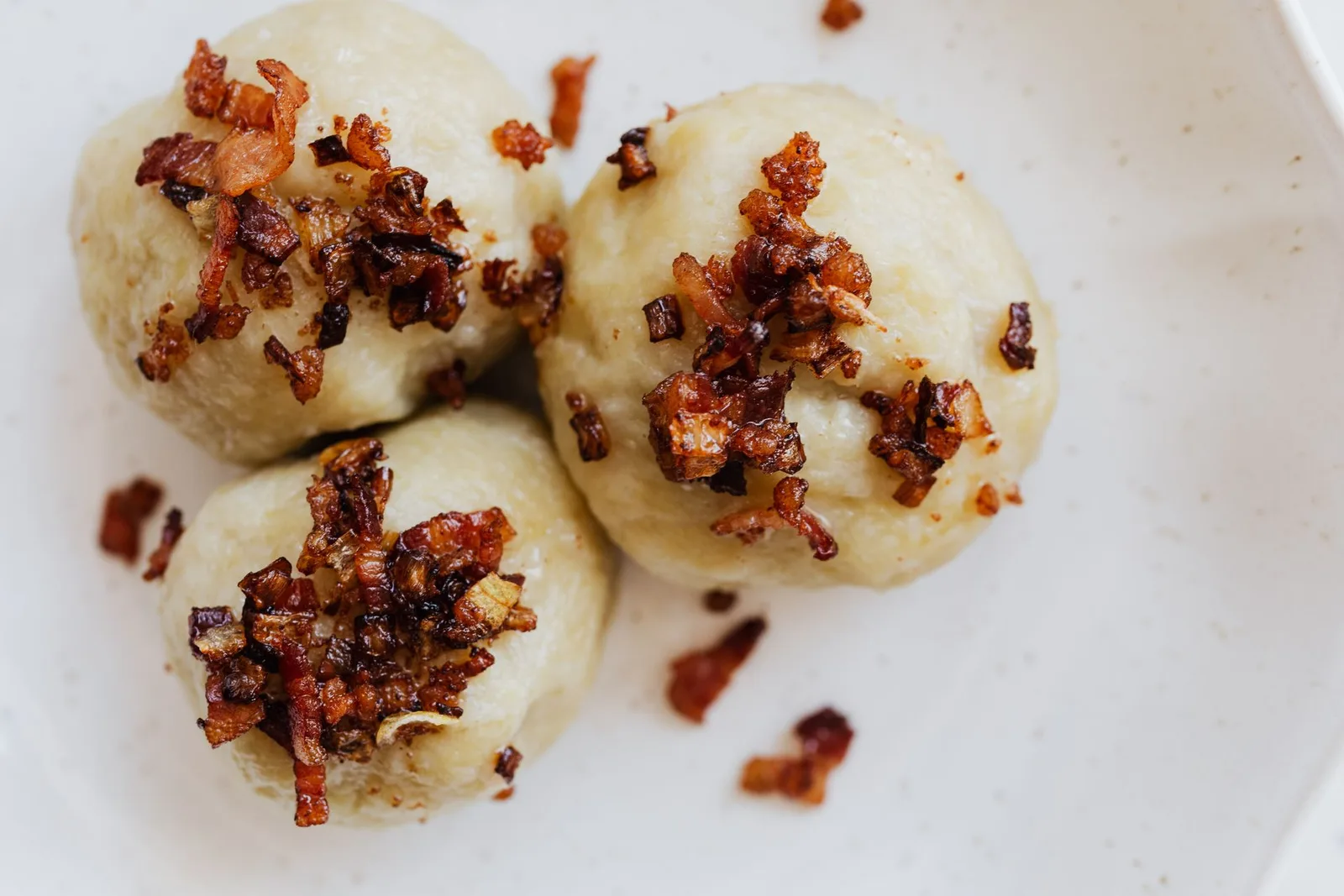
Cepelinai (potato dumplings), cold beetroot soup šaltibarščiai, and home-made midus: simple fare that holds its own surprisingly well against more refined neighbours.
What we put together for you depends on what you're after: stillness, architecture, or both.

Early summer for the lakes, August for the coast.
Lithuania has four distinct seasons. May and June are ideal for the lake country: long daylight, not too many mosquitoes yet, and nature at its greenest. July and August draw the most visitors to the coast, when the Baltic Sea finally warms up to something bearable.
September is a quiet favourite: calmer than summer, with the forests turning to mushroom season. Winter is harsh and dark, but anyone who loves snow finds a lit-up Christmas market in Vilnius and a frozen scene in Trakai.
Best time to visit Lithuania
Who else is at their best in these months?
May June September
Use the contact form to discuss your travel dates and preferences with us.
Practical, without the noise.
A few things that make travelling easier.
Getting there
Direct flights from Brussels to Vilnius; a layover can sometimes be quicker depending on the season.
Documents
A valid ID card is enough for EU citizens.
Getting around
Distances are small. Vilnius, Kaunas and Trakai are all under ninety minutes apart. The coast is further, around three to four hours' drive.
Health
No special vaccinations needed. A tick bite in the forest in summer isn't unthinkable. Long trousers on a walk are advisable.
Pace
Lithuania suits a relaxed trip. There's no need to move on every day. A few nights in the same place often works better.
The Curonian Spit, where the dune still shifts a little further each year.
No imitation of its neighbours.A country with a history, language and rhythm all its own.
Frequently asked questions
Is Lithuania a good introduction to the Baltic states?
Certainly, and it's a good starting point precisely because it's culturally the least like its neighbours. You get a story of its own straight away, rather than an extension of Scandinavia.
Can you combine Lithuania with Latvia or Estonia?
You can, though we'd recommend allowing enough time per country. A rushed tour through three countries does justice to none of them.
Is the language barrier a problem?
In Vilnius, Kaunas and the tourist towns on the coast, English is spoken well. Less so in the countryside, but that's exactly the kind of travel we plan for.
How many days do you need?
For a first introduction to the capital, the lake country and the coast, plan on nine to eleven days without having to rush.
- Flight time
- About 2 hours 30 minutes direct from Brussels to Vilnius
- Language
- Lithuanian: English is widely spoken in the cities
- Time difference
- One hour ahead of Belgium, year-round
- Currency
- Euro
- Best time to go
- May to September for lakes and coast, September for a quieter visit