

A country that refuses to be summed up by one peak.
Valleys and temple cities that tell as much about the country as the mountains do. This reaches far beyond Everest alone.
Nepal is often pitched as a waiting room for Everest, a country that only really begins where the base camps start. Arrive with that idea and you miss most of the story. Between Kathmandu, Patan and Bhaktapur lies a valley full of temple cities that stood long before any mountaineer ever set foot here, with woodcarving, squares and rituals still repeated daily.
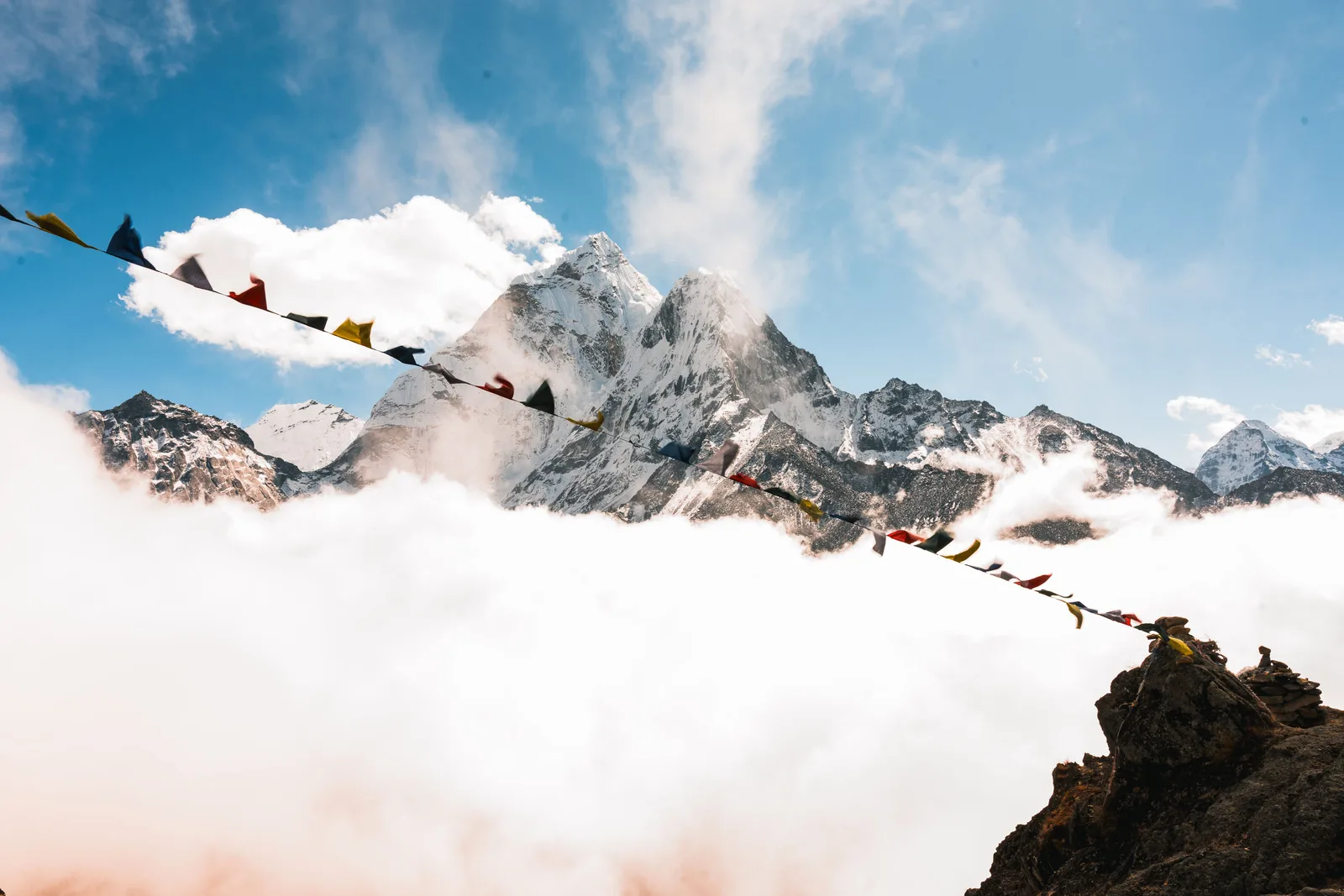
Further out, the landscape shifts faster than you'd expect from a country named after a mountain range: subtropical lowland in the south, rolling terraced fields in the middle, and only right up in the north the string of eight-thousanders that shapes Nepal's image worldwide. In between live Newari, Sherpa, Tamang, Gurung and Tharu communities, each with their own language, cuisine and way of using the landscape.
QualiMundi builds a trip through Nepal around that breadth, not around one peak. That can mean a journey spending weeks in the mountains, just as much as a trip that never climbs above a thousand metres and still digs deeper into the country than most treks do.
In short
Best time to go
October and November, just after the monsoon, with the clearest skies, and March and April, when the rhododendrons bloom. From June to September Kathmandu and Pokhara get most of their annual rain.
How long
Two to three weeks if you want to combine a trek with the Kathmandu Valley or Chitwan. Above 2,500 metres acclimatisation sets the pace, and mountain roads are slow.
Who it suits
For travellers who want to walk at their own pace, from a few days to a few weeks, and give the temple towns of the Kathmandu Valley as much time as the mountains.
What sets it apart
Hinduism and Buddhism are intertwined here: the Kathmandu Valley alone has seven monument zones on the World Heritage List, and Lumbini in the Terai is the birthplace of the Buddha.
Nepal is less one country than a stack of worlds.
The Kathmandu valley has little in common with Mustang, and Chitwan resembles neither. Reduce Nepal to mountains and you miss most of the map.
Kathmandu, Patan, Bhaktapur
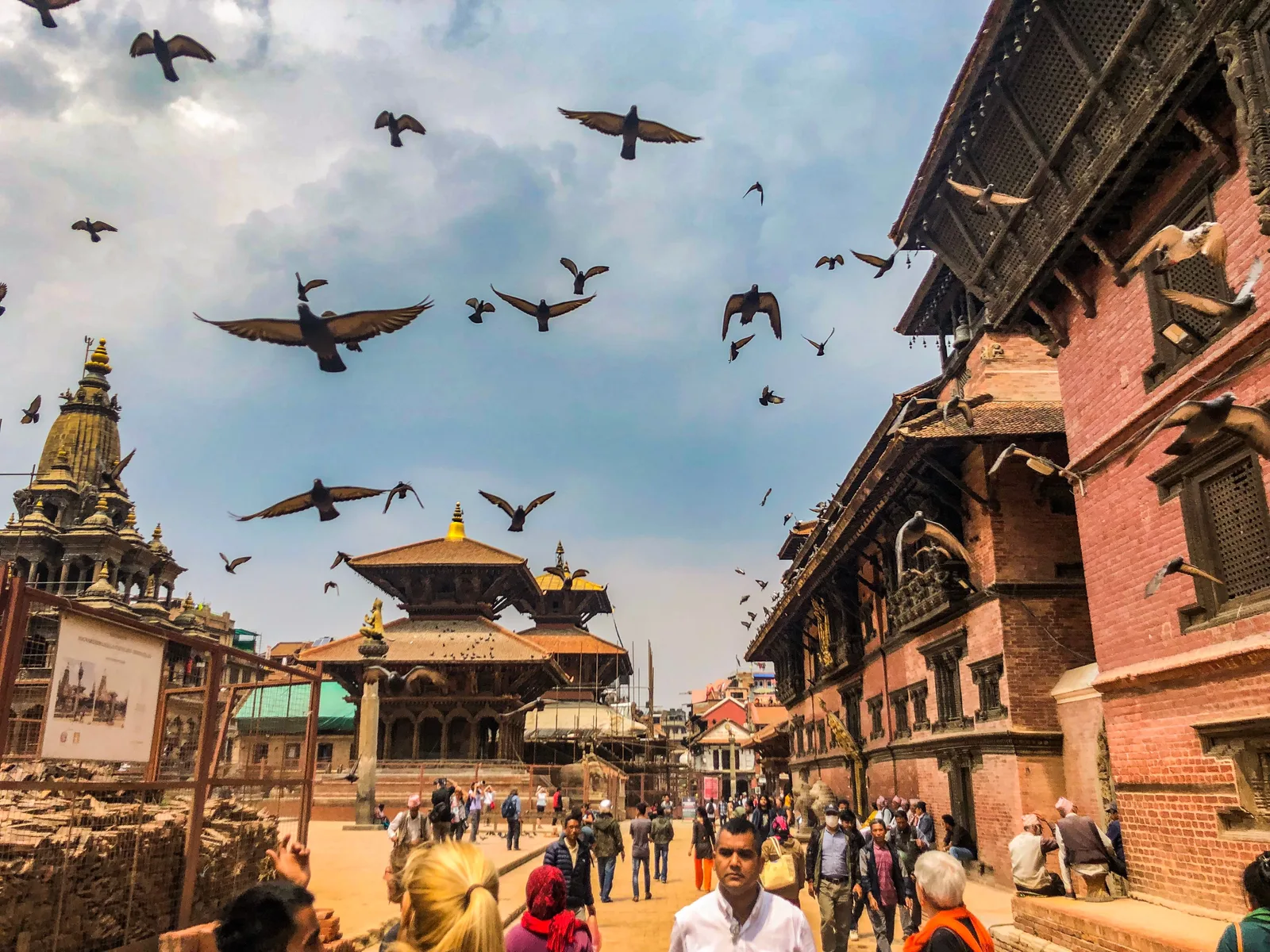
Three former kingdoms that once competed with each other, now three cities within walking distance of one another. Each square has its own temples, its own woodcarving, its own rhythm of morning offerings.
Pokhara and the Annapurna
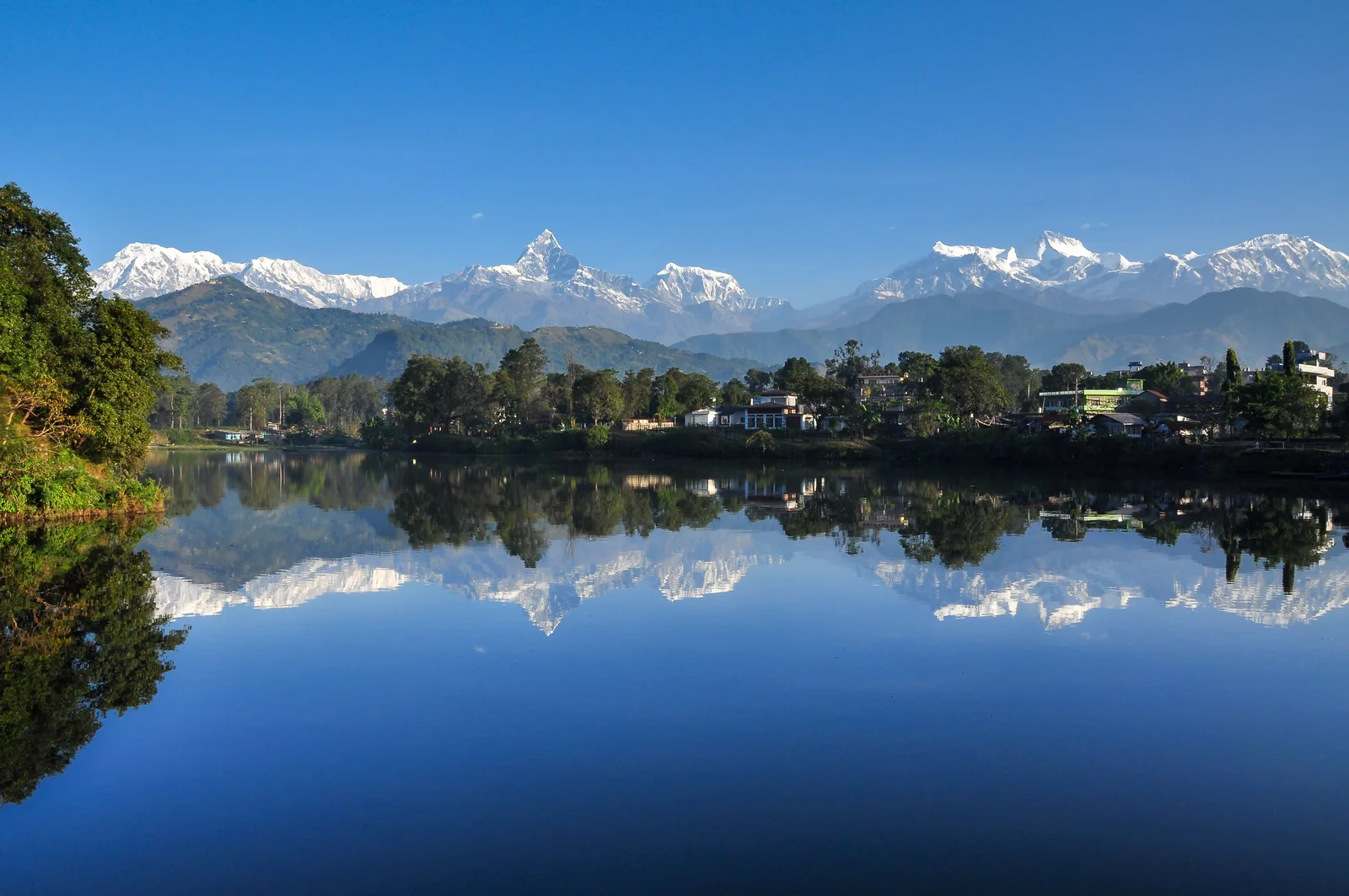
Pokhara sits on a lake that mirrors the Annapurna range on clear mornings. For some a base to head into the mountains, for others a place to do nothing for three days but watch that reflection.
Solukhumbu
Namche Bazaar, monasteries on mountain ridges, villages where daily life has revolved around yaks and trade over the passes for centuries, with or without a trek to the foot of Everest.
Langtang
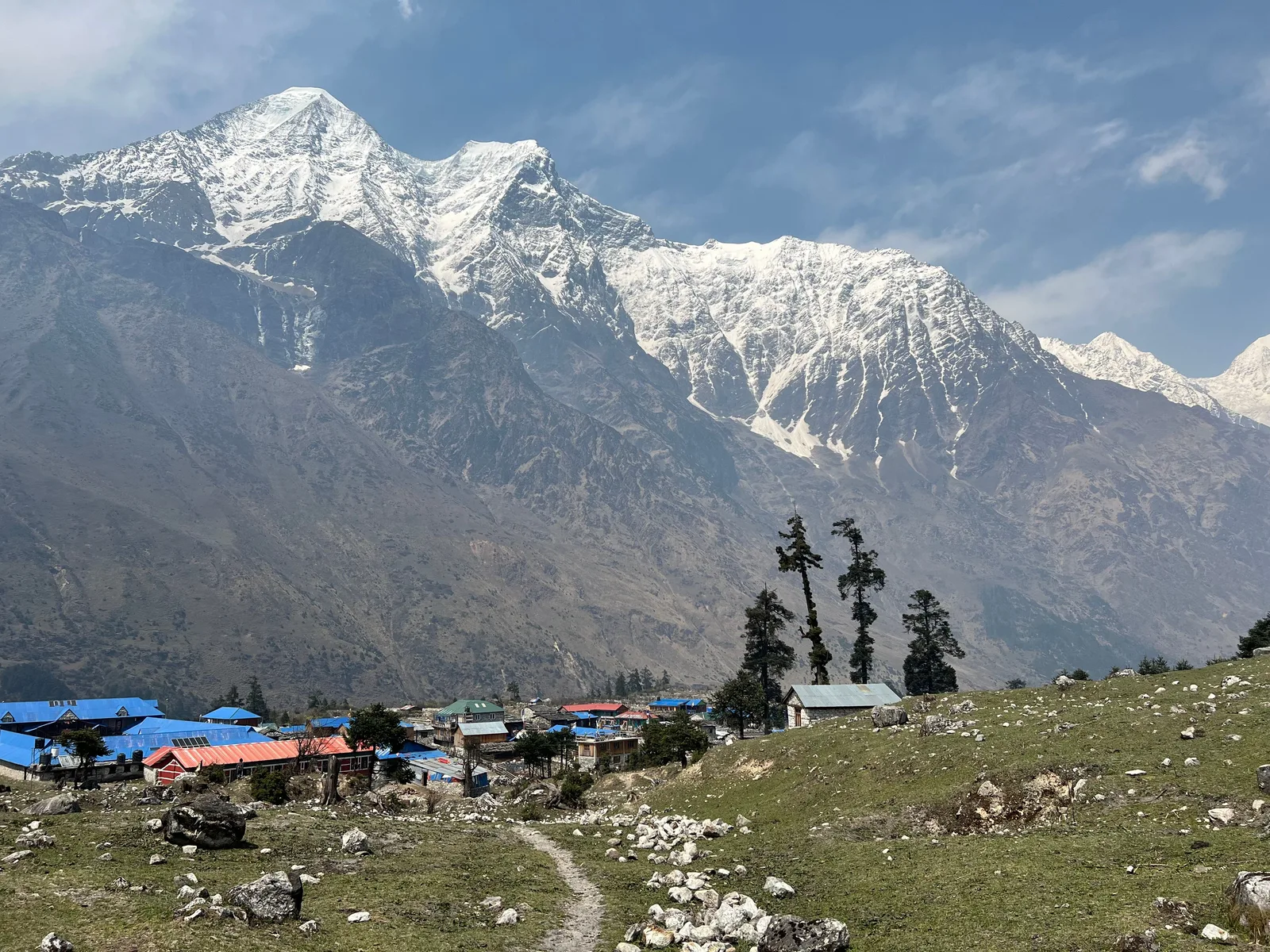
A day's journey from Kathmandu and yet entirely different: Tamang villages, a valley that rebuilt itself after the 2015 earthquake, and trails far quieter than those towards Everest or Annapurna.
Mustang
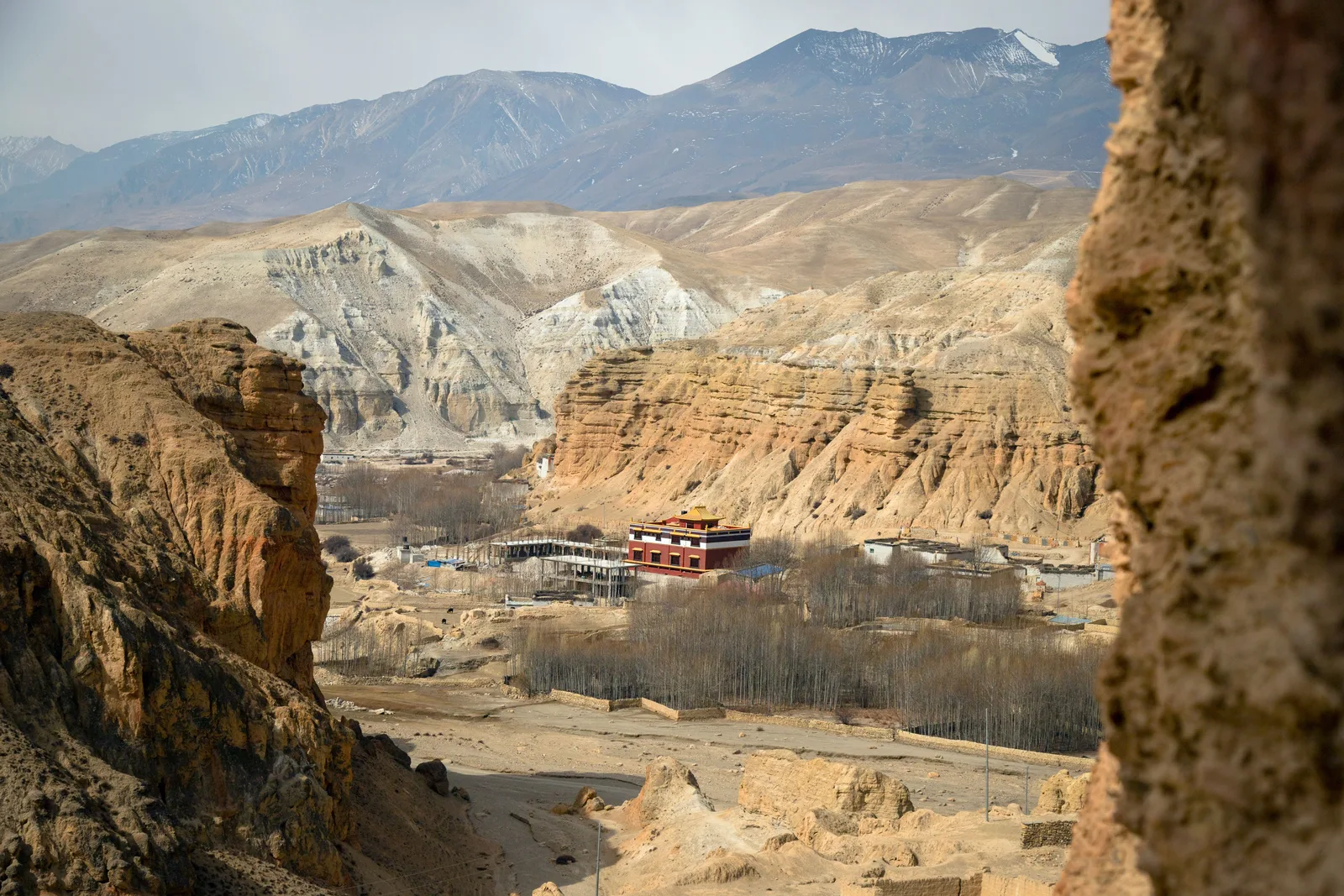
A high plateau that resembles Tibet more than the rest of Nepal, with the walled city of Lo Manthang at its heart. Closed to outsiders until the 1990s, still one of the least visited corners of the country.
Chitwan
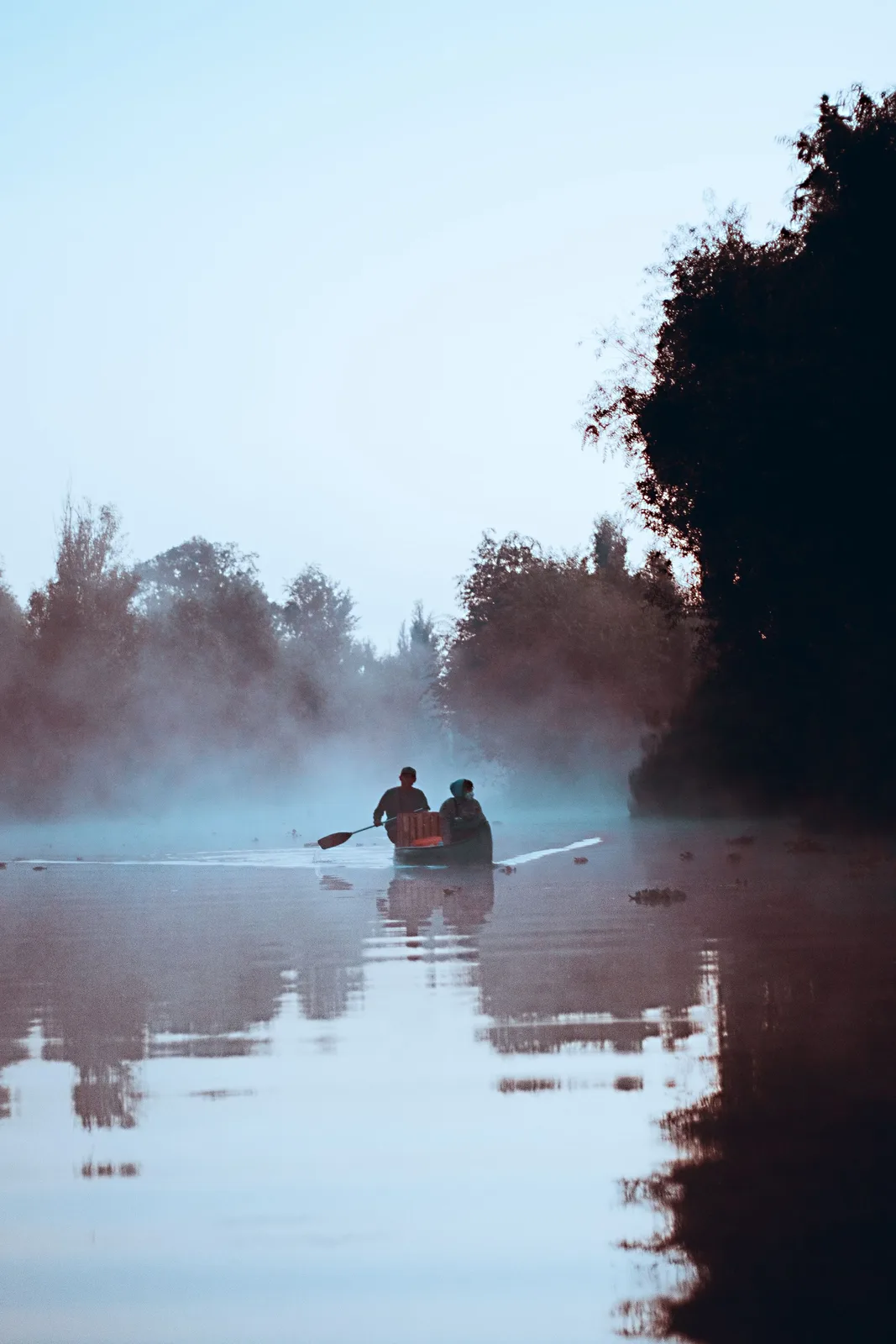
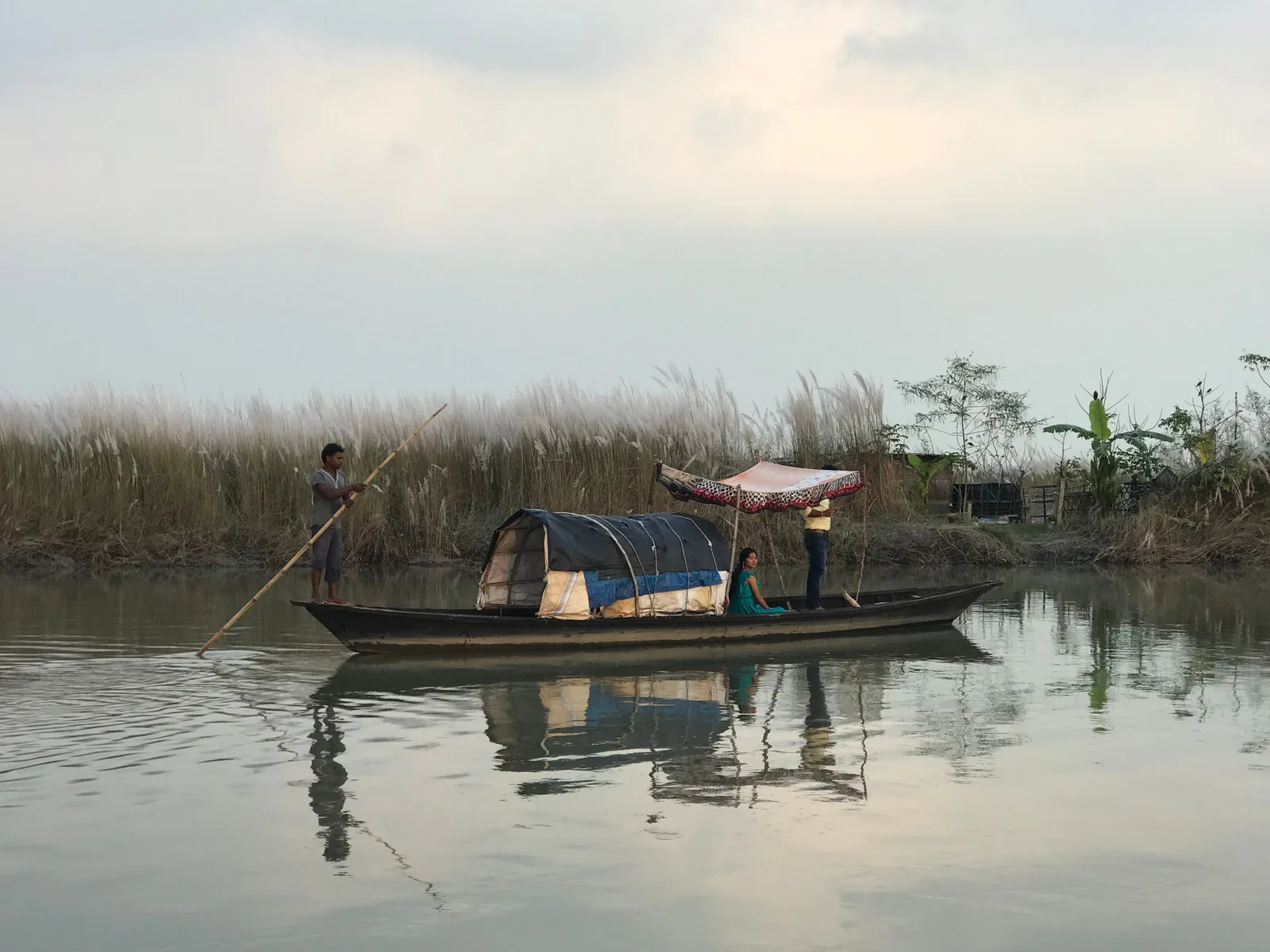
Subtropical national park in the south, where rhinos wade through tall grass and the Rapti river is crossed by canoe. A different Nepal from the mountains, just a few hours' drive from Kathmandu.
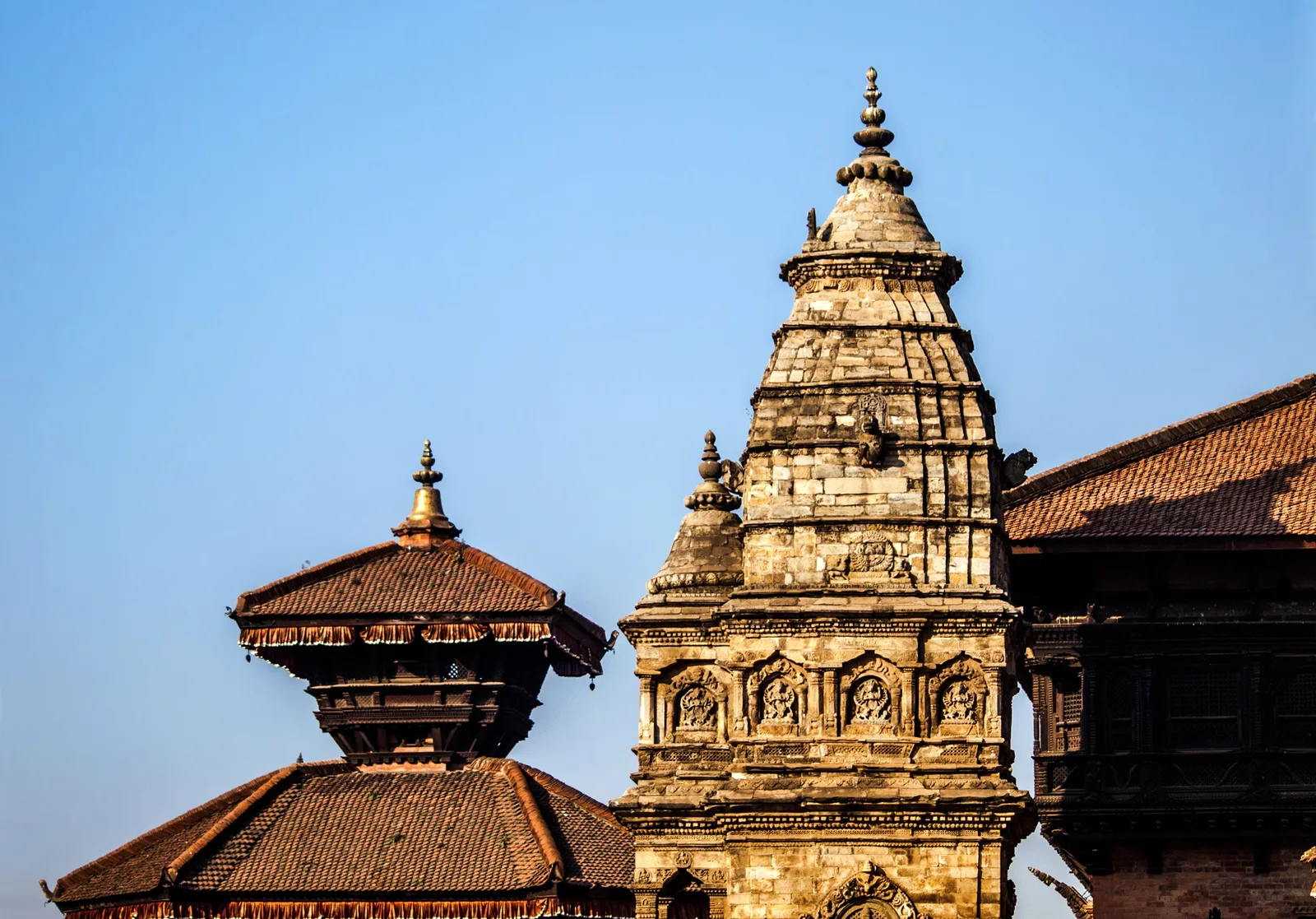


In Bhaktapur, the square is never done praying.
The Kathmandu valley holds seven monument zones on the UNESCO World Heritage List within an area you could cross on foot in a few days. This is no open-air museum: the squares of Bhaktapur are still used for prayer, trade and drying produce. Red chillies and grain lie drying in the sun beside centuries-old wooden temples.
Hinduism and Buddhism don't simply coexist here, they run through one another: the same temple is visited by both communities, the same festivals, Indra Jatra, Bisket Jatra, draw both in. Newari craftsmanship, from woodcarving to metalwork, is the signature of the whole valley, from house doors to temple roofs.
Nepal is not a peak to climb.It is a country to read layer by layer.

From jungle to glacial valley, sometimes in the same week
Chitwan
Elephant grass, sal forests and the Rapti river make up one of the few places in Asia where rhinos still live in the wild. A jeep or a quiet canoe trip brings you closer than any zoo ever could.
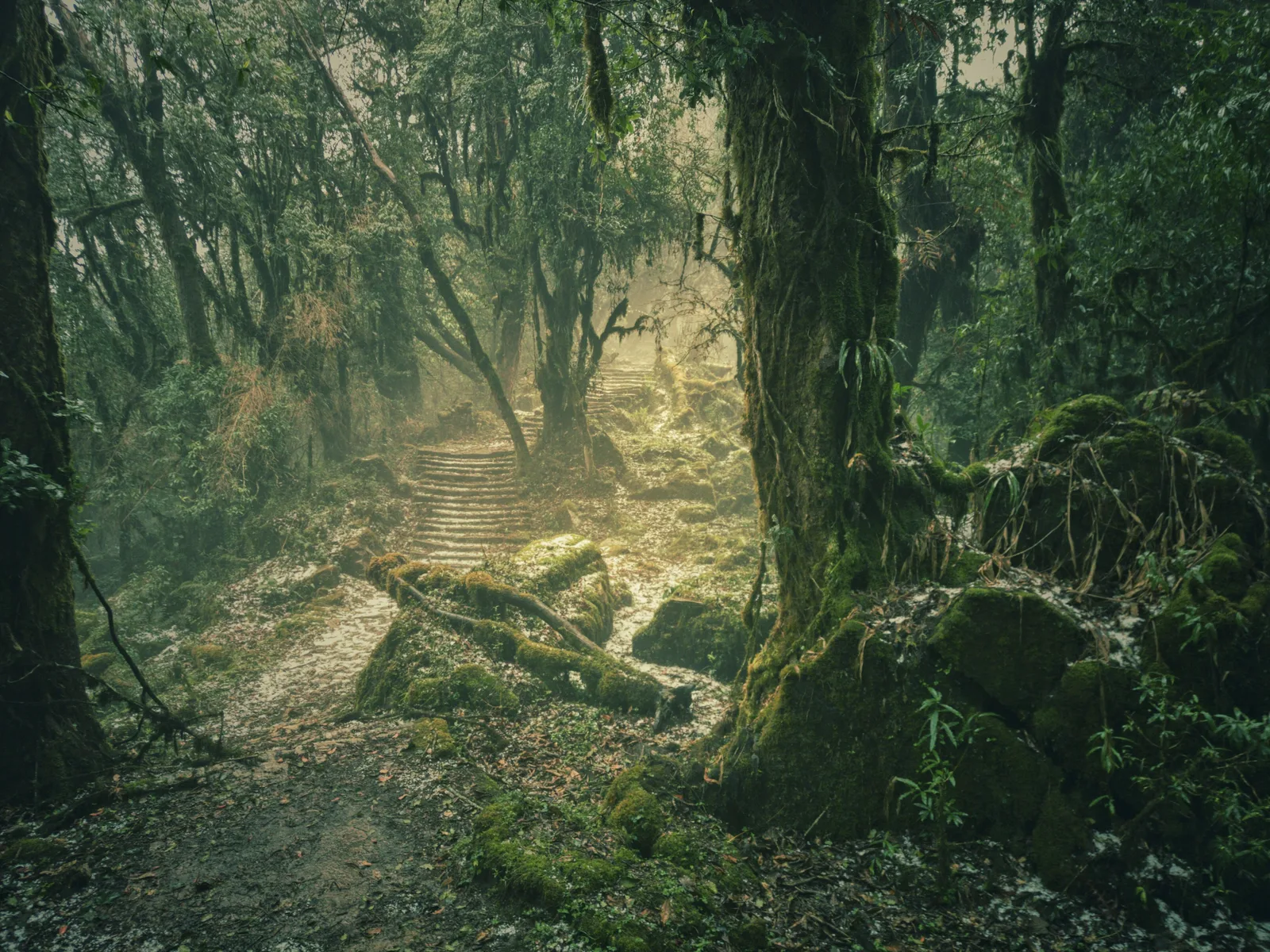
Flowering mountain forests
In March and April, the slopes around Ghorepani and Langtang turn red and pink with rhododendron, Nepal's national flower, growing here as forest rather than in a border.
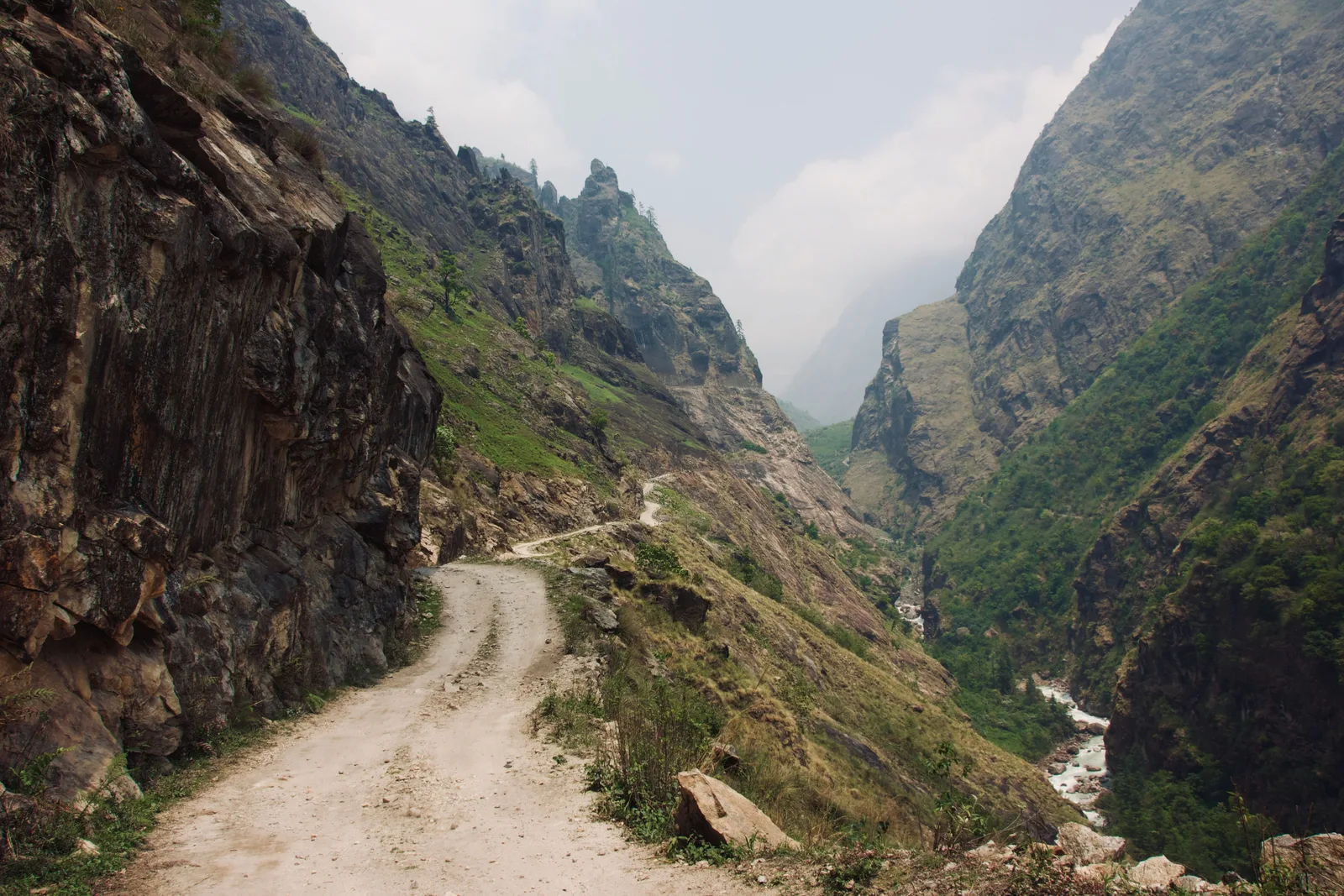
Glacial valleys
Beyond the last villages begin valleys of rock, ice and moraine, where the silence is as striking as the eight-thousanders you sometimes glimpse in the distance.
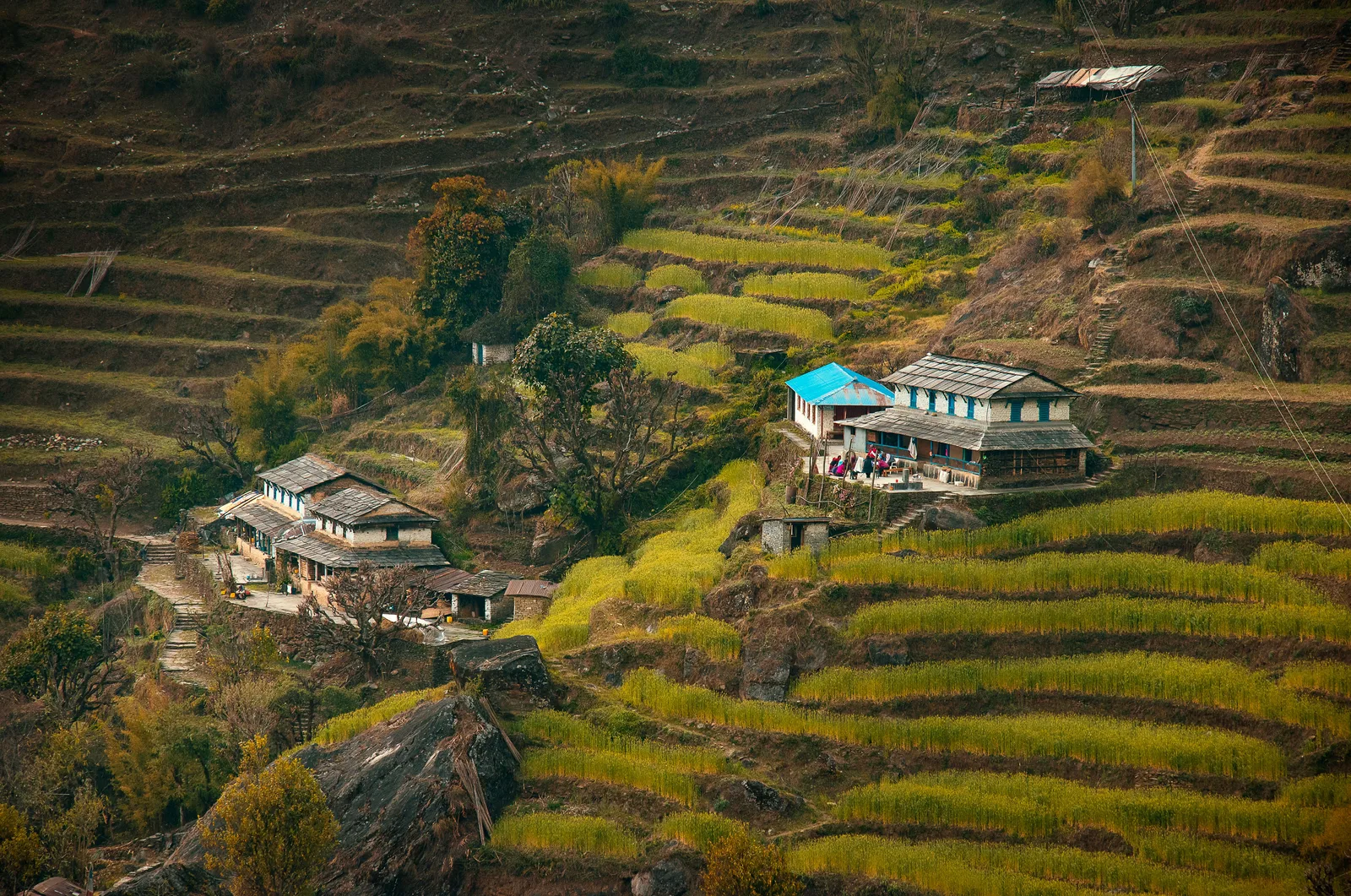
Terraced fields beneath the Annapurna: the path there tells as much of a story as the summit.
Nepal gives back as much on a temple square as on a mountain pass
No fixed programme, but a number of experiences that recur throughout a trip through Nepal, in whatever order and intensity suits you.
Walking at your own pace
From a trek of a few days to one of several weeks. Nepal's mountains lend themselves to both, without a base camp needing to be the only goal.
A night with a Sherpa or Tamang family
Sleeping under the same roof as the family who works the land, eating whatever is ready that day, and watching a mountain village wake up in the morning.
Rising early for a temple square
Bhaktapur or Patan before sunrise, when the first offerings are brought and the squares still belong to the residents rather than the cameras.
Into the jungle, on foot or by canoe
Chitwan isn't only seen from a jeep. A walk with a local guide or a canoe trip brings you eye to eye with an entirely different Nepal.
A flight over the Himalaya
For those who want to see the mountains without walking into them: a morning flight along the Himalayan range shows in forty minutes what a trek takes weeks to reveal.
Most travellers leave Nepal with a list for next time, not a box ticked off.
When you go decides which Nepal you see
The monsoon, from June to September, washes out mountain trails and hides the views, a period to avoid if you want to see the Himalaya, unless you deliberately choose Mustang's rain-shadow region.
October and November follow right after the monsoon: the air is at its clearest, the terraced fields are still green and it's the season of Dashain and Tihar, the country's most important festivals. March and April bring a second peak, with rhododendron forests blooming across the hills.
Best time to visit Nepal
Who else is at their best in these months?
April October November
Use the contact form to discuss your travel dates and preferences with us.
Practical, without the noise.
Nepal calls for a different kind of planning than most destinations. Not harder, just slower.
Getting there
Direct flights from Europe to Kathmandu are scarce; most journeys route through a hub in the Middle East.
Documents
Which travel documents you need depends on your nationality, and entry rules change regularly. We go through the current requirements with you before you leave.
Altitude and health
Above 2,500 metres, acclimatising isn't optional, it's a necessity. We build the pace of a trip around it.
Distance and time
A hundred kilometres in the mountains can mean a full day's drive; distance on the map says little about travel time.
Connectivity
Wifi and mobile coverage are good in the Kathmandu and Pokhara valleys, and drop off the higher and more remote a village lies.
- Flight time
- About 10 to 12 hours, with one stopover
- Languages
- Nepali as the lingua franca, more than 120 local languages, English in the tourism sector
- Time difference
- 3 hours 45 minutes ahead of Belgium in summer, 4 hours 45 minutes in winter
- Altitude range
- From around 60 metres in the Terai to 8,849 metres at the summit of Everest
- Best time to go
- October-November and March-April, outside the monsoon and the coldest winter season