

Desert, mountains and coast lie a few hours' drive apart, and the cities are every bit their match.
Three landscapes within a single day's drive of each other.
Drive two hours south from Marrakech and the city's red earth turns to mountainside. Keep driving for the rest of the day and it becomes dune. That same day could have begun with snow on a mountain pass above two thousand metres. Morocco is a country that refuses to be captured in a single landscape, and the same holds for its cities: Fez, where tanneries have worked the same stone vats for nine centuries, has little in common with Essaouira, where fishermen build their boats against a wind that never quite settles.
What stands out about Morocco isn't the distance between these worlds, but how small it turns out to be. A guide driving through a cedar forest in the Atlas in the afternoon can have you at a table in a riad with a courtyard and fountain that same evening. The transition doesn't feel rushed. It's simply how tightly this country fits together.
In short
Best time to go
March to May, and October and November: mild in the mountains and still pleasant on the edge of the desert. In summer the interior is scorching while the Atlantic coast stays fresh, and in winter snow falls in the High Atlas.
How long
Ten days to two weeks for two or three regions, such as Marrakech, the High Atlas and the desert. The dunes lie a long day's drive beyond the mountain passes, so with one week choose one or two regions.
Who it suits
For travellers who want to combine a medina and a riad with walking in the Atlas or a night on the edge of the desert, and who would rather leave the long distances to a private driver.
What sets it apart
Morocco has both a Mediterranean and an Atlantic coastline, and in Toubkal (4,167 m) the highest peak in North Africa. Since 2011 Tamazight has been an official language alongside Arabic.
Six landscapes, no two skies alike
Morocco is often reduced to Marrakech and the desert, but the country stretches from a Mediterranean coastline to an Atlantic one, cut in two by a mountain range.
Marrakech and the High Atlas
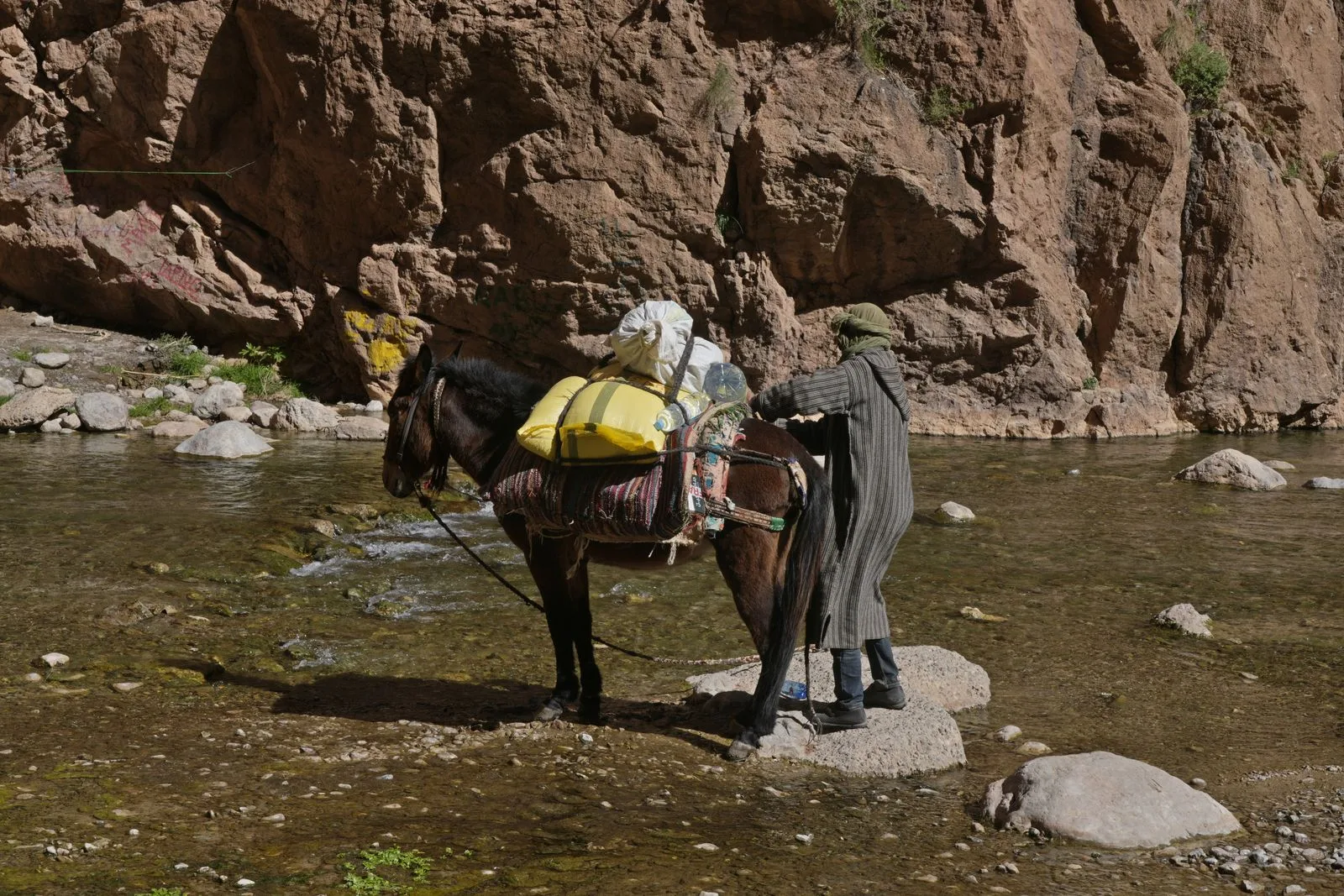
The ochre walls of the medina lie barely an hour from mountain villages where snow lingers into April. After a few days in the city, head into the Ourika or Imlil valley and trade the bustle of Jemaa el-Fnaa for mule tracks and mudbrick houses against the slope.
Fez and Meknes
Fez el-Bali is one of the largest car-free urban centres in the world, with tanneries, coppersmiths and a university older than most in Europe. Meknes, an hour away, is quieter and less visited, with imposing gates from the era of Sultan Moulay Ismail.
The edge of the Sahara
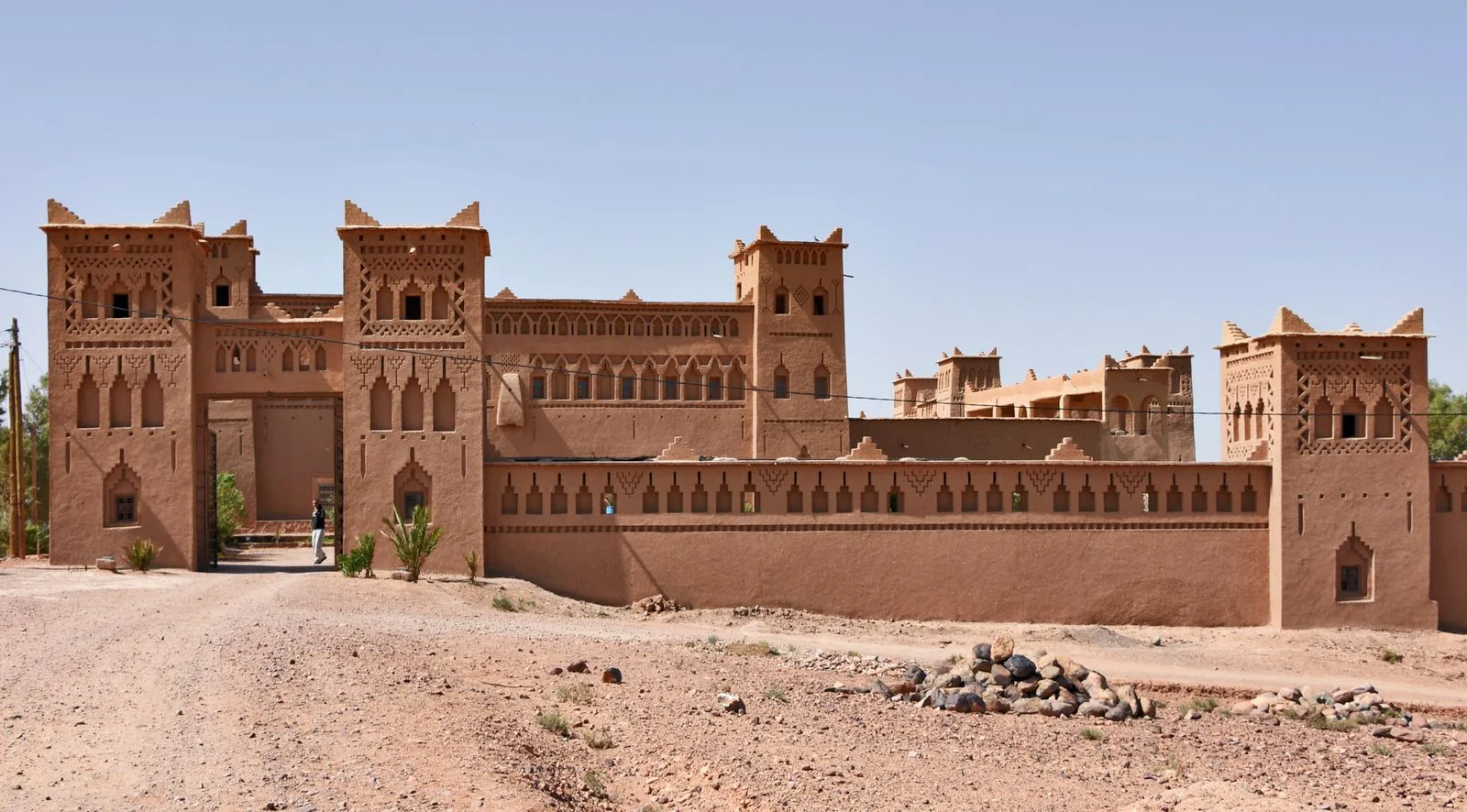
Past the Tizi n'Tichka pass, the landscape turns into rammed-earth kasbahs and palm groves along the Draa valley, until the road runs out at the dunes near Merzouga or Erg Chigaga. Rarely does a mountain pass lie so close to a sand dune.
The Atlantic coast
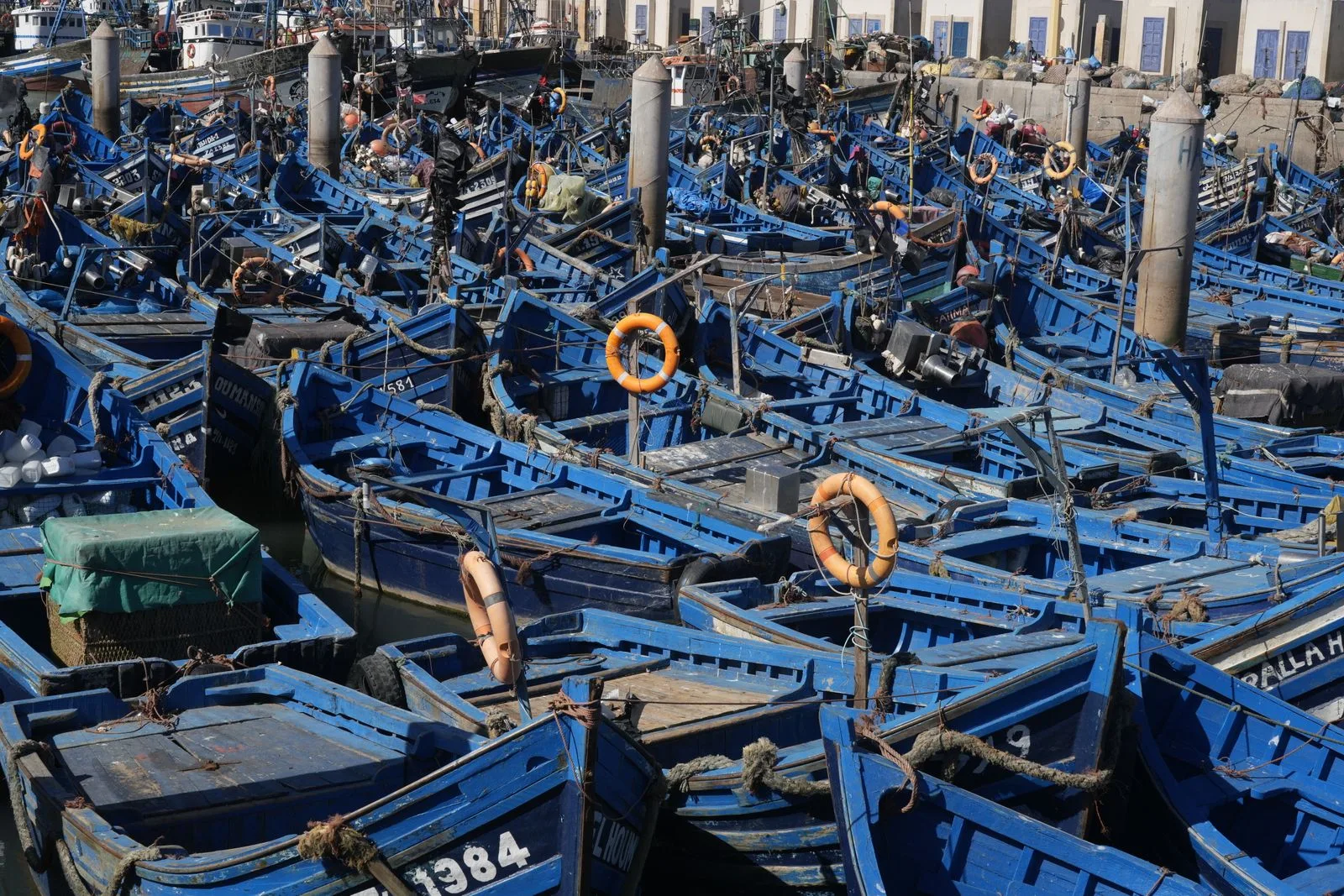
Essaouira is built for the wind: blue fishing boats, walls that break the surf, a medina that feels calmer than Marrakech's. Further north lie Oualidia with its oyster farms and Asilah with its whitewashed streets.
The Rif and Chefchaouen
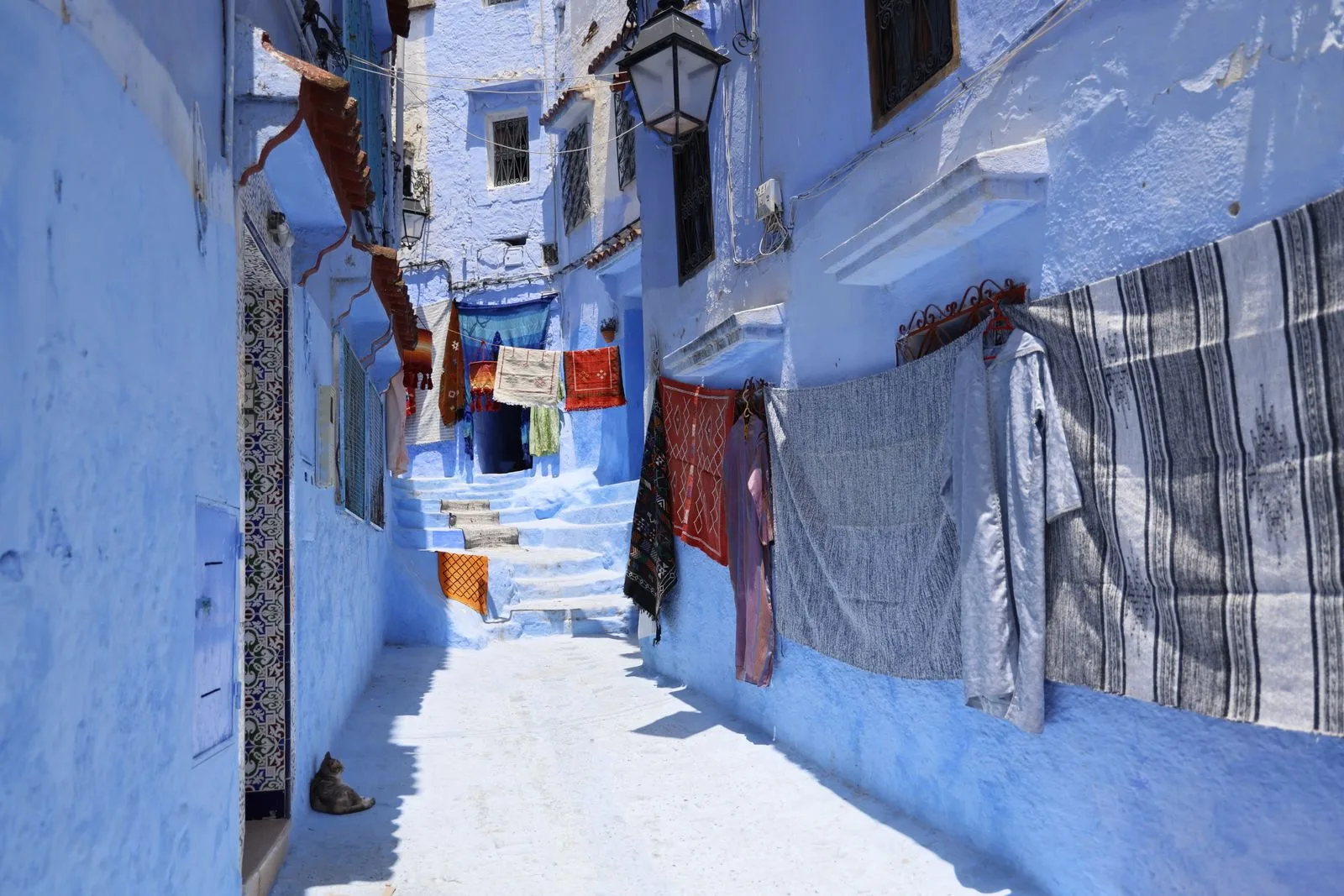
Chefchaouen, its blue-painted medina set against the mountainside, is the best-known face of the Rif, but the mountains behind it, with the Talassemtane range and cedar forests, see few visitors. Smaller, greener and less hurried than the south.
Anti-Atlas and the Souss valley
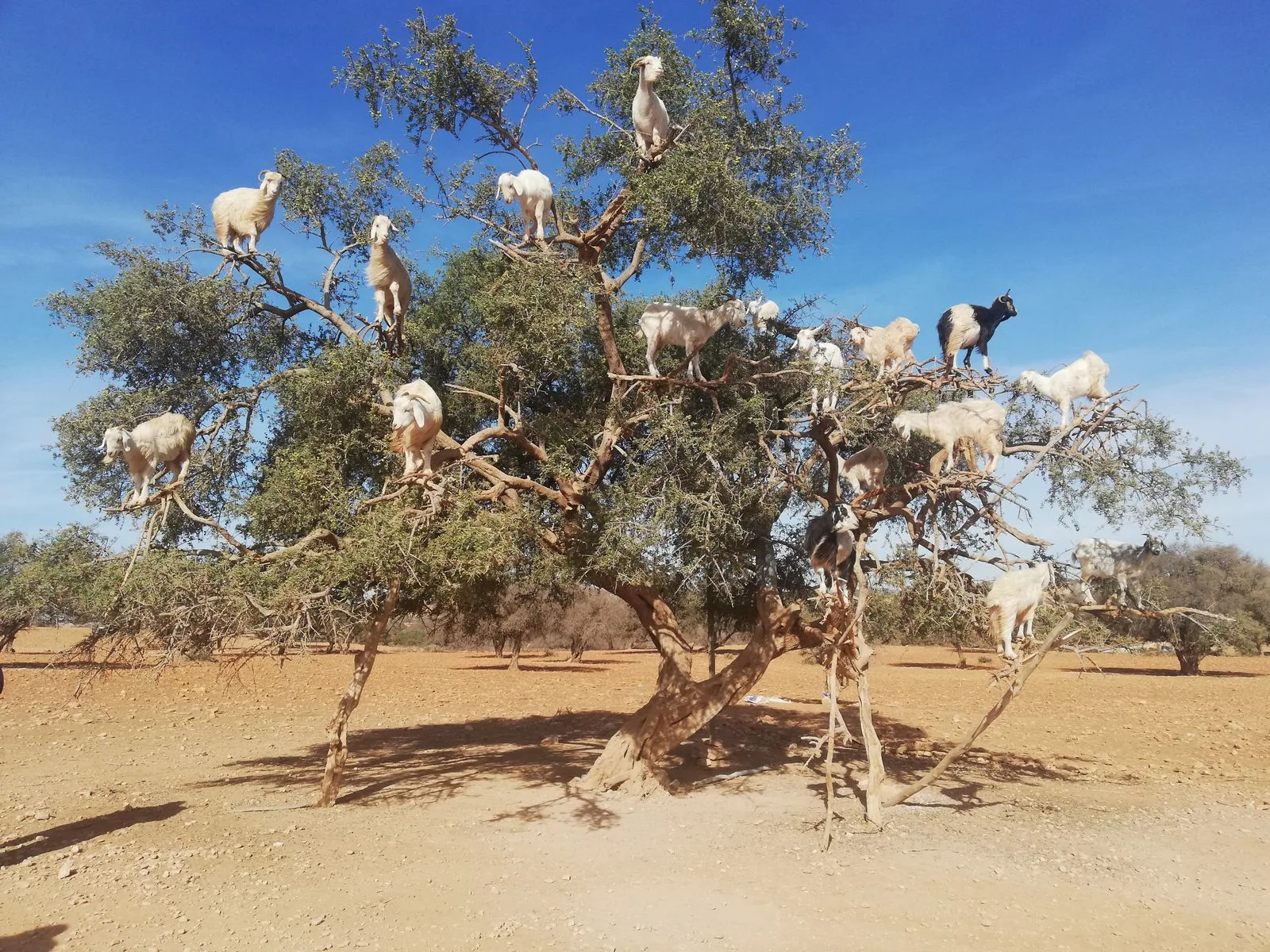
Around Taroudant and Tafraoute the landscape turns rocky and still: argan trees with goats climbing them, rock formations that turn pink at sunset, almond blossom in February. Morocco without the crowds of the better-known routes.


A craft practised daily, not staged for visitors
In Fez, a tannery has stayed in the same family for generations; in the Atlas, a Berber woman weaves a carpet to a pattern learned from her mother, not from a manual. That distinction, between what's done for visitors and what simply happens, with or without an audience, is where Morocco sets itself apart from destinations where the 'authentic' has become an attraction.
Our local expert works with guides who come from the region they show: a muleteer from the Ourika valley, a driver who knows the mountain passes as well in snow as in sun, a riad owner in Fez who seats her guests at the same table as her family. A difference you feel in the pace of a conversation, not in a brochure.
More than a sunset camel ride
Morocco suits both those who want to stay active and those who mainly want to slow down, often within the same trip.
Trekking the High Atlas
Village to village with a local muleteer, staying with host families rather than in a tented camp.
A night with a desert family
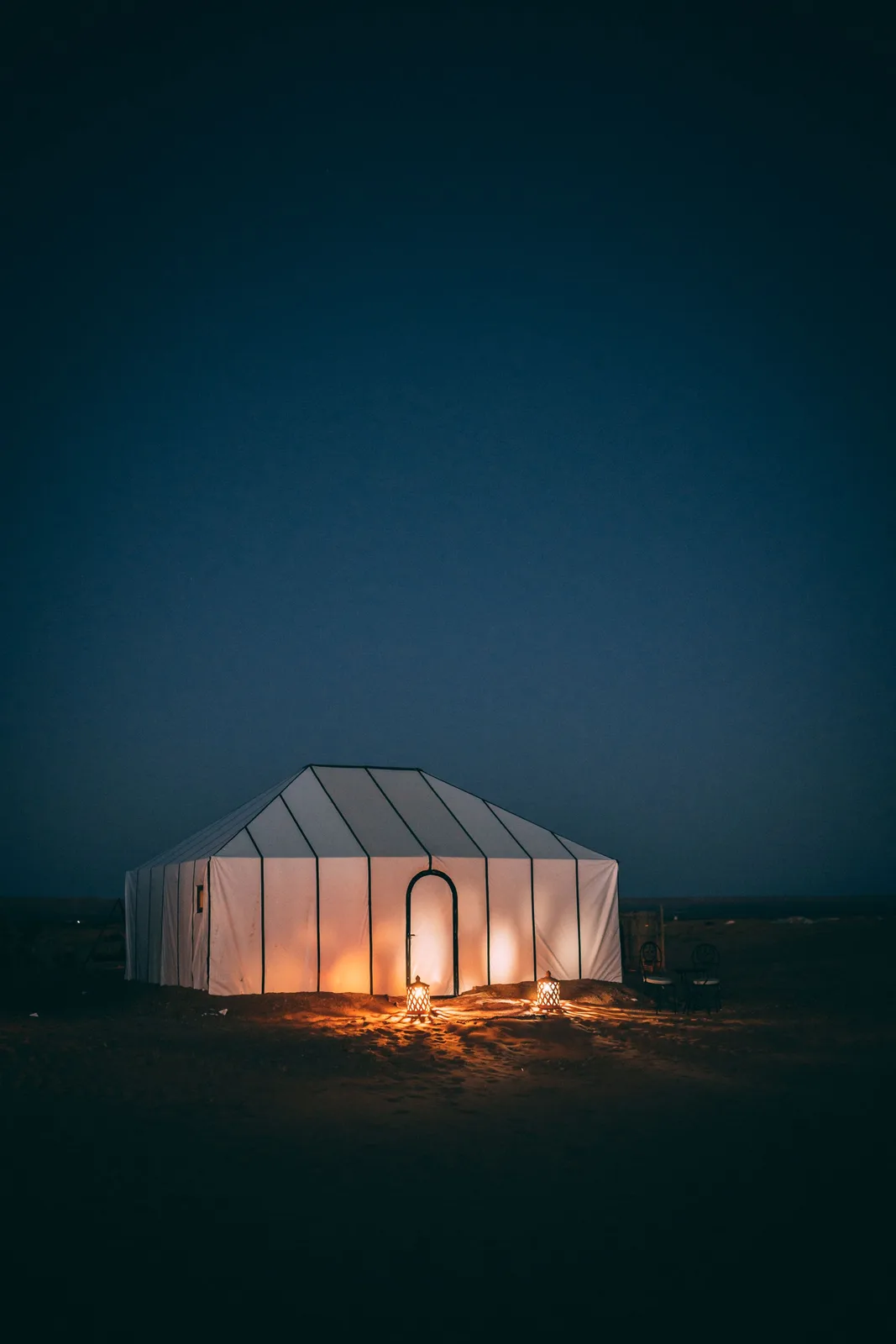
Beyond the tourist camps near Merzouga lie smaller, family-run camps where the number of guests can be counted on one hand.
Working alongside a craftsman in Fez
Half a day in a leather workshop or a ceramics studio, not as a demonstration but as a genuine working session with the craftsman himself.
Surfing and yoga on the Atlantic coast
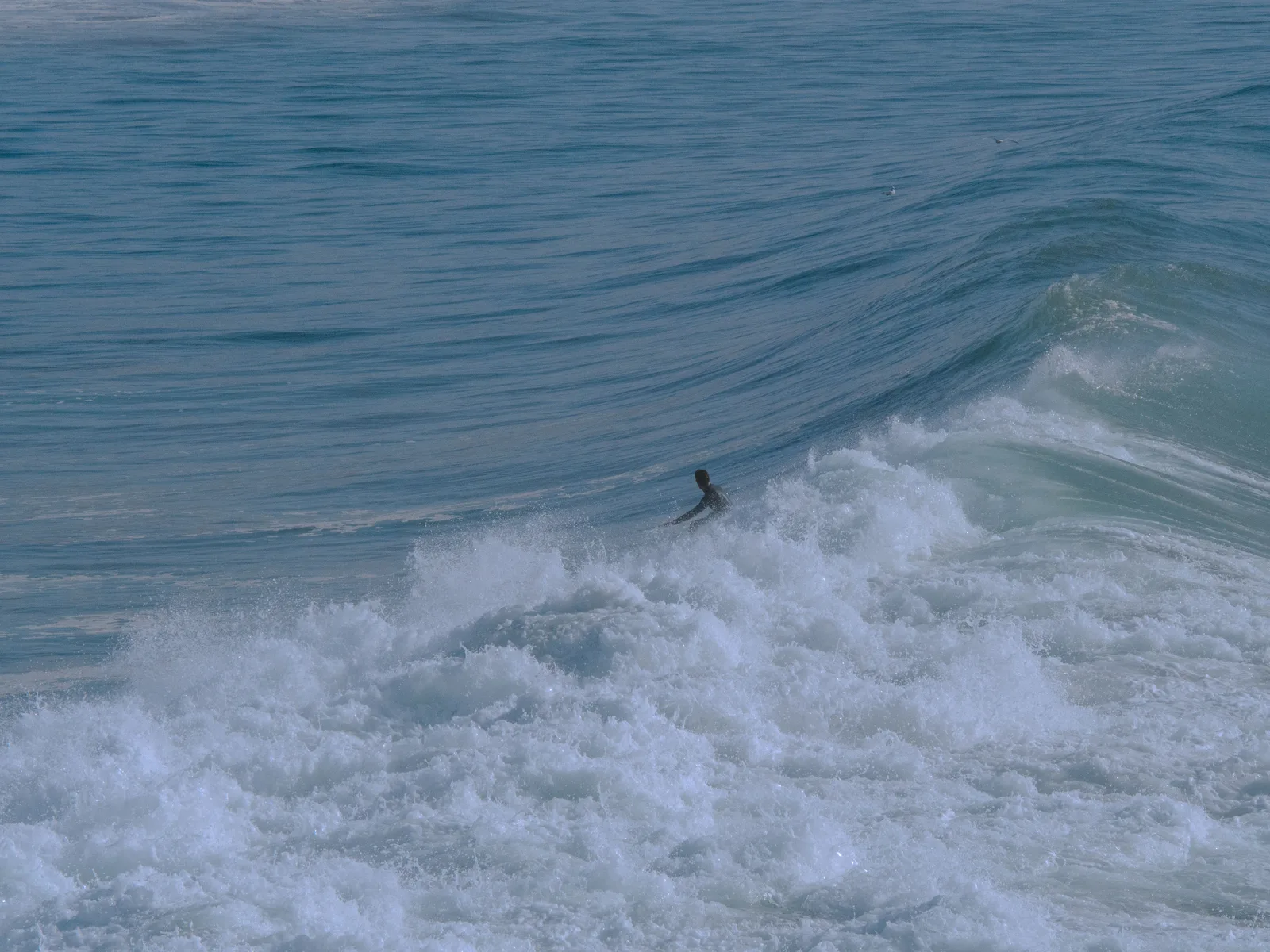
Taghazout and the bays around it offer waves for beginners and experienced surfers alike, at a calmer pace than Marrakech.
Almond blossom in the Anti-Atlas
In late February, the valley around Tafraoute turns white and pink. A moment few foreign visitors know about.
None of these experiences stand alone. They only take on meaning in the order and pace of a trip built around you.
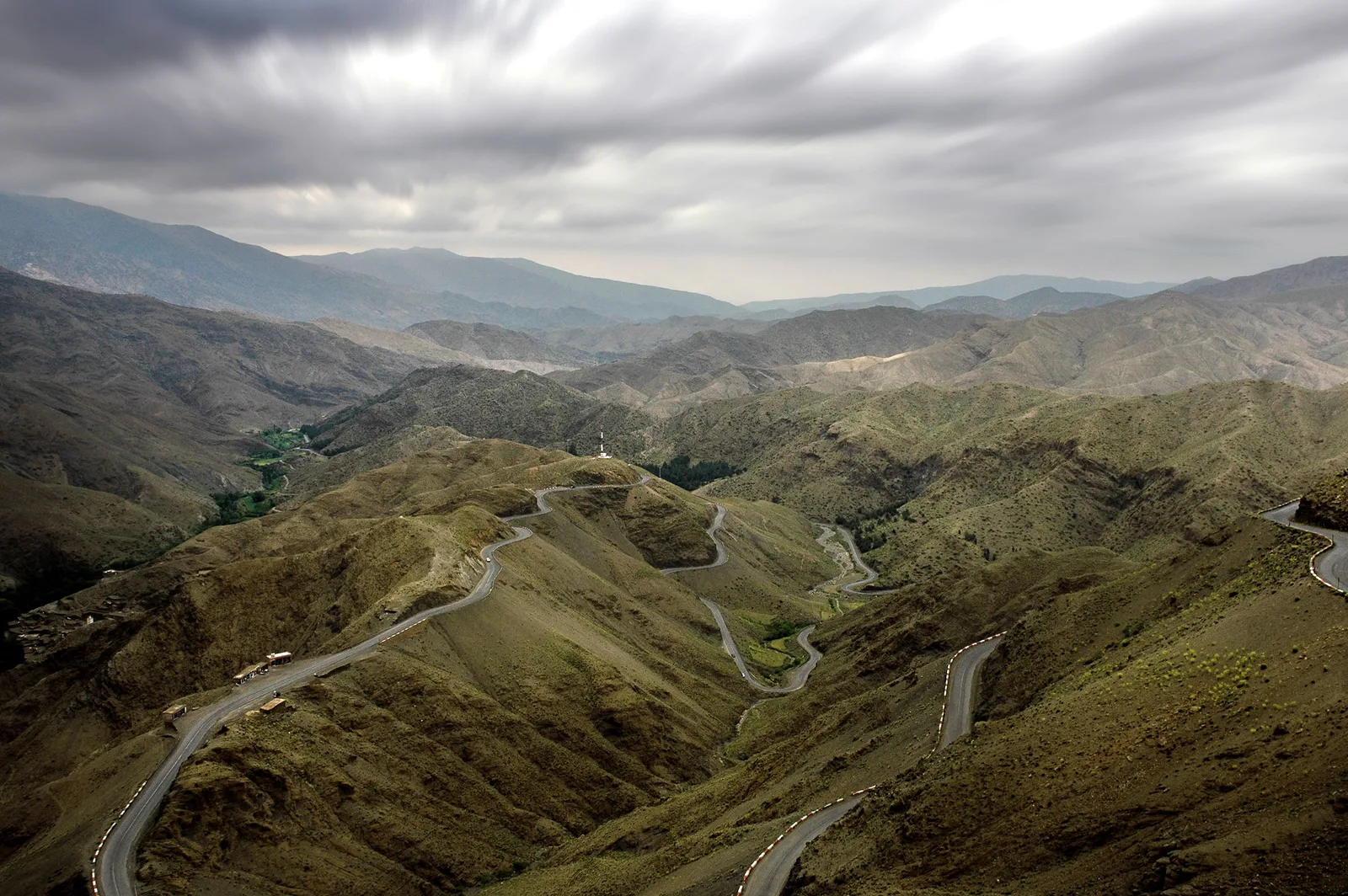
The N9 between Marrakech and Ouarzazate climbs over the Tizi n'Tichka pass, more than 2,200 metres high. The shortest road between the country's two worlds.

When you go shapes your trip more than where you go
Morocco has no single season. It has at least three, depending on where you are. Summer is scorching inland and in the desert, with temperatures in Marrakech and Zagora well above forty degrees; on the Atlantic coast the wind keeps things pleasant instead. Winter brings snow to the High Atlas and cold nights in the Sahara. By day, it can still be sunny and mild.
Spring and early autumn are the easiest: mild enough for the mountains, not yet too hot for the desert, and the almond trees already blossoming in the south-west by late February.
Best time to visit Morocco
Who else is at their best in these months?
March April May October November
Use the contact form to discuss your travel dates and preferences with us.
Practical, without the noise.
A few things that make planning easier.
Getting there
Direct flights from Brussels to Casablanca and Marrakech; getting around the country is usually done with a private driver, given the distances and mountain roads.
Documents
Which travel documents you need depends on your nationality, and entry rules change regularly. We go through the current requirements with you before you leave.
Health
No mandatory vaccinations; better to avoid tap water outside major hotels, bottled water is available everywhere.
Pace
Allow for longer drive times through the mountain passes. The country rewards those who build in time between regions instead of moving every day.
Clothing and climate
Even in summer, nights cool sharply in the desert and mountains; an extra layer is never wasted.
Morocco isn't one trip with three stopovers.It's three landscapes that happen to share a border.
Frequently asked questions
Is Morocco suitable for driving yourself?
The main roads are well maintained, but the mountain passes call for experience and local knowledge, especially in winter. Most travellers combine a private driver for the mountain routes with more freedom in the cities and along the coast.
How hot does it get in the Sahara?
By day it can climb above forty degrees in summer, while winter nights can dip just below freezing. Spring and autumn offer the most comfortable middle ground.
Is a week enough for Morocco?
For one or two regions in depth, yes, for example Marrakech with the High Atlas, or Fez with a trip to the desert edge. Trying to see the whole country in a week mostly means time on the road.
How welcoming is Morocco for those who don't speak French or Arabic?
English is widely spoken in tourist centres, and our local guides bridge the rest. Outside those centres a few words of French help, but it's not required.
- Flight time
- About 3.5 hours from Brussels
- Languages
- Arabic, Tamazight (Berber) and French; English in tourist centres
- Time difference
- None, Morocco follows the same clock as Belgium
- Elevation range
- From sea level to over 4,000 metres in the High Atlas
- Best time to visit
- March to May and October to November