
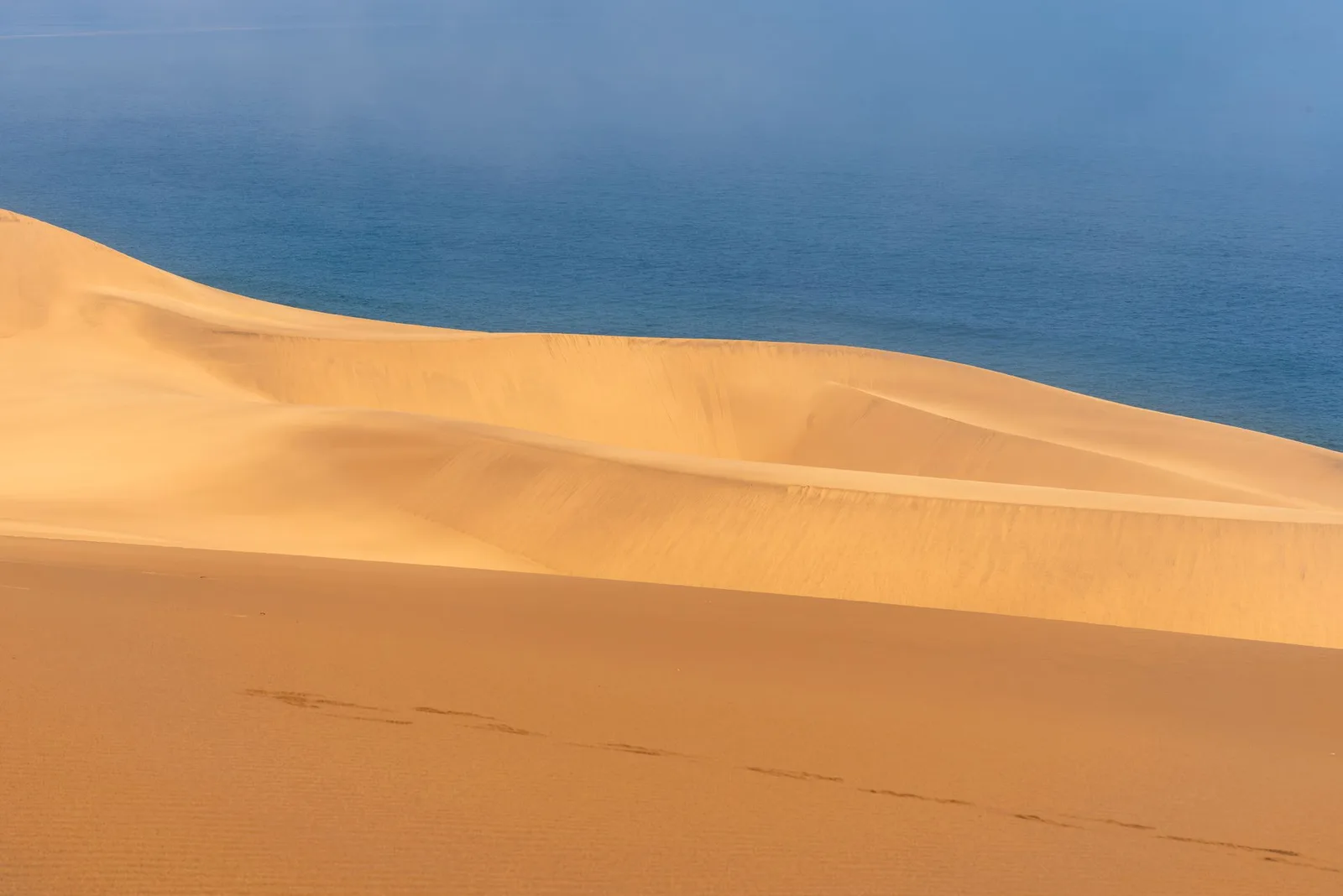
A peninsula that rebuilt itself within a few decades, yet stays quiet and bare just beyond the new skyline.
Barely forty years ago, Doha was little more than a low coastline of fishing boats and a fort. Today a skyline stands that rivals Singapore or Dubai, raised at a pace few cities have ever matched. Anyone who only looks at it misses the land around it: a peninsula barely 160 kilometres long, where the desert begins within half an hour's drive and the Gulf defines the coast on three sides.
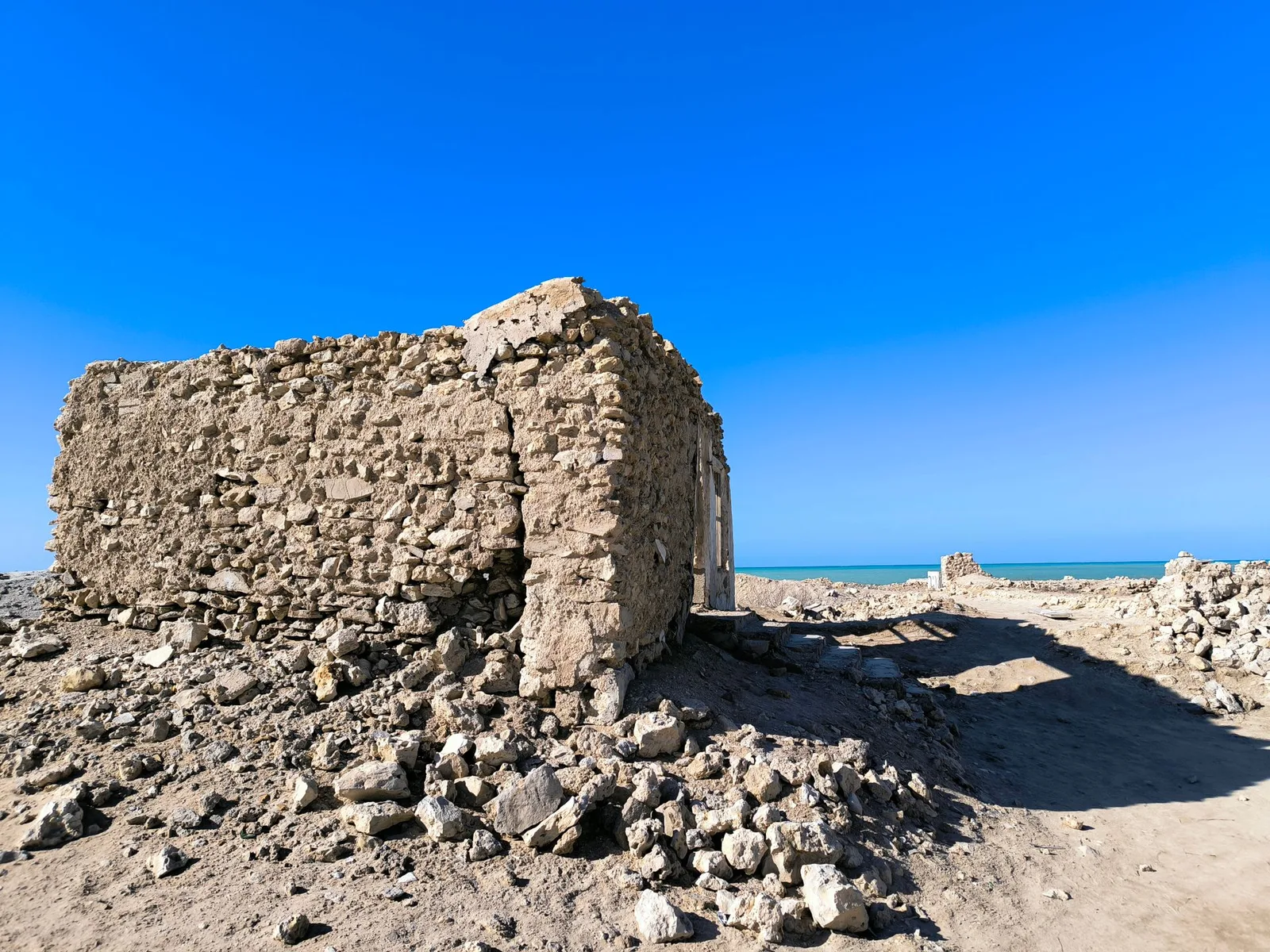
Just beyond that new city lies another Qatar. In Al Wakrah, fishermen still haul their boats onto the sand every day. In the south, at Khor Al Adaid, the dunes slide straight into the sea with no road leading there. In the north, beside the fort of Zubarah, lie the remains of an eighteenth-century pearling town, from long before an oil platform ever appeared on the horizon.
We don't build an itinerary that drags you from skyline to dune to souq. We'd rather ask what you're actually after: a silent morning, a conversation with a falconer, a night in the desert without a generator, and work out from there which part of Qatar fits.
In short
Best time to go
November to February, with daytime highs of 22 to 30 degrees in Doha and cool evenings in the desert. From May to September average highs top 38 degrees, reaching about 41 in July.
How long
Three to five days for Doha, a night in the desert near Khor Al Adaid and the north around Zubarah. Qatar also works well as one stage of a longer journey around the Gulf.
Who it suits
For travellers who want to pair Doha's museums and architecture with the silence of the desert, or who are looking for a short winter trip or a stopover of a few days.
What sets it apart
Doha had its museums designed by leading architects: I. M. Pei drew the Museum of Islamic Art, Jean Nouvel the National Museum after a desert rose. Zubarah is on the World Heritage List.
Small on the map, surprisingly layered on the ground.
Qatar can be crossed by car in a single day, but hurrying is exactly how you miss the interesting part. Four places that show how differently this peninsula feels.
Msheireb
The district where Doha began, levelled and rebuilt around the old scale: low façades, courtyards, streets for pedestrians. A few hundred metres away the towers rise, but here the deliberate choice was not to build upward.
Al Wakrah
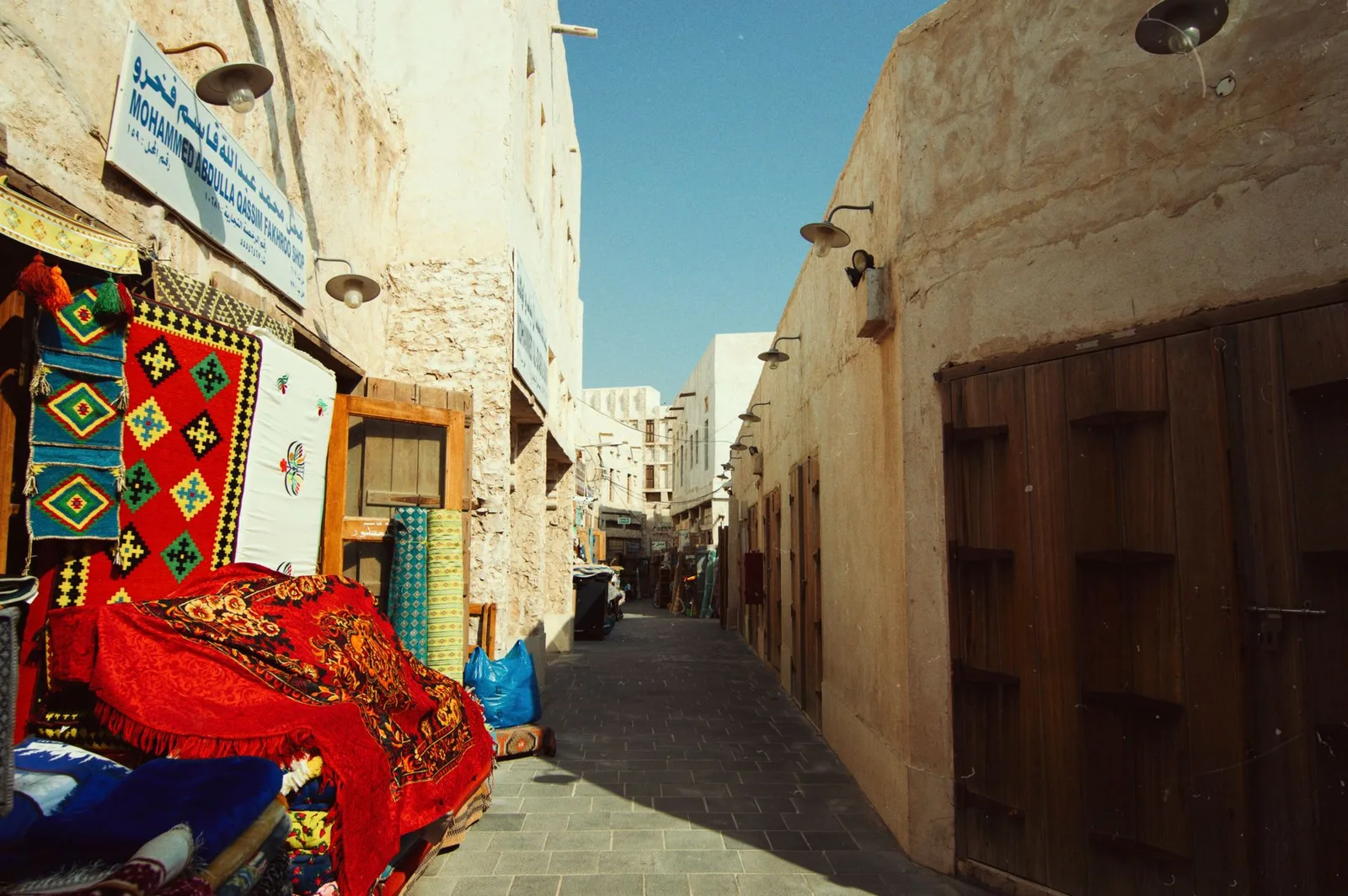
Half an hour south of Doha, and yet a different rhythm entirely: a restored souq without chain stores, a fishing harbour that still genuinely works, streets where early morning brings more gulls than people.
Zubara
One of the wealthiest pearling towns on the Gulf in the eighteenth century, now a UNESCO ruin on a deserted coast. Few visitors make it out here, and that's precisely what keeps the place standing.
Dukhan
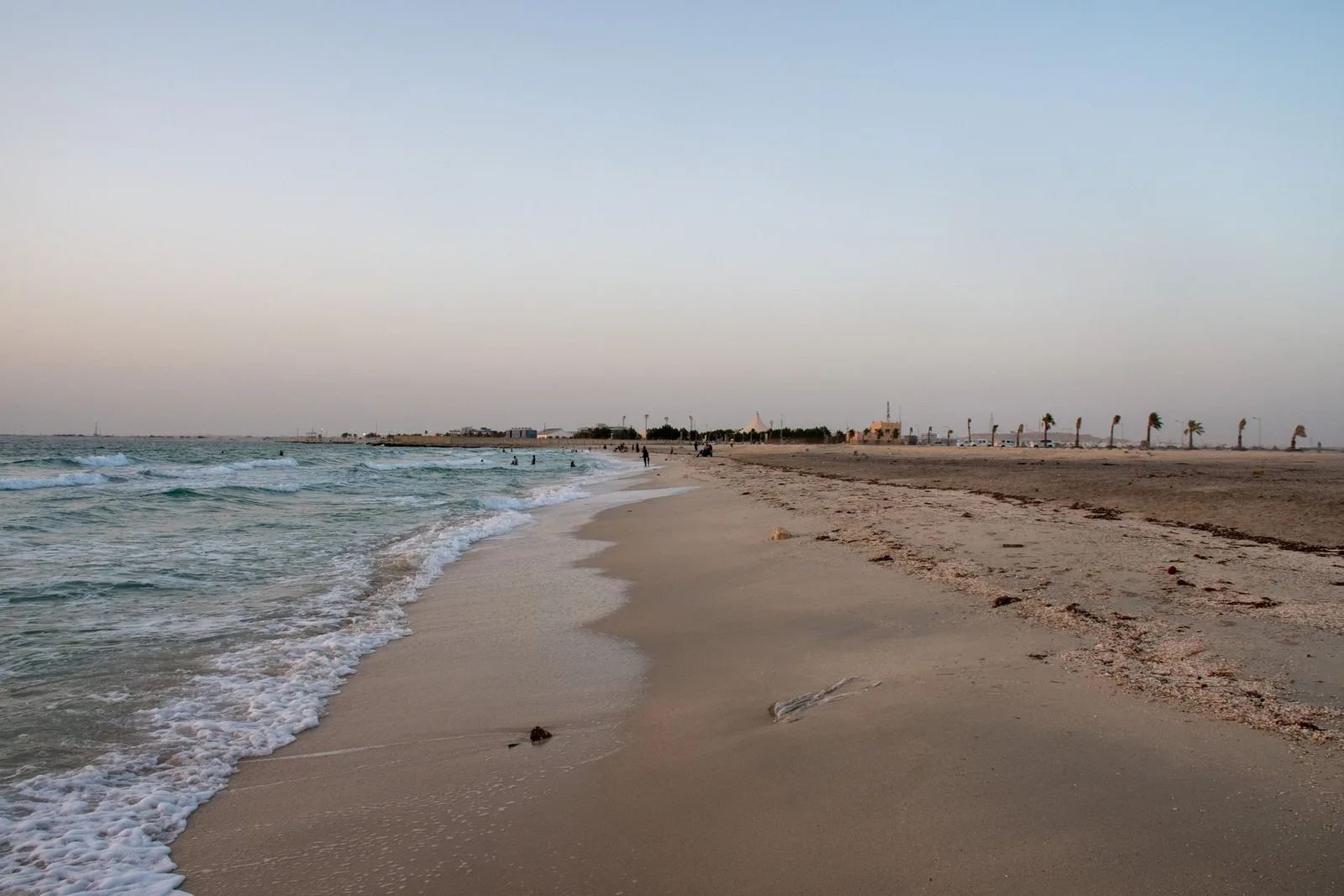
The west coast, where the oil industry once began and has since been largely returned to emptiness. Quiet beaches without sunbeds, and a light that falls differently than on the Doha side.

A culture that doesn't perform for visitors.
Before there was oil, there was the pearl. Qatari divers spent months out on the Gulf, and the rhythm of that life, early departures, hard silence, respect for those who know the sea, still shapes how people here talk about hospitality. A majlis isn't a stage set; it's the room where a family receives guests, and where a conversation carries more weight than a tour.
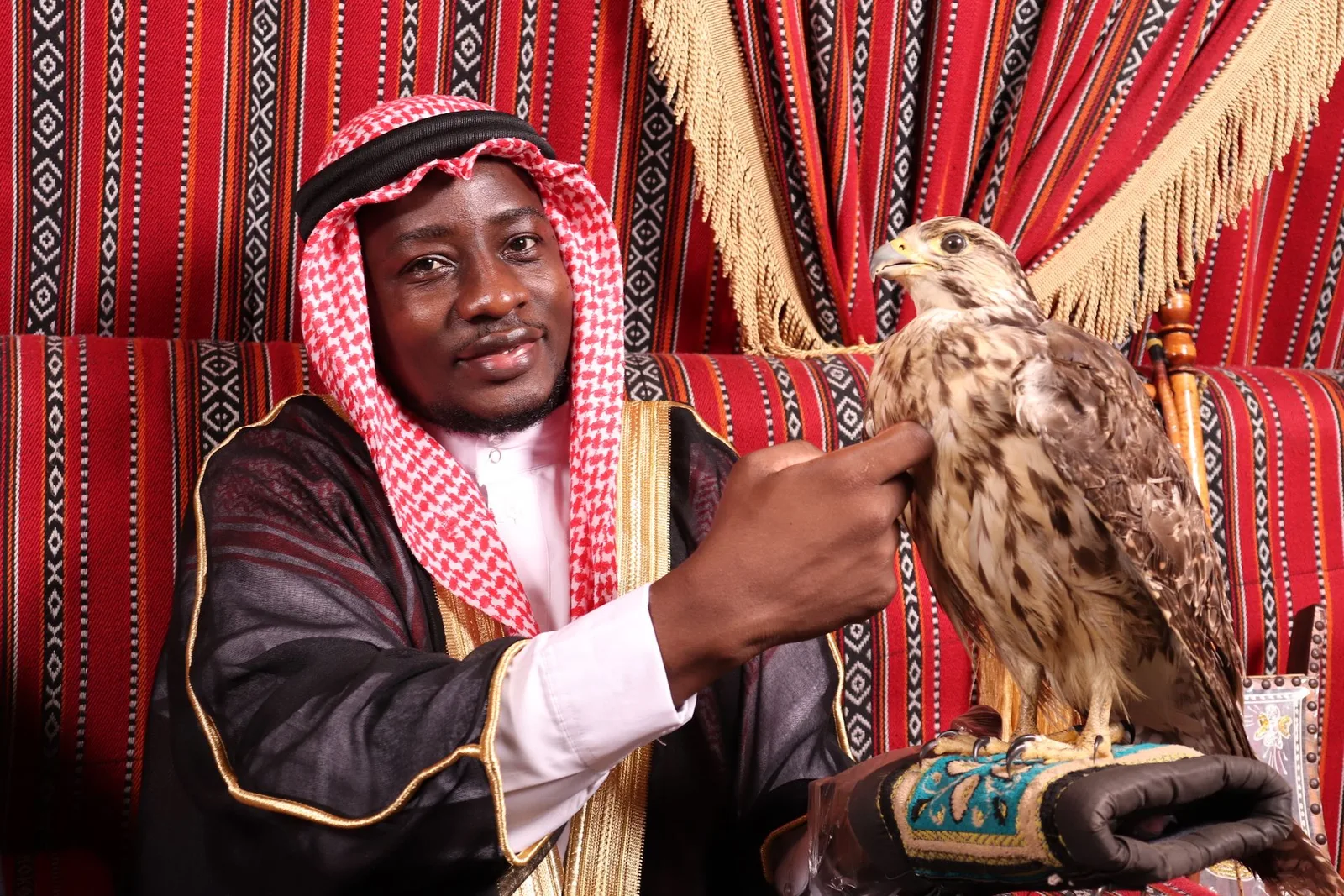
Falconry here isn't folklore staged for tourists but a living practice: at the falcon market by Souq Waqif, birds are inspected, fed and cared for daily by men who make it their profession. On Friday mornings, camels race at the Al Shahaniya track, guided by robot jockeys since children were banned from riding, a detail that says more about contemporary Qatar than any skyscraper.
Where the peninsula stops pretending to be a city.
Khor Al Adaid
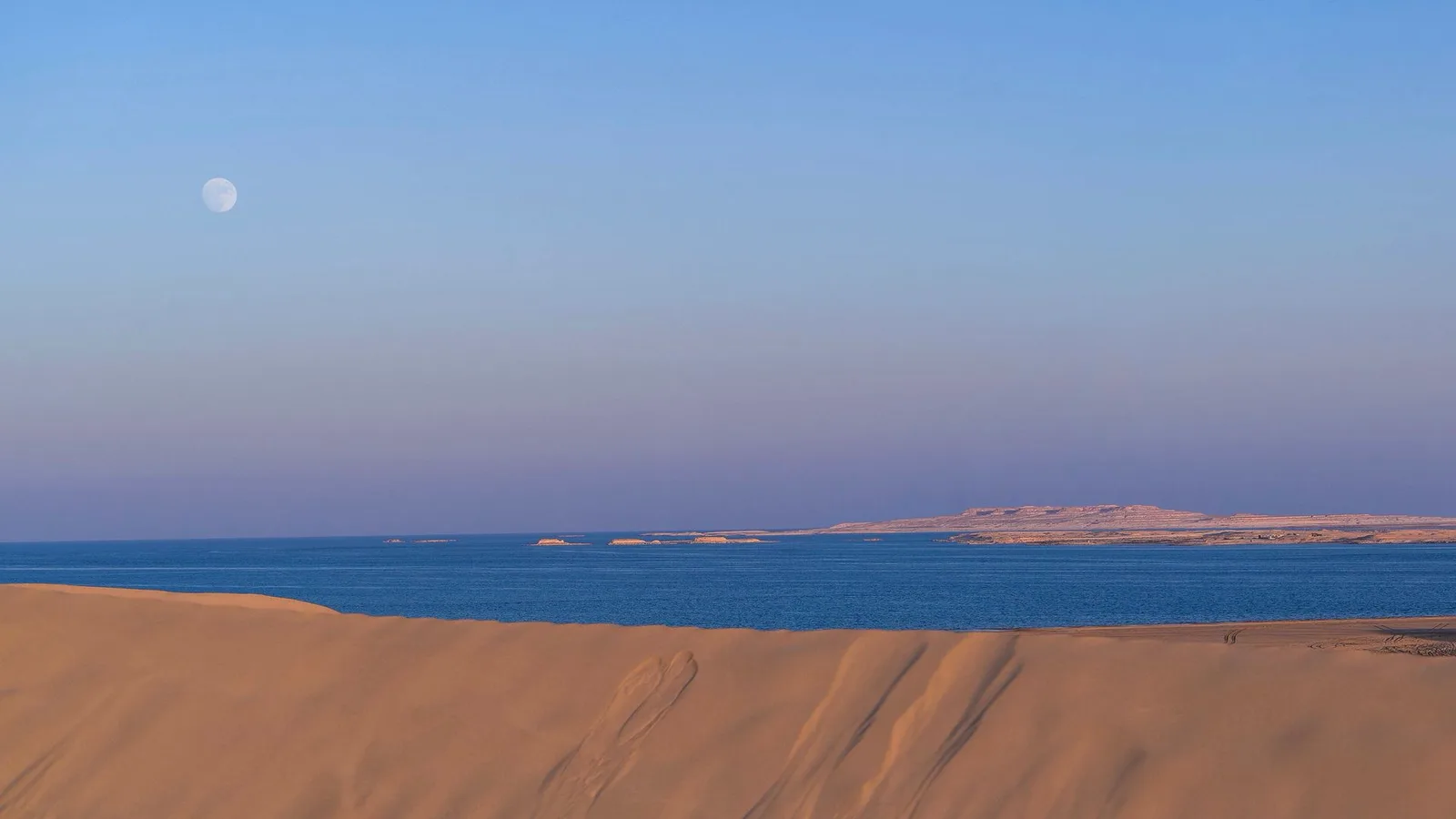
Where the dunes of the southern desert slide into the Gulf with no transition at all. No road leads there. You drive a 4x4 across kilometres of sand until the water is suddenly beside you. Towards sunset, there's no sound but wind.
Al Reem Reserve
A protected stretch of desert west of Doha where the Arabian oryx, once nearly extinct, once again roams in small herds. No safari park with paths, just flat land and animals that decide for themselves how close they come.
Purple Island
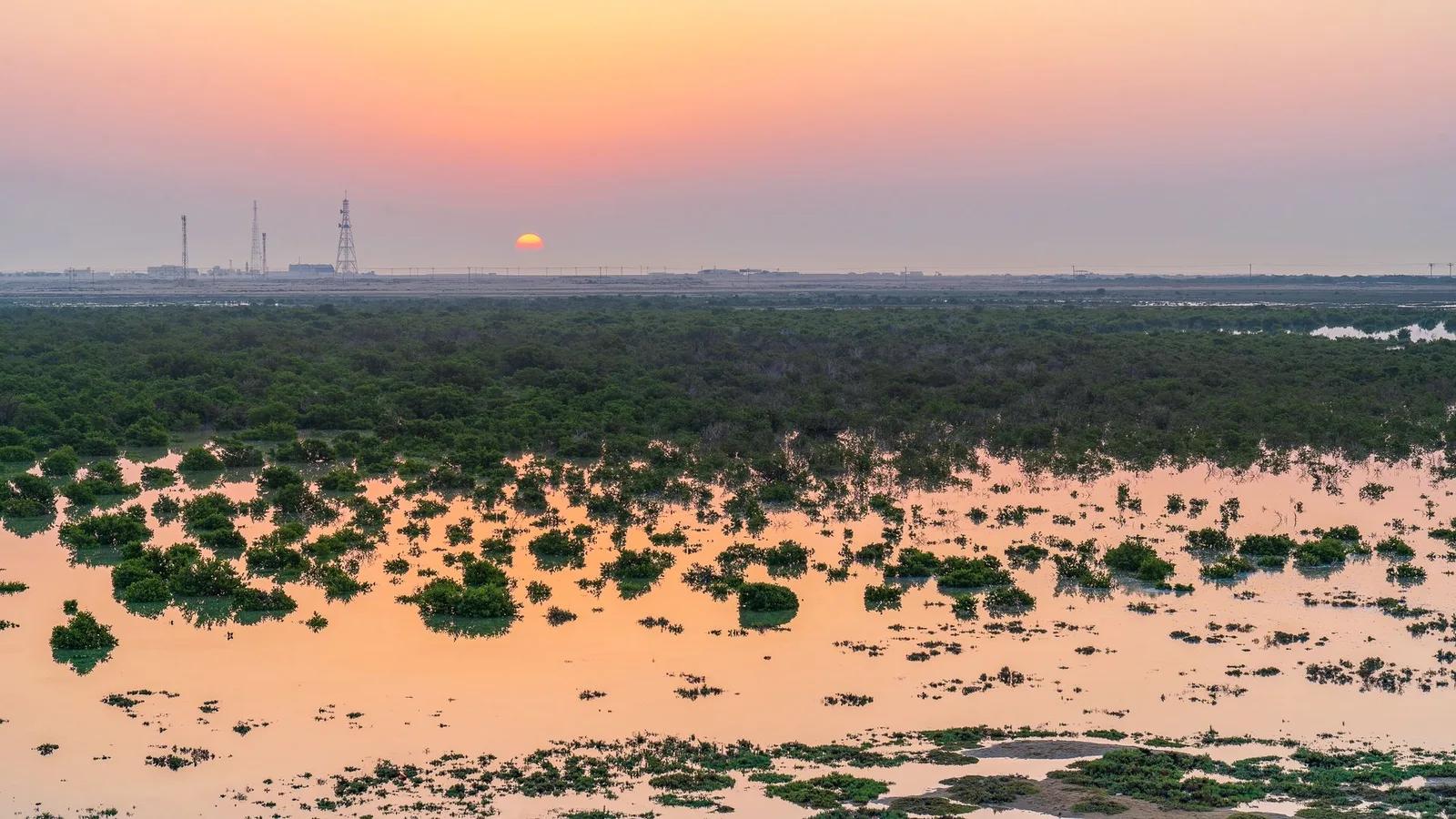
A mangrove islet in the bay near Al Khor, reachable by kayak, named after a vanished Phoenician dye works. Herons and flamingos, and not another boat in sight.
No fixed itinerary. Rather, a set of ways into the country.
These aren't day trips we impose. They're starting points from which we build, together with you, a route that suits you.
A night in the desert
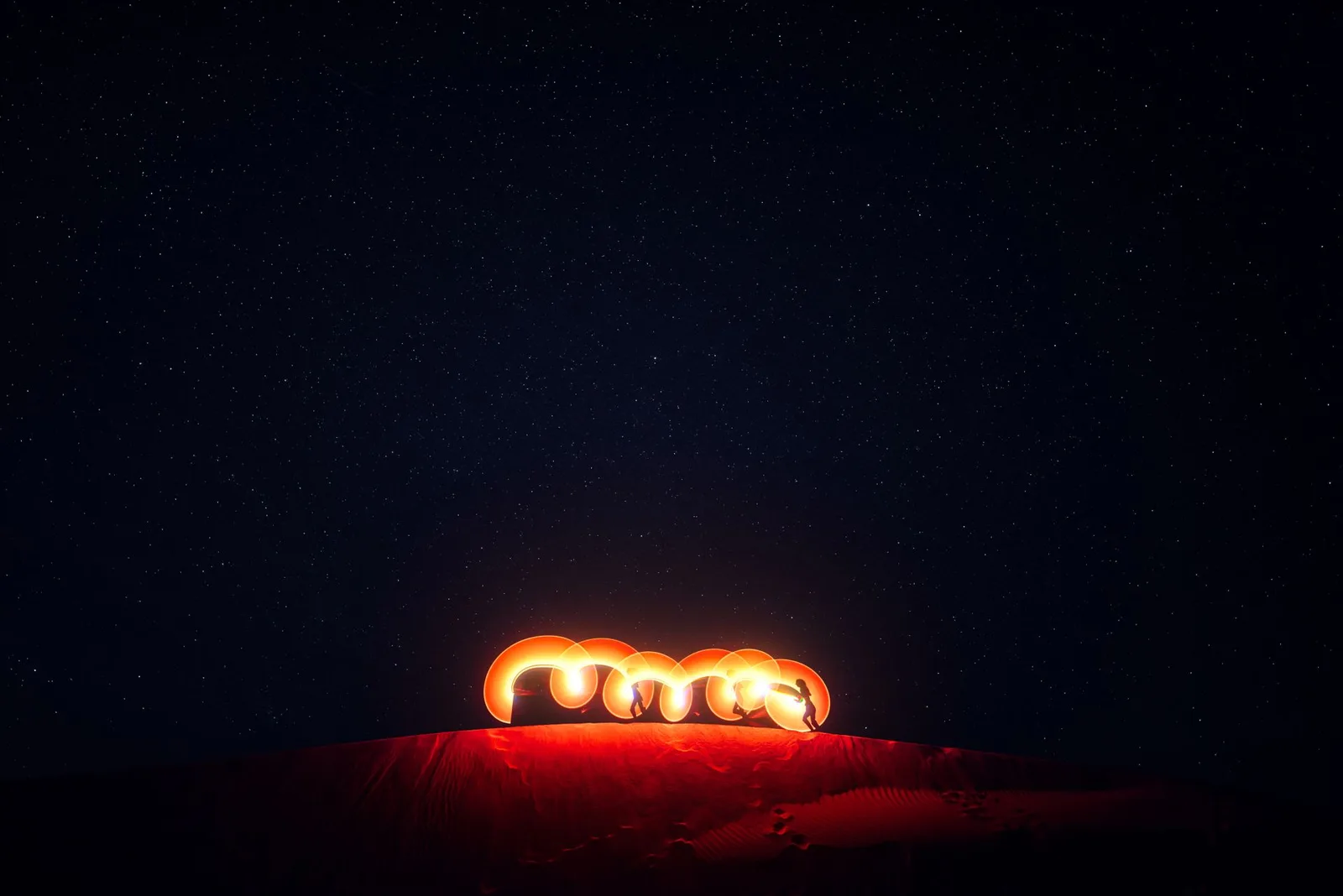
A camp without the hum of a generator in the south, close to Khor Al Adaid. No entertainment programme, just darkness and a sky you never see in Doha.
With a falconer
A private visit to someone who has worked with birds of prey their whole life: watching the training, hearing why this bird matters so much here, no show laid on.
Souq Waqif by night
The restored souq after sunset, when the light turns warmer and the spice stalls and tea houses take over from the shopping streets.
Sailing on a dhow
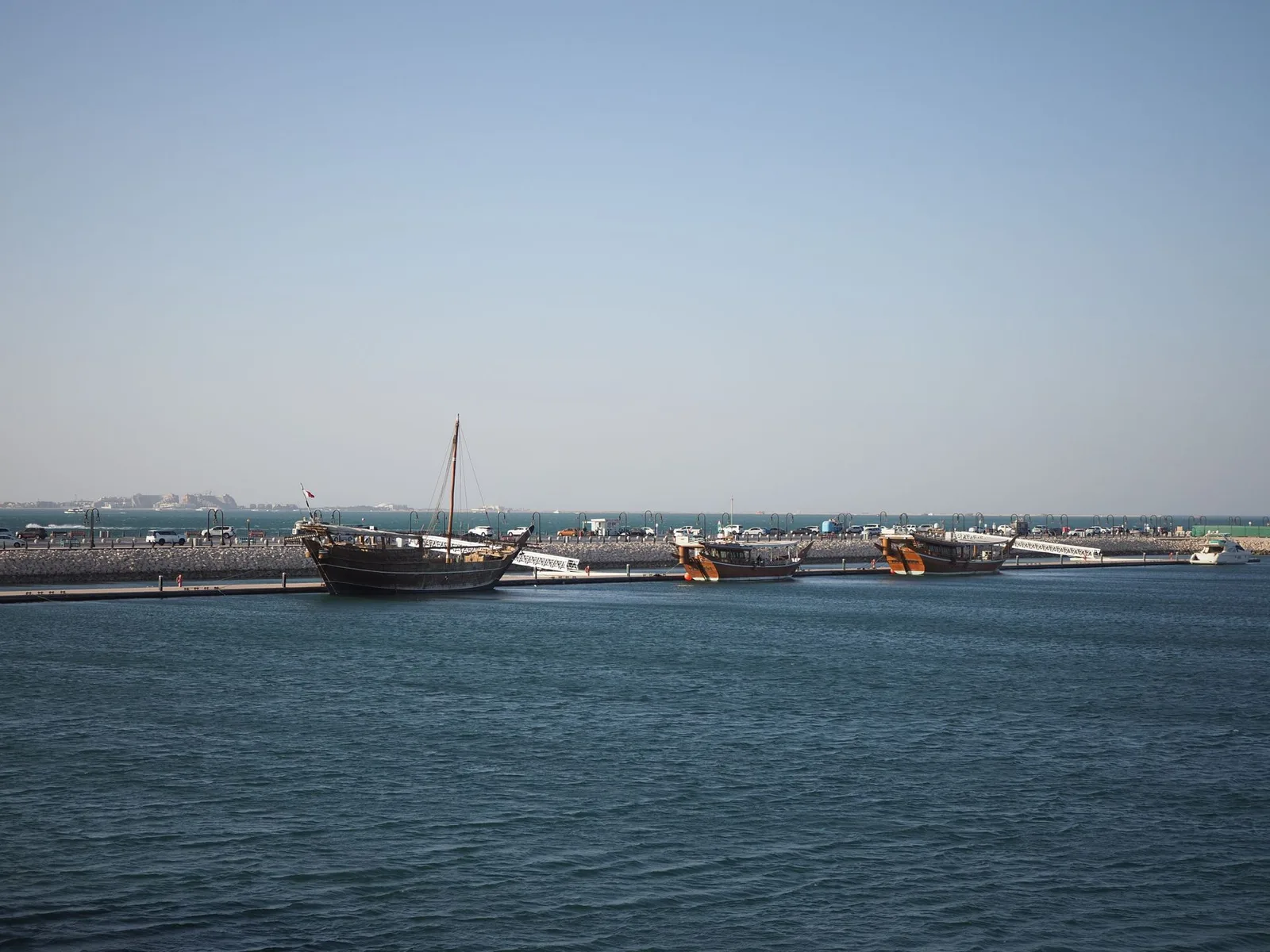
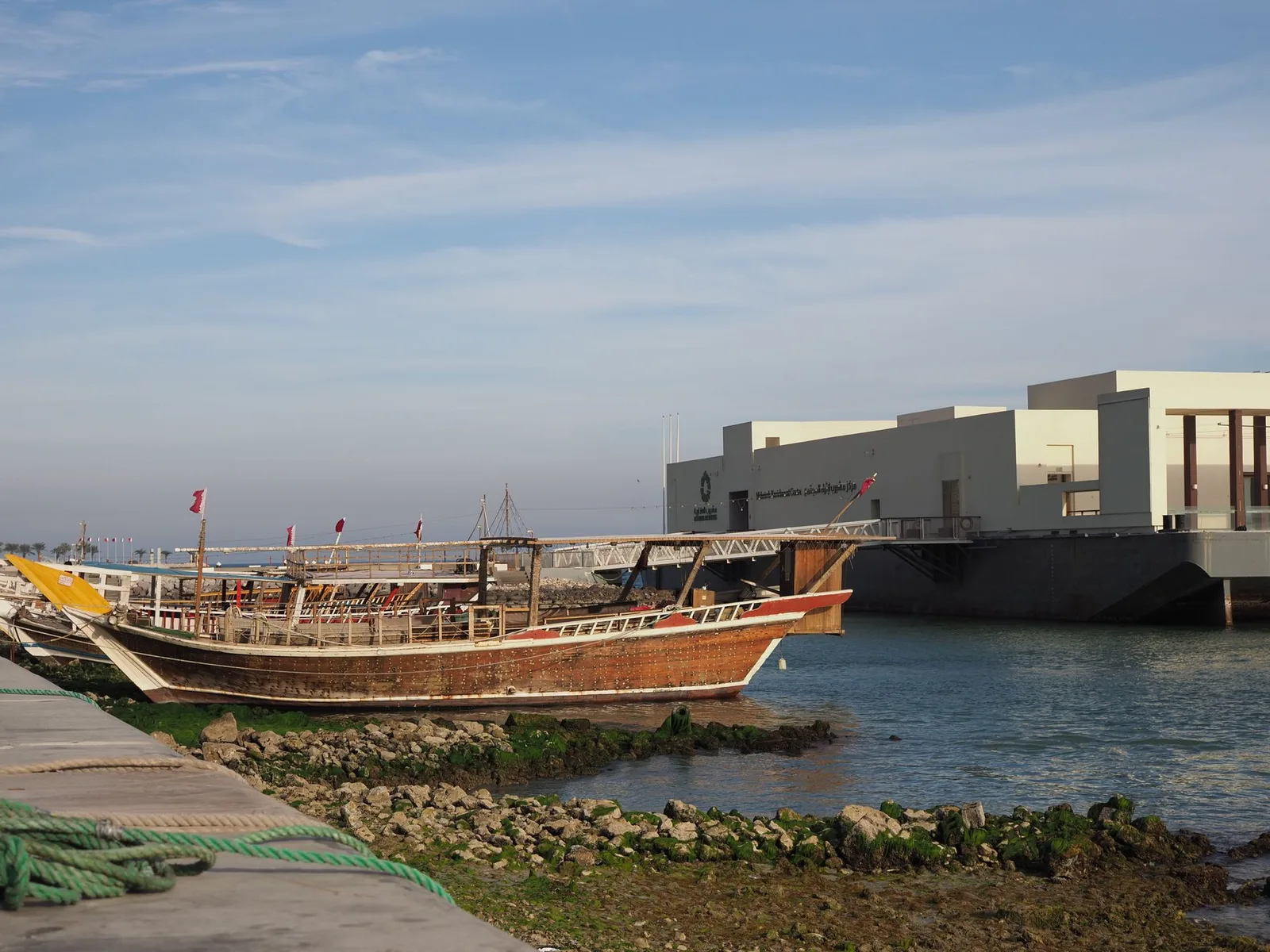
A trip on a traditional wooden boat from the old harbour or from Al Wakrah, moving at the pace of those who fish it daily, not a fixed sailing schedule.
Museums without hurry
The Museum of Islamic Art and the National Museum, with a guide who takes time over the architecture, the desert-rose shape of one, the old fort beneath the other, rather than rushing through the halls.
Whatever you choose here, it isn't about ticking things off. It's about taking time in a place that's still catching its own breath.

A table that reveals how many trade routes met here.
Machboos is the dish you meet everywhere: slow-cooked rice with chicken, lamb or fish, spiced with turmeric, cinnamon and dried lime, a recipe that owes as much to Persia and India as to the Gulf itself. That's no accident: Qatar always sat on a trade route, and the food here is a sum, not a single local story.
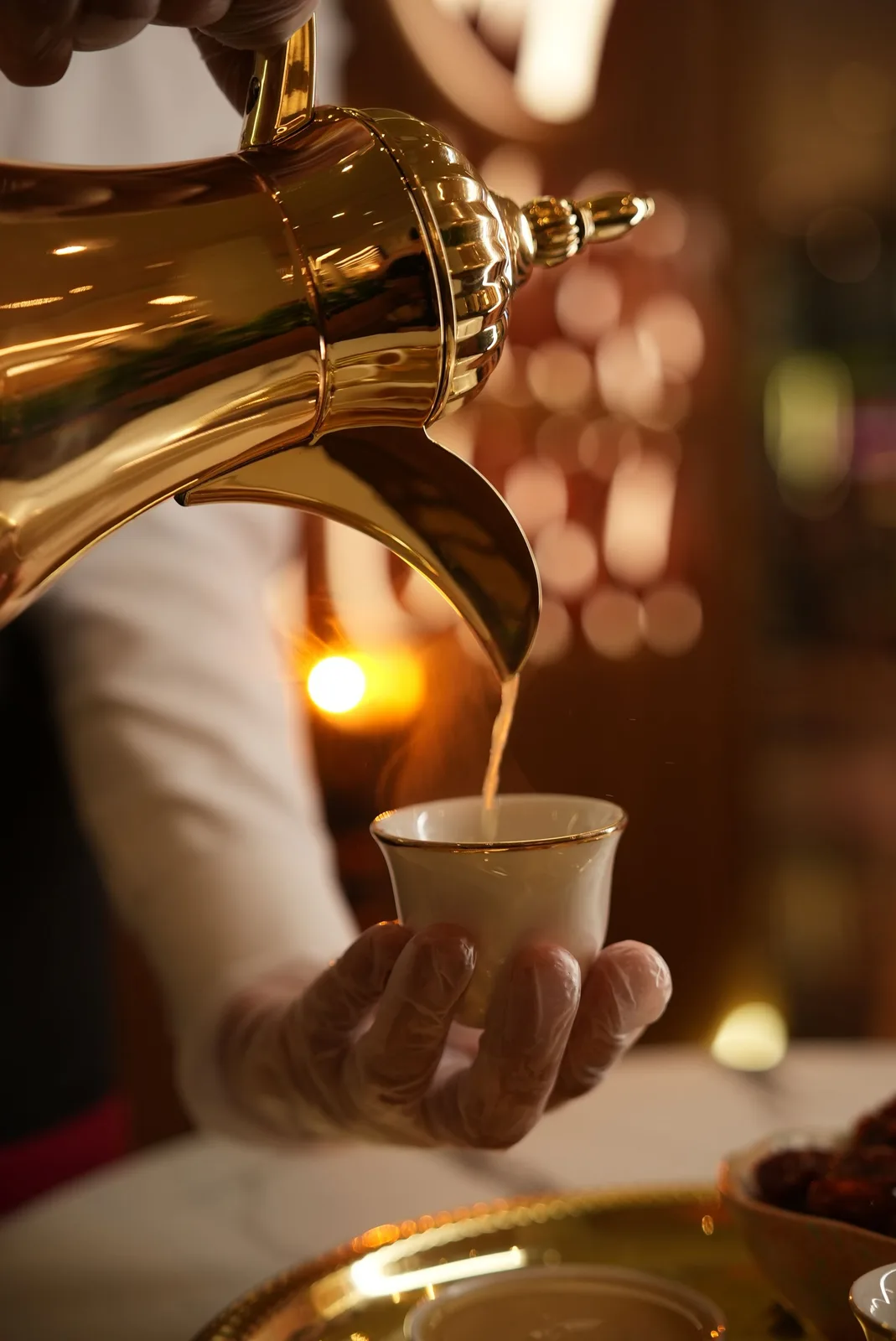
Karak, strong tea brewed with milk and cardamom, is poured at street stalls often run by South Asian workers, a habit that says as much about the country's population today as about the taste. Anyone who sits down with a family for a meal notices above all how much honour goes into hospitality: rarely is too little served.
Al Wakrah, early morning: fishing boats ready to leave, long before the city wakes.
When you go decides how much of the country you can take.
Between June and September, temperatures in Doha climb past 45 degrees, and even early morning offers little relief. Anyone travelling then shifts their rhythm automatically: the outdoors belongs mainly to early and late hours, the rest of the day to indoors or the water.
November to March is the opposite: dry days, around twenty to twenty-five degrees from December to February and a little warmer in November and March, ideal for the desert and for long walks through Msheireb or Souq Waqif. Also bear Ramadan in mind, which shifts every year. Many eateries close during the day then, which changes the pace of a visit without spoiling it.
Best time to visit Qatar
Who else is at their best in these months?
January February November December
Use the contact form to discuss your travel dates and preferences with us.
Frequently asked questions
Is Qatar enough on its own, or is it better combined with another country?
Qatar comfortably carries a stay of several days on its own, especially if you take time for the desert and coast alongside Doha. It also combines well with another country further along the Gulf for travellers wanting more coastline or more nature. We discuss that per traveller.
Can a woman travel through Qatar alone?
Yes, Qatar is considered one of the safer destinations in the region for solo travel. Clothing that covers shoulders and knees outside hotels and beaches helps you keep a low profile, but that's about all it takes.
Can you experience the desert without joining a convoy of jeeps?
Yes. Alongside the large group tours, small-scale outings exist with a single guide and a single vehicle, including towards Khor Al Adaid. We arrange that in advance, not on the spot.
- Flight time
- About 6.5 to 7 hours, direct from Brussels
- Languages
- Arabic is official, English is understood everywhere
- Time difference
- Winter: +1 hour. Summer: no difference from Belgium
- Climate
- Dry desert climate, summers above 40 degrees
- Best time to go
- November to March
- Currency
- Qatari riyal