

Seven emirates, not all of them with a skyline.
Beyond the well-known cities lies a country of dunes, wadis and oasis villages with an entirely different pace. Anyone who knows only Dubai and Abu Dhabi has not yet seen half the country: the rust-red dunes of Liwa on the edge of the Empty Quarter, the gorges of the Hajar Mountains near Ras Al Khaimah, the palm gardens of Al Ain that have been fed for centuries by underground falaj channels.
The Emirates are not a contrast between old and new, but a country where both exist side by side. A quarter of an hour outside a city of skyscrapers, an entirely different landscape already begins: quieter, drier, with a horizon that doesn't rise but falls away.
In short
Best time to go
From November to March afternoons sit between 24 and 31 degrees and evenings cool down, good for mountains and desert. April and October are already hot, and from May to September temperatures reach 40 degrees or more.
How long
A week to ten days for a city, the Liwa dunes, the Hajar Mountains near Ras Al Khaimah and the east coast. Good roads let you give each region a few nights without long travel days.
Who it suits
Travellers who want to look beyond Dubai and Abu Dhabi: walking in the wadis of the Hajar Mountains, snorkelling on the east coast, a night among the Liwa dunes and the palm gardens of Al Ain.
What sets it apart
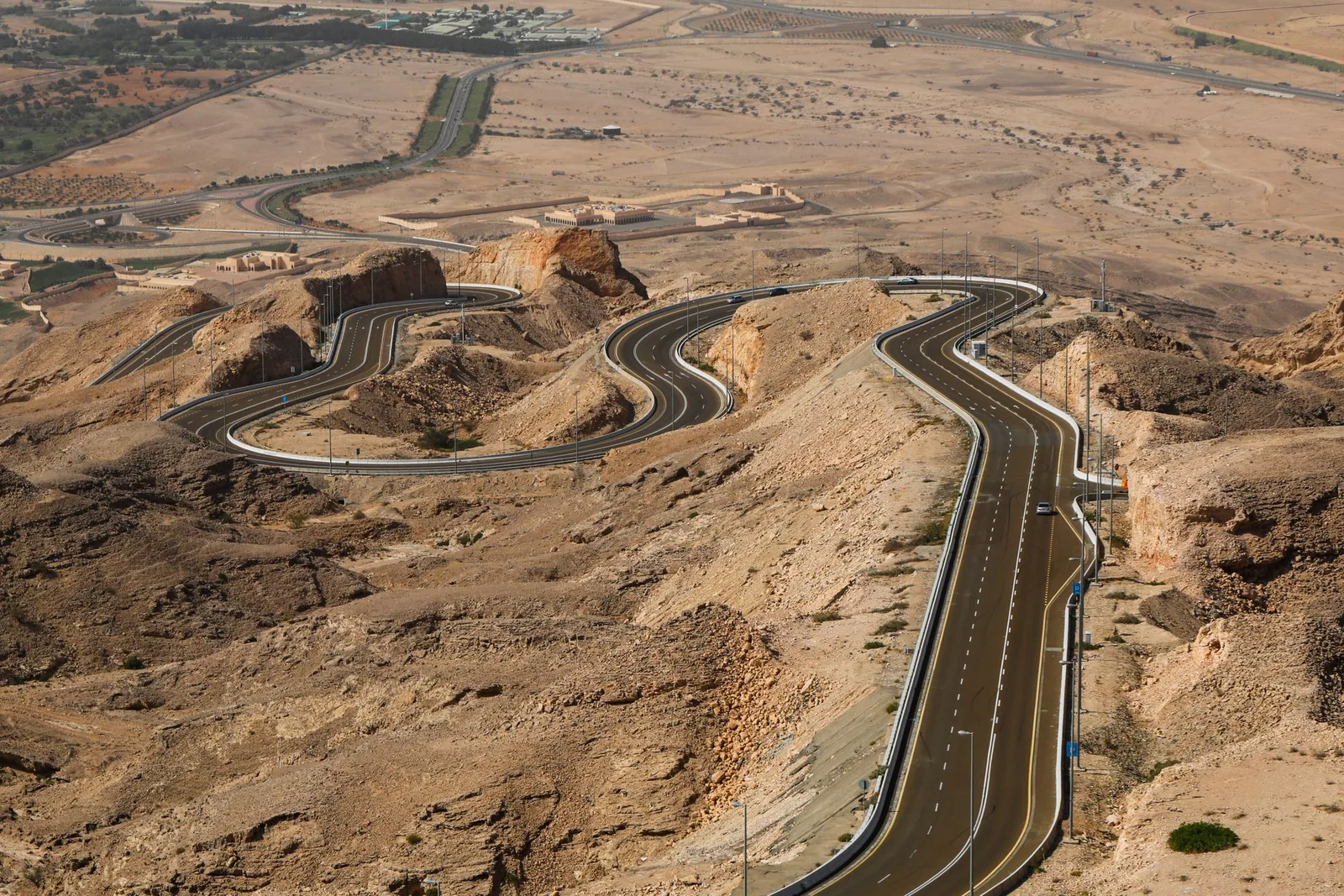
Combining several emirates shows more than a skyline: Fujairah is the only emirate lying entirely on the Gulf of Oman, and in Ras Al Khaimah the country's highest point, at 1,892 metres, lies on the flank of Jebel Jais.
One country, four entirely different landscapes.
The Emirates are only slightly larger than Belgium and the Netherlands combined, yet the distance between a dune at Liwa and a wadi near Ras Al Khaimah feels like another world.
Al Ain
The 'garden city' against the border with Oman, built around an oasis that has given water for thousands of years. Falaj channels run right through the palm gardens, and from the top of Jebel Hafeet the view opens onto a plain that gives way abruptly to the mountains.
Ras Al Khaimah and the Hajar Mountains
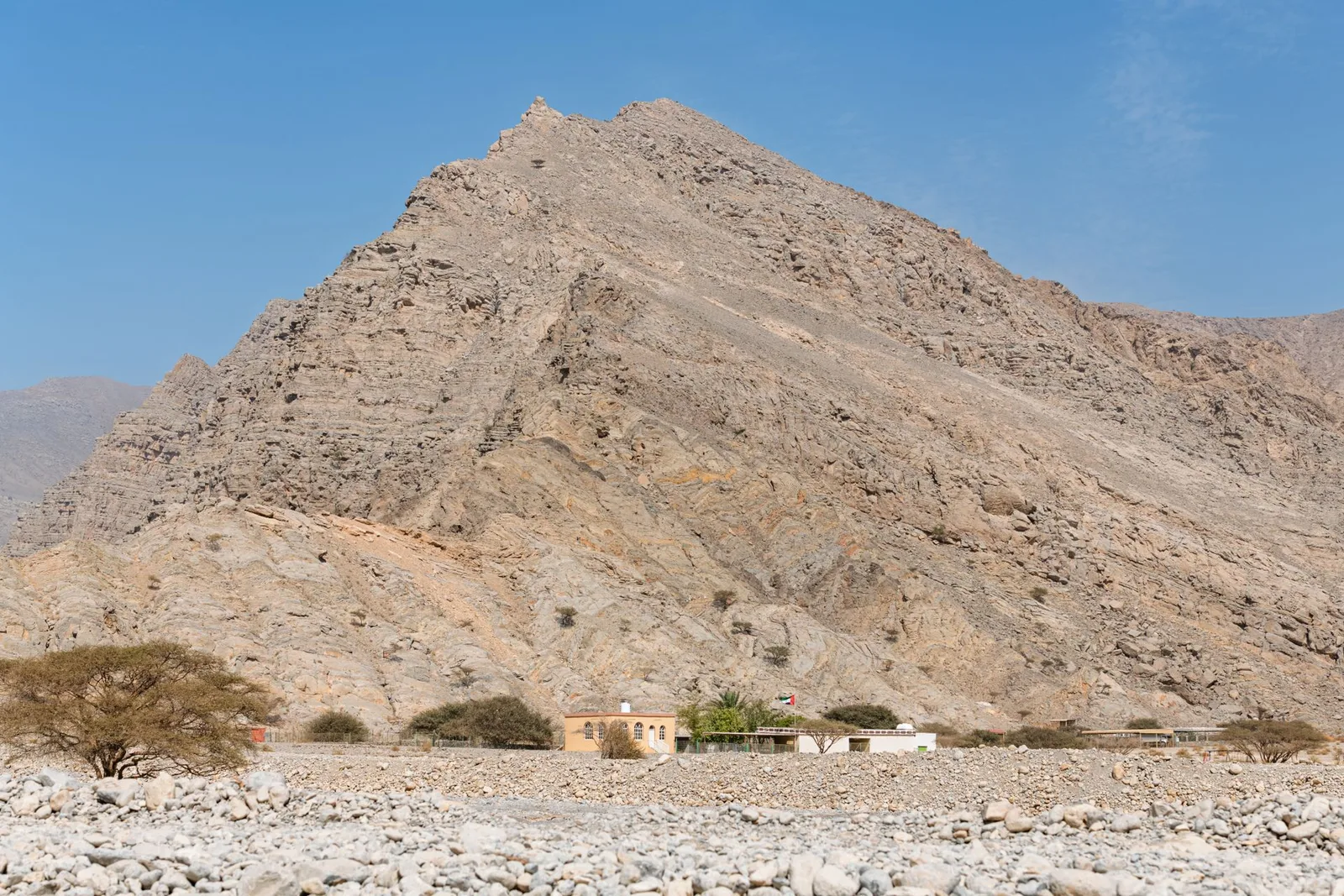
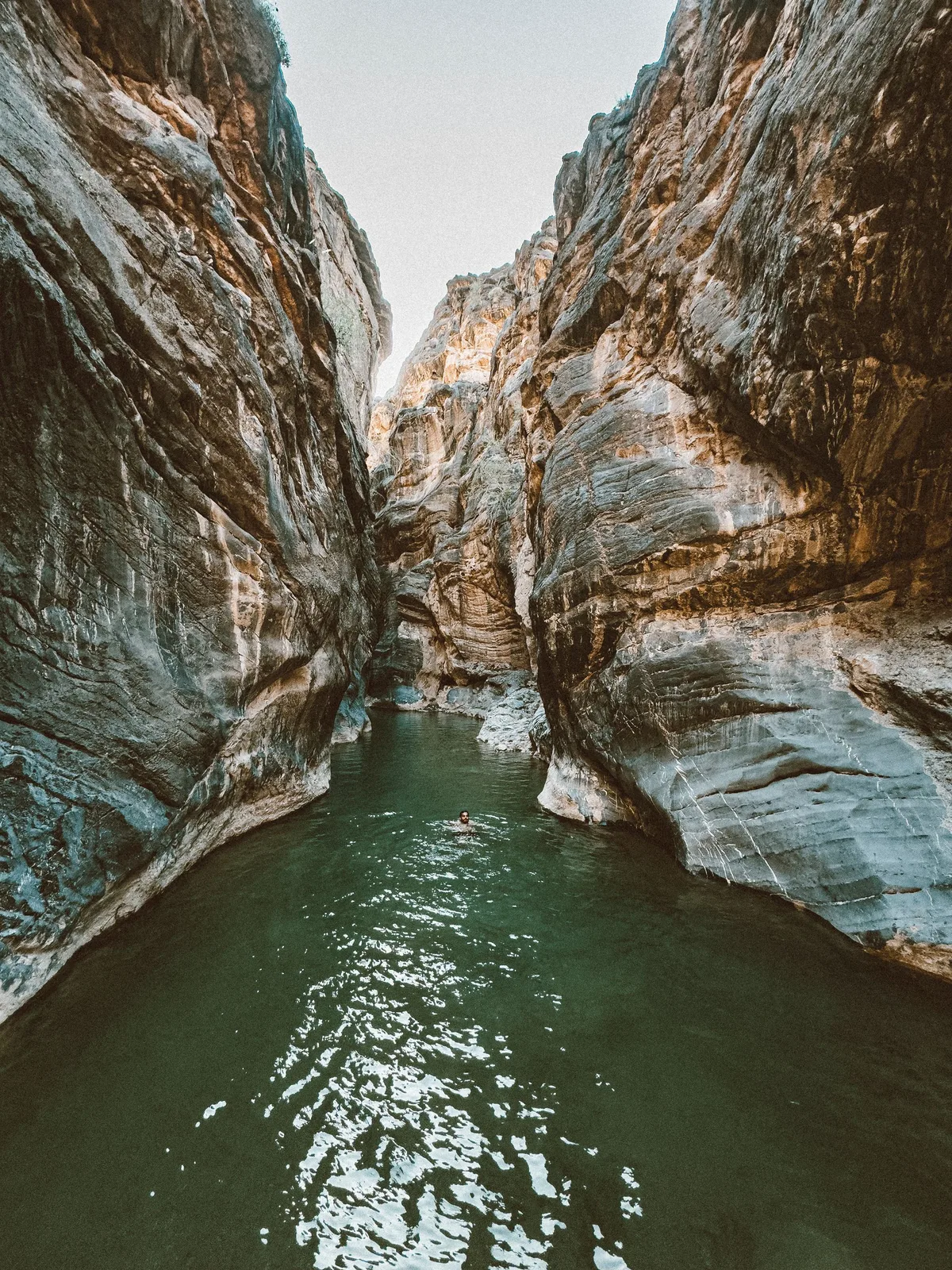
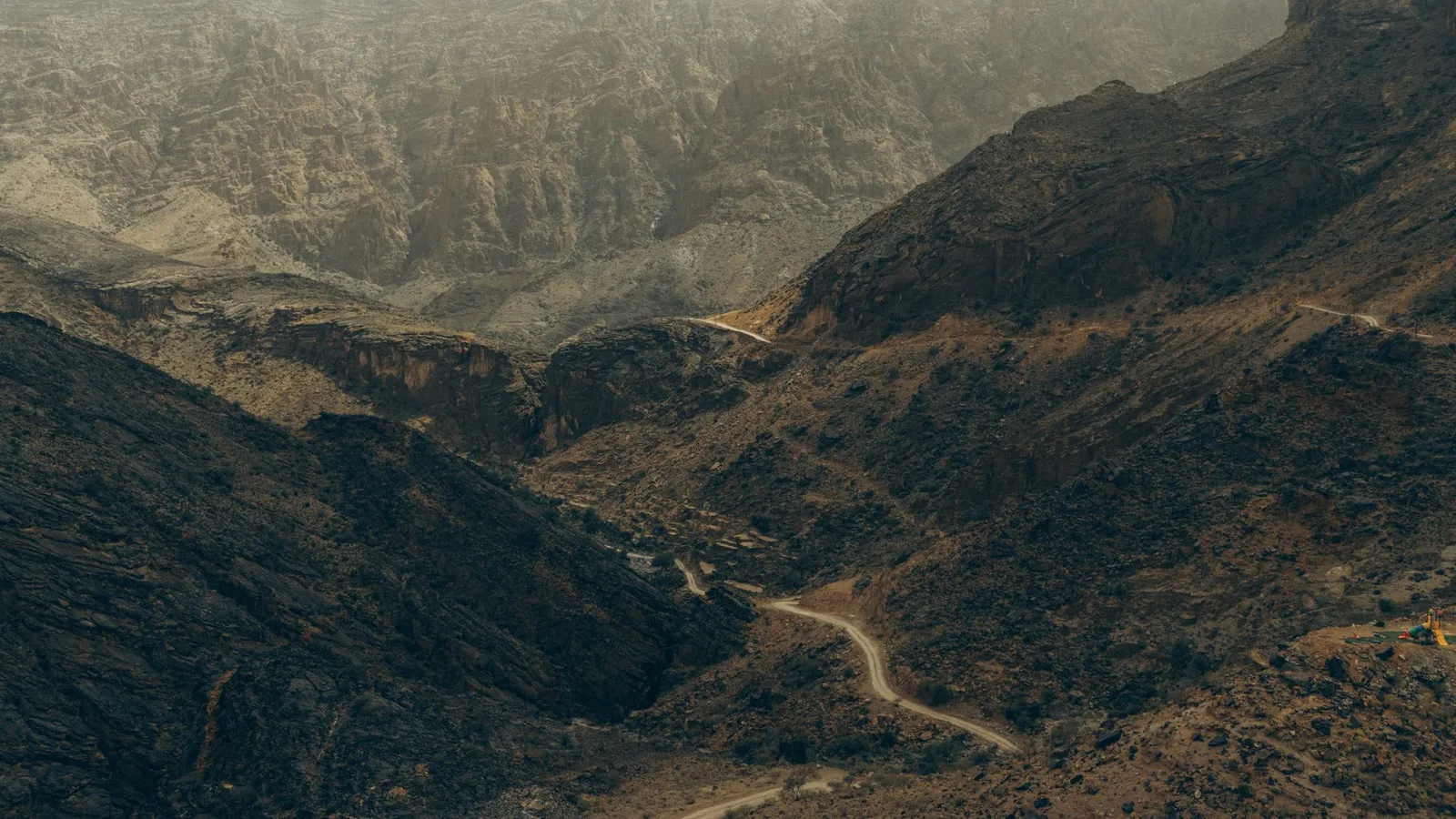
The northernmost emirate leans against a mountain range that stretches all the way into Oman. Wadi Shawka and Wadi Bih cut deep gorges into the rock, with abandoned stone villages clinging to the mountainside.
The east coast: Fujairah and Khor Fakkan
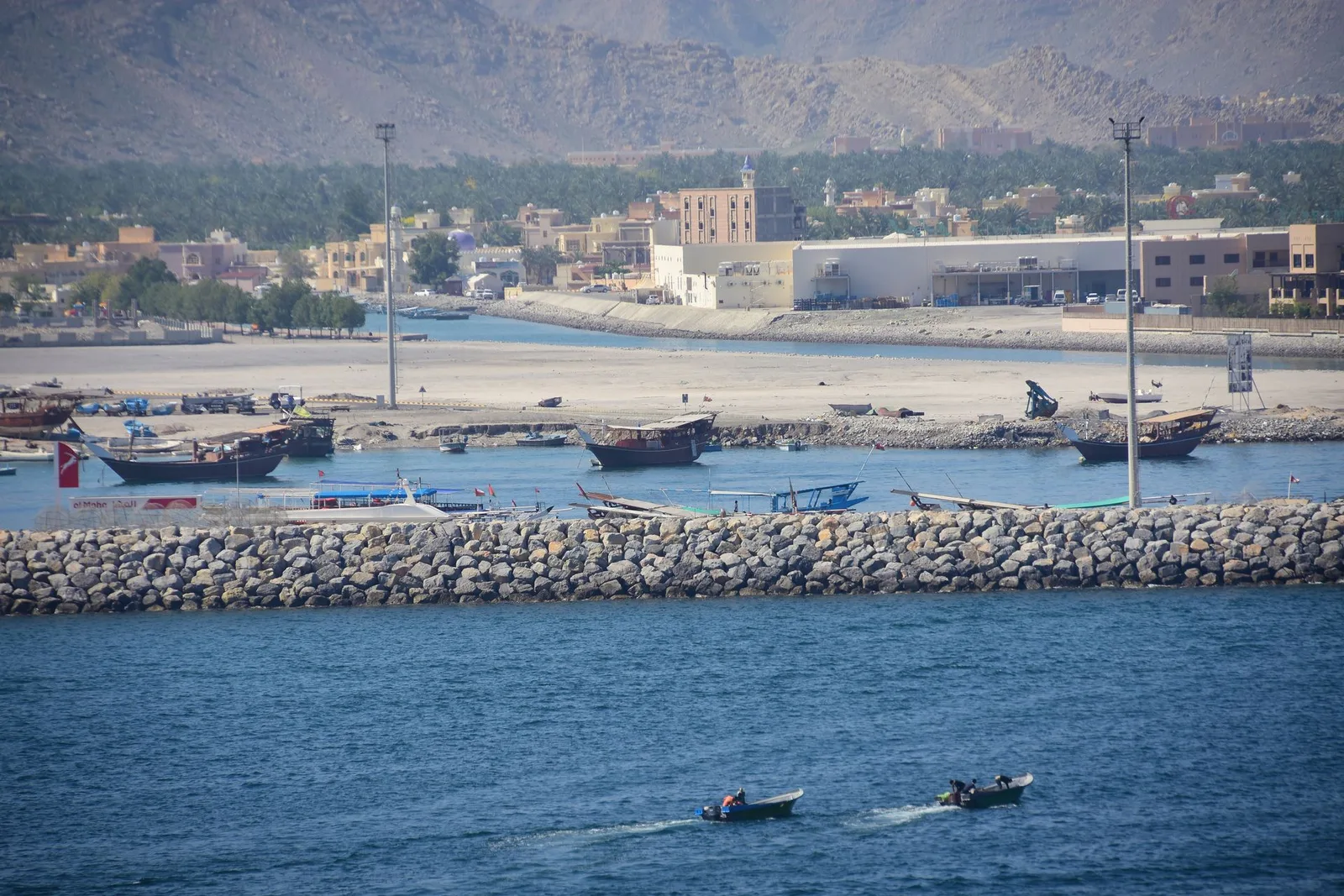
On the Gulf of Oman, where the mountains drop straight into the sea, sit fishing villages that have nothing to do with the familiar image of the Gulf coast. Dhows are still built on the beach here, and the reefs offshore remain little known to visitors.
Liwa and the edge of the Empty Quarter
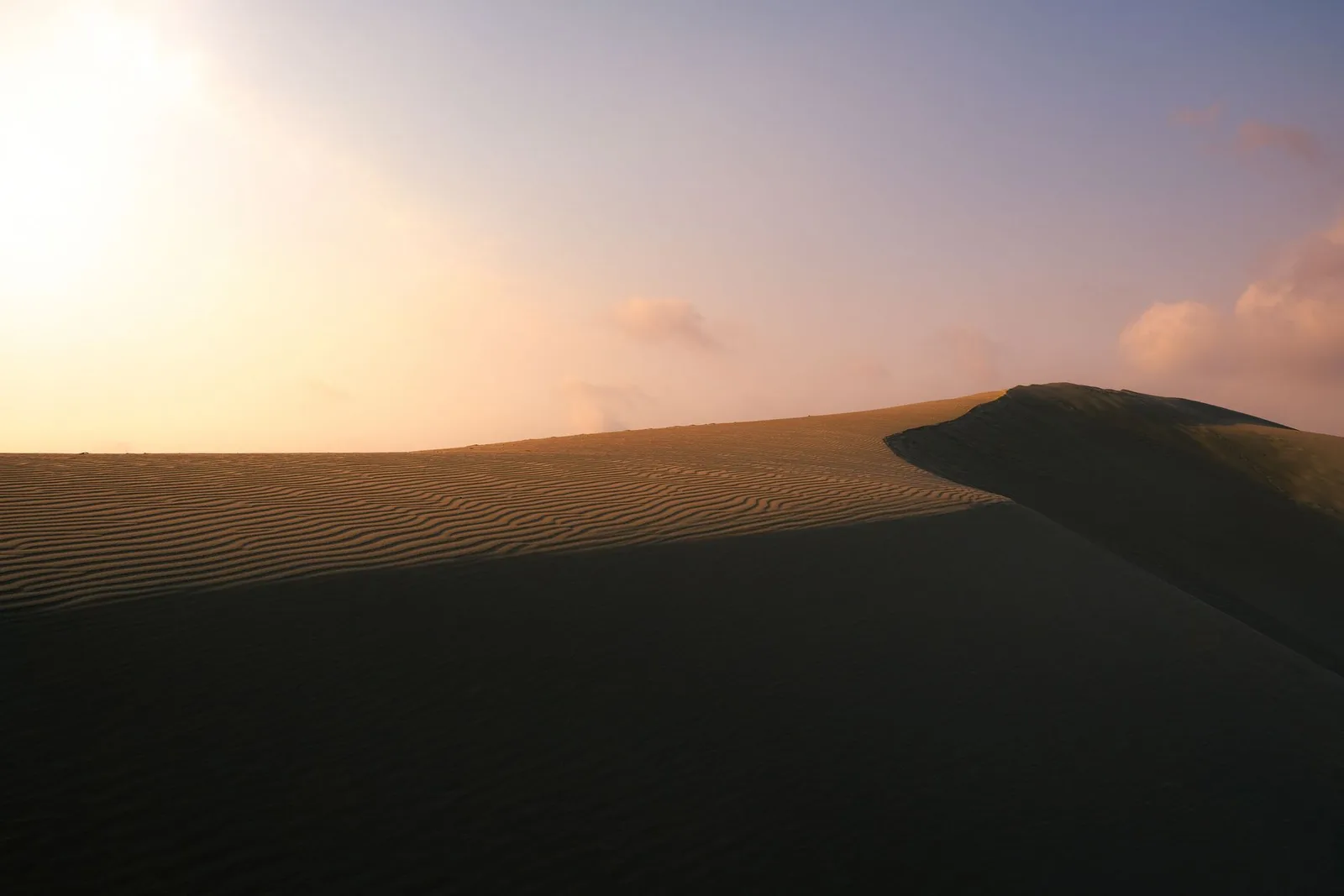
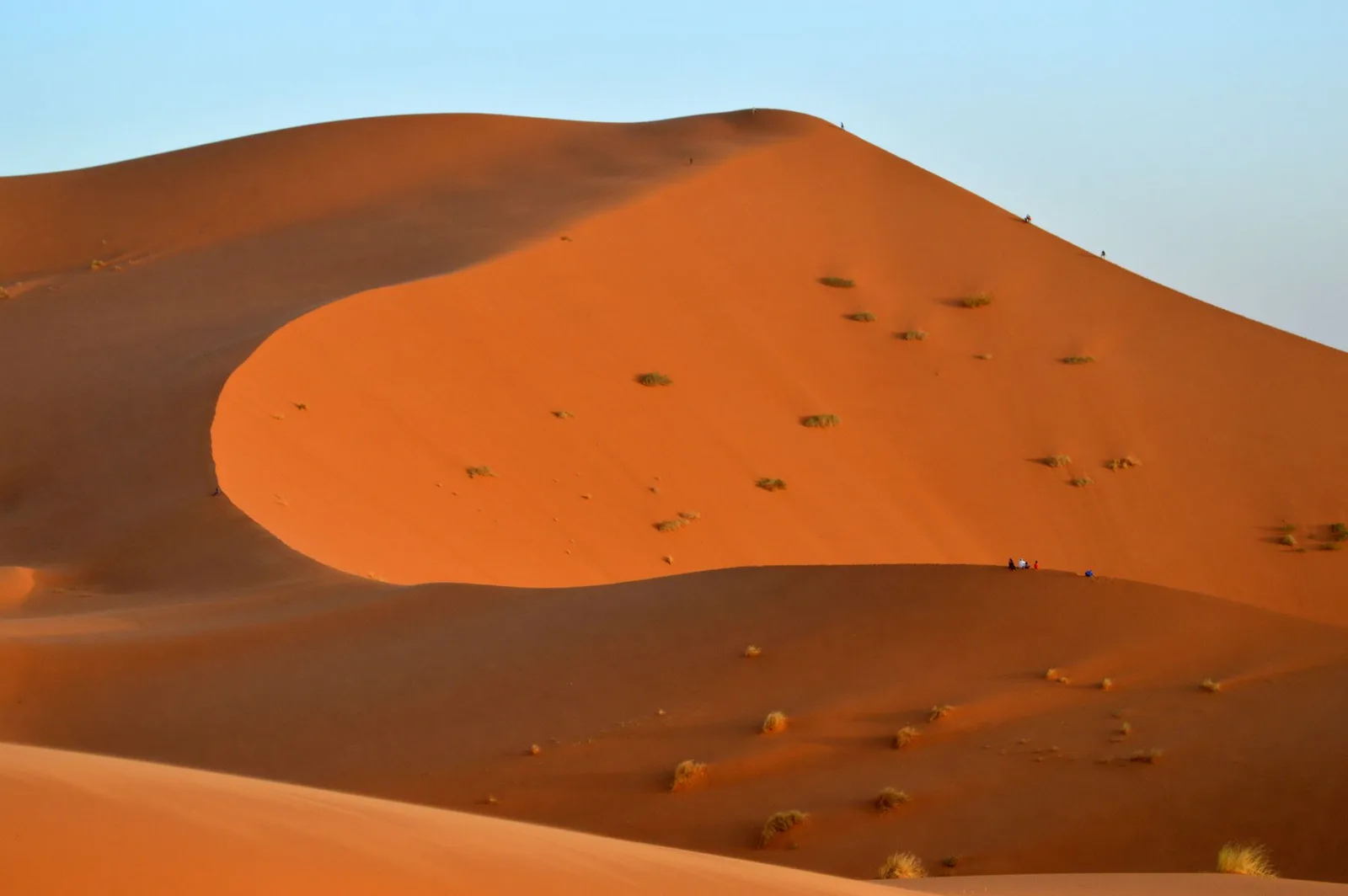
This is where the country's highest dunes begin, outliers of the Rub al Khali that stretches into Saudi Arabia. Liwa is where Bedouin families have long grazed their camels, and where the sand can rise up to a hundred metres.
Three worlds within half a day of each other.
The dunes of Liwa
Red and gold dunes that shift colour with the position of the sun, and at night a sky free of any light pollution.
The wadis of the Hajar
After rain, the dry riverbeds fill with clear water between rock walls, a landscape few people associate with this part of the Gulf.
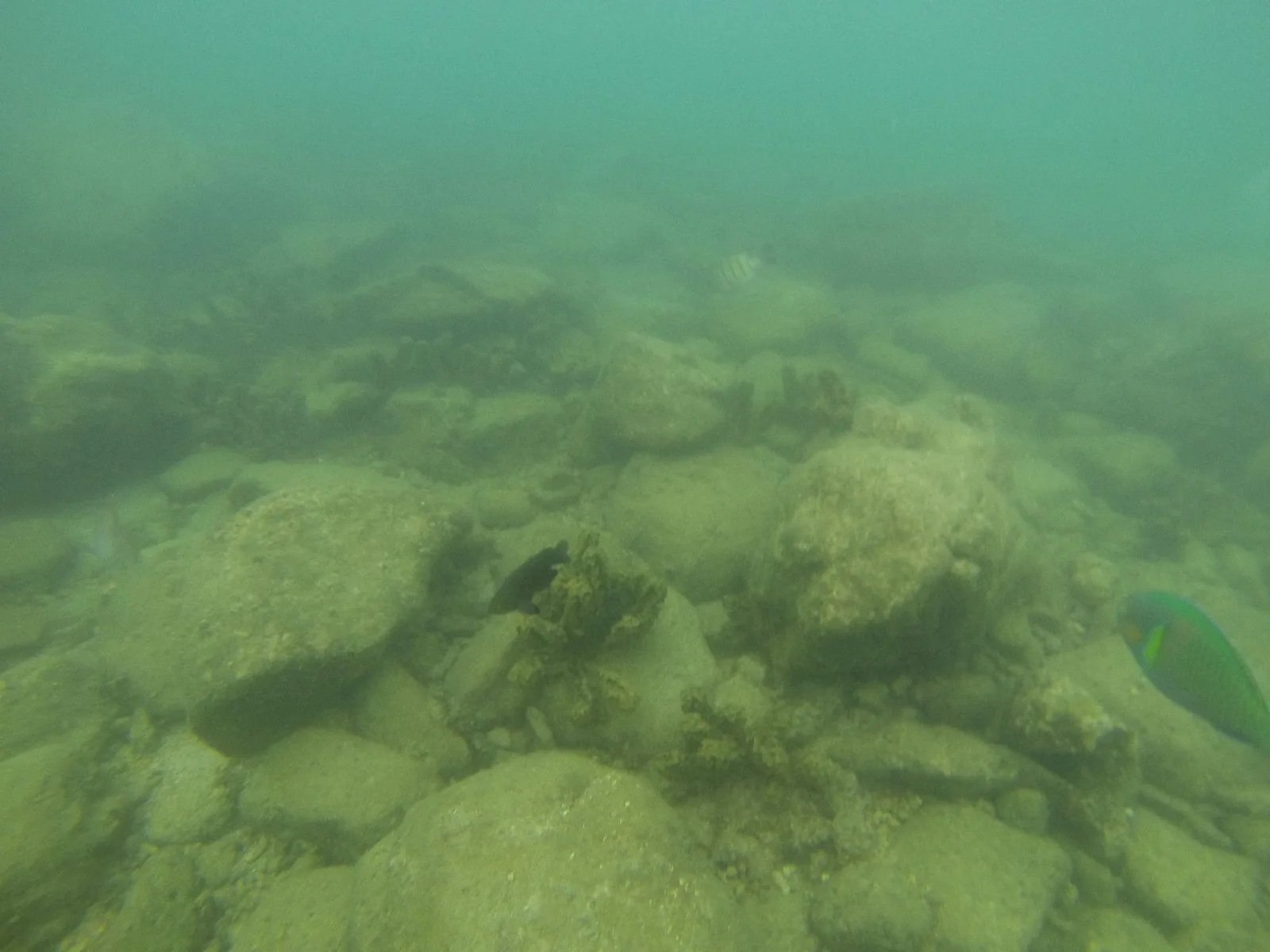
The reefs of the east coast
Off Dibba and Khor Fakkan lie coral formations that have remained relatively untouched, with turtles and a striking diversity of species for this latitude.
Possibilities, not a programme.
Every trip to the Emirates takes shape differently depending on what you're after. These are directions, not a fixed route.
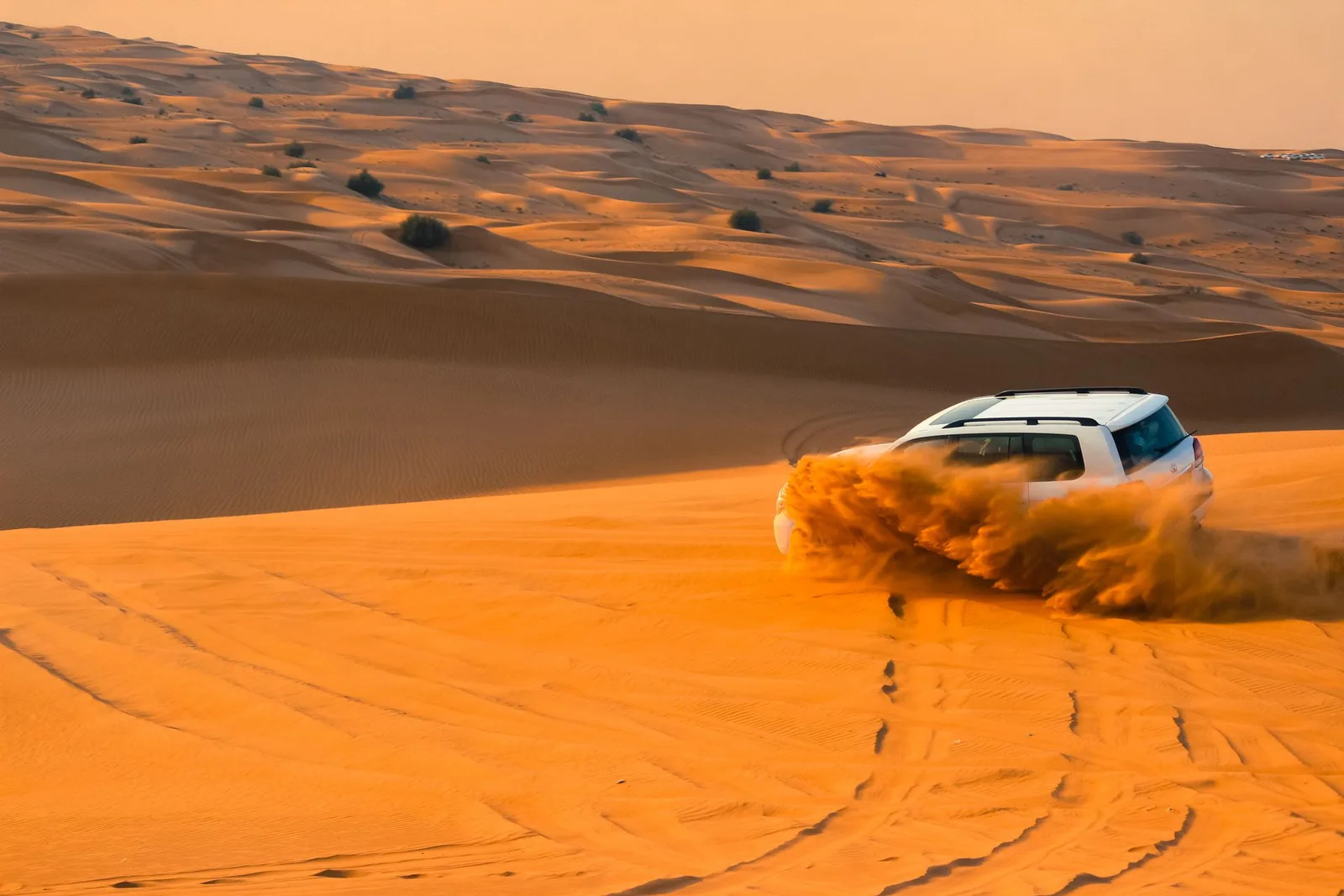
Into the desert at sunset
A drive through the dunes of Liwa or the Al Wathba area, timed for when the light sits low and the colours of the sand shift.
An introduction to falconry
A visit to a falconer or the Falcon Hospital in Abu Dhabi, where the bond between hunter and bird is explained as it has existed for centuries.
Walking a wadi
A route through Wadi Shawka or Wadi Bih, with rest stops at natural pools and views of mountain villages that have barely changed.
Watching dhow builders at work
In Fujairah and Ajman, wooden dhows are still built by hand, a craft that predates the oil industry.
Wandering through a souk
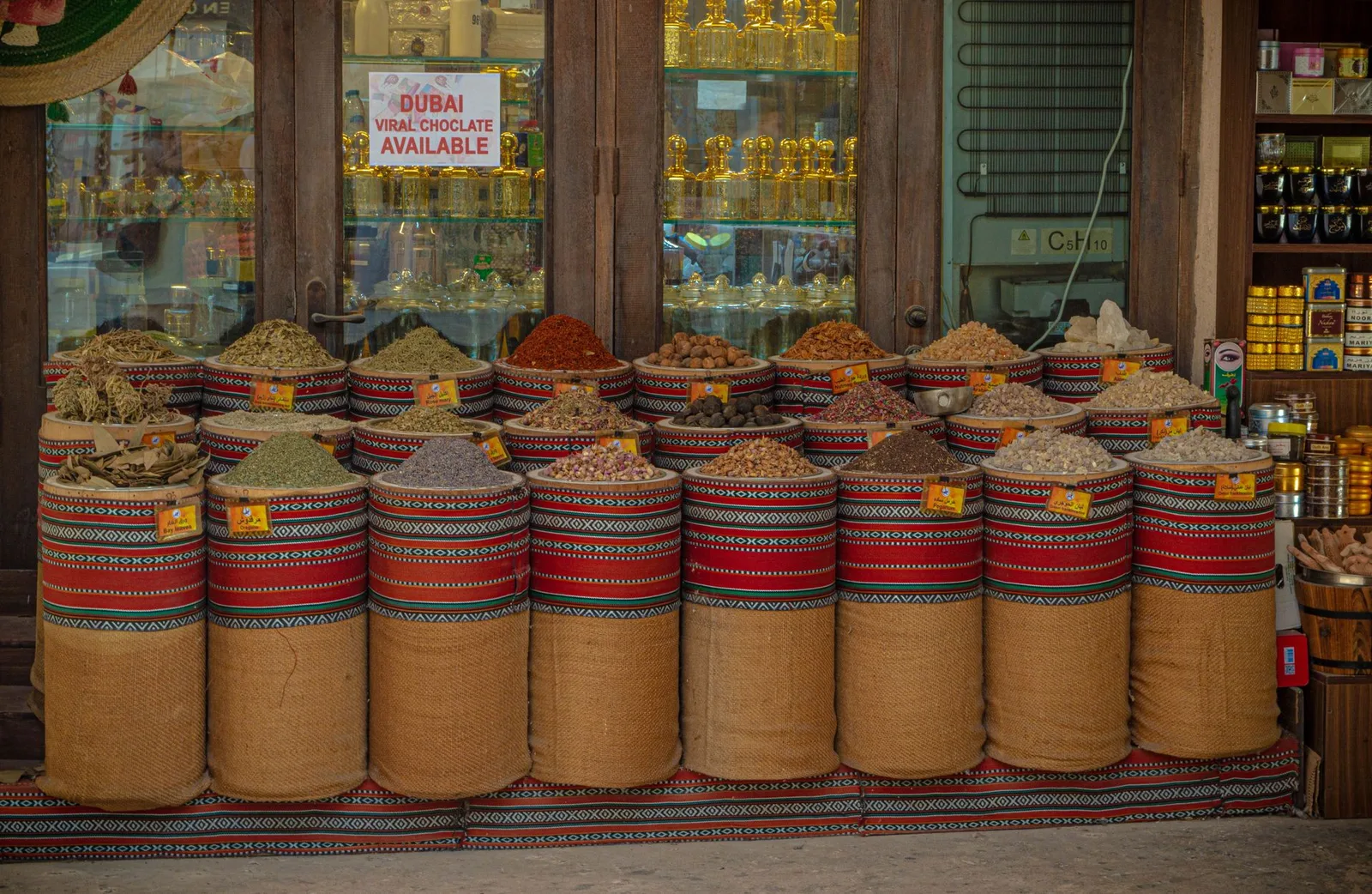
The souks of Sharjah and Al Ain, where spices, textiles and gold are still traded as they have been for generations.
Learning to read an oasis
At Al Ain Oasis, local guides explain how the falaj system distributes water over kilometres, a technique older than the city itself.
These are possibilities.Not your journey.

When the Emirates show their best side.
Between November and March, daytime temperatures fall back to a pleasant twenty-five to thirty degrees and the evenings genuinely cool down, which suddenly makes the mountains and desert easy to explore. April and October are transition months: warm, but still manageable for early starters.
Summer, from June to August, is another story: temperatures around or above forty degrees, with peaks above 45, and suffocating humidity on the coast make outdoor activities unappealing. Anyone travelling during that period does so mostly early in the morning or after sunset.
Best time to visit United Arab Emirates
Who else is at their best in these months?
January February March November December
Use the contact form to discuss your travel dates and preferences with us.
Practical, without the noise.
A few things that make travelling through the Emirates concrete.
Getting there
Direct flights from Brussels to Dubai or Abu Dhabi, with a well-developed road network linking the emirates.
Documents
Which travel documents you need depends on your nationality, and entry rules change regularly. We go through the current requirements with you before you leave.
Health
No mandatory vaccinations; the main things to watch are sun protection and drinking enough water, especially outside winter.
Dress code
Outside beaches and hotels, modest clothing is appreciated, particularly when visiting mosques, souks and mountain villages.
Pace
Distances are short: from the coast to the mountains or the desert, journeys rarely take more than two to three hours.
From Jebel Jais, home to the country's highest point, the view reaches deep into the gorges of the Hajar Mountains.
A country that doesn't sell its dunes as backdrop, but as a place where people still live.
Frequently asked questions
Does Dubai stay out of the picture in a trip you put together?
Not necessarily. Dubai can be a starting or end point, but we build the trip so the city isn't the only thing you see of the country.
Can you really swim among coral here?
Yes, especially on the east coast near Dibba and Khor Fakkan, where the reefs are less known and less busy than on the west coast.
How hot is it really outside summer?
From November to March, daytime temperatures sit between twenty-four and thirty-one degrees, with evenings that cool down noticeably, especially in the mountains.
Is a combination with Oman possible?
Geographically yes, the Hajar Mountains run into Oman, but we put that together per trip depending on what you're looking for.
- Flight time
- About 6.5 hours, direct from Brussels
- Languages
- Arabic is the official language, English is widely used day to day
- Time difference
- Two hours ahead of Belgium in winter, one hour in summer
- Elevation range
- From sea level to 1,892 metres on the slopes of Jebel Jais
- Best time to go
- November to March, once the heat breaks