
A country that has nothing to prove, and does it anyway.
Serbia doesn't sell itself to visitors. There's no tourist choreography steering you from photo to photo, no signpost telling you where the 'real' Serbia begins. What there is: hospitality that feels unfiltered, and a nightlife that lives up to its reputation, on the splavovi of Belgrade, but just as easily on a village terrace in Šumadija where the rakija gets topped up unasked.
That's the heart of the country right there: extremes that sit side by side without clashing. A capital that parties through to the early hours, a bike ride away from monasteries that haven't rushed anything in nine centuries. A Danube that's still wide and slow at Novi Sad, and a hundred kilometres on gets squeezed through the Đerdap Gorge into a narrow, fast current. Serbia doesn't force you to choose between those two speeds. The country is both at once.
Belgrade parties through until sunrise.A hundred kilometres away, a fresco is waiting that hasn't waited for anyone in nine hundred years.
In short
Best time to go
April to June and September to October, mild enough for walking in Zlatibor and Tara and for visiting monasteries. July and August are warm, with Belgrade often around thirty degrees by day, and winter is cold.
How long
Ten days to two weeks for Belgrade, Novi Sad and Fruška Gora, the west around Tara and the Danube through the Iron Gate. Mountain roads take longer than the map suggests.
Who it suits
For travellers who value hospitality and food as much as sights, and want to stretch a weekend in Belgrade into monasteries, wine regions and river gorges.
What sets it apart
Serbian is written in both Cyrillic and Latin script, and you will see the two side by side everywhere. Studenica Monastery, founded in 1190, is on the World Heritage List.
A guest is sacred. You feel it at the table.
Gostoprimstvo, hospitality, isn't a word for the service industry in Serbia, it's a social law. Walk in and you get a chair, a glass of rakija and usually a story within ten minutes. That happens in the kafanas of Belgrade's Skadarlija district, where an accordion and violin take over the conversation the moment it threatens to lull, but just as easily in a kitchen in Vojvodina where the hostess keeps refilling your plate until you surrender.
Food is never an afterthought here. Ćevapi, kajmak, ajvar, a slow-stewed sarma. It arrives in waves, shared, unhurried. Serbian coffee isn't drunk but sat through, the grounds at the bottom proof you took the time. Anyone trying to eat here on the way through misses the point.

From river boulevard to monastery stillness.
Serbia is more compact than it feels: a few hours' drive shifts the country from capital chaos to Pannonian plain, from vineyard to river gorge.
Belgrade
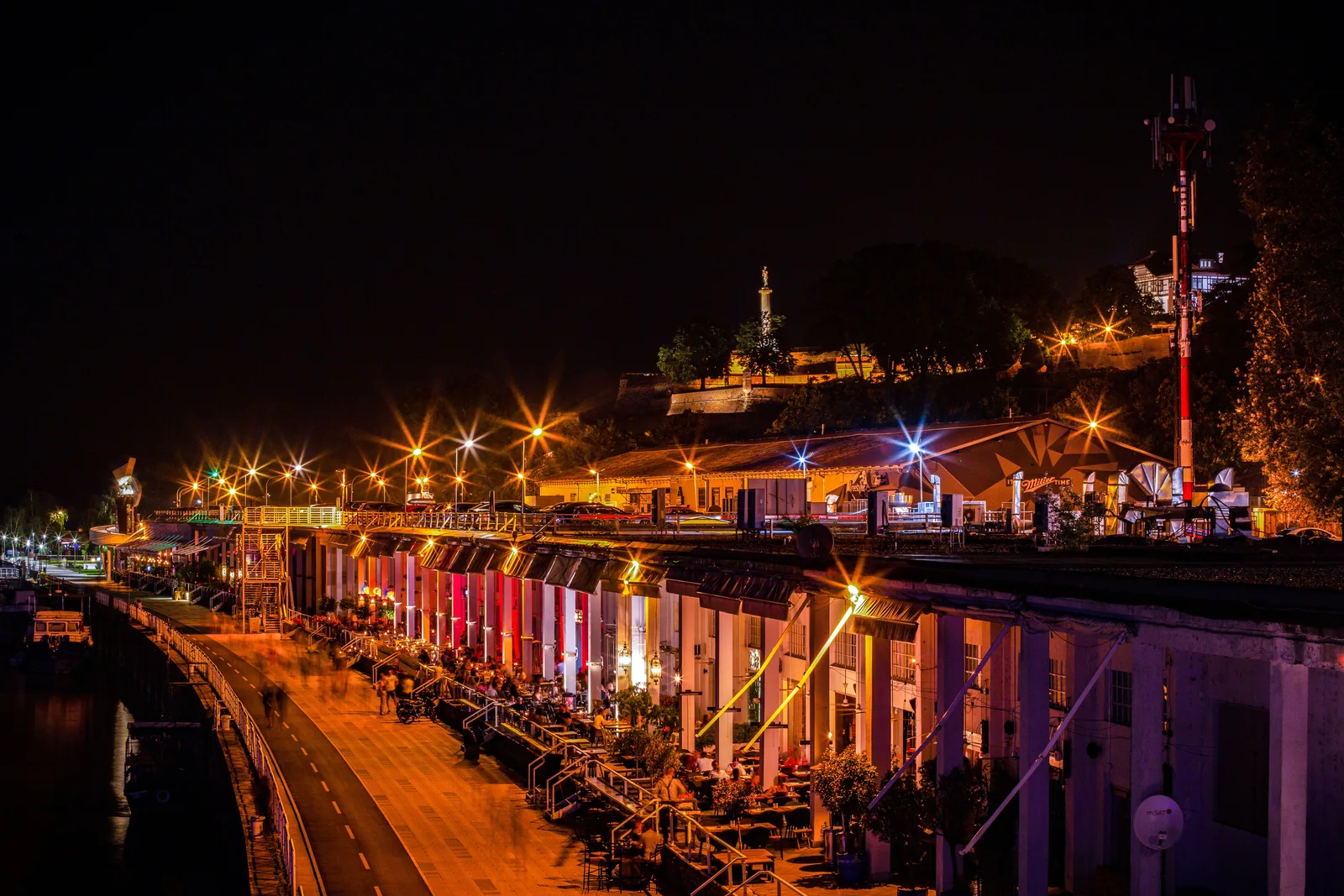
A city built where the Danube meets the Sava, with a fortress overlooking both rivers. Brutalist neighbourhoods and a lively coffee culture by day, the splavovi, floating clubs on the river itself, by night.
Novi Sad and Vojvodina
The Pannonian Plain north of the capital: paprika fields, Hungarian influences in the kitchen, and the Petrovaradin Fortress looking out over the Danube. A slower pace, a different cuisine.
Fruška Gora
A rolling ridge with sixteen Serbian Orthodox monasteries, tucked between vineyards. The Orthodox answer to the capital's bustle, barely an hour away.
Zlatibor and Tara
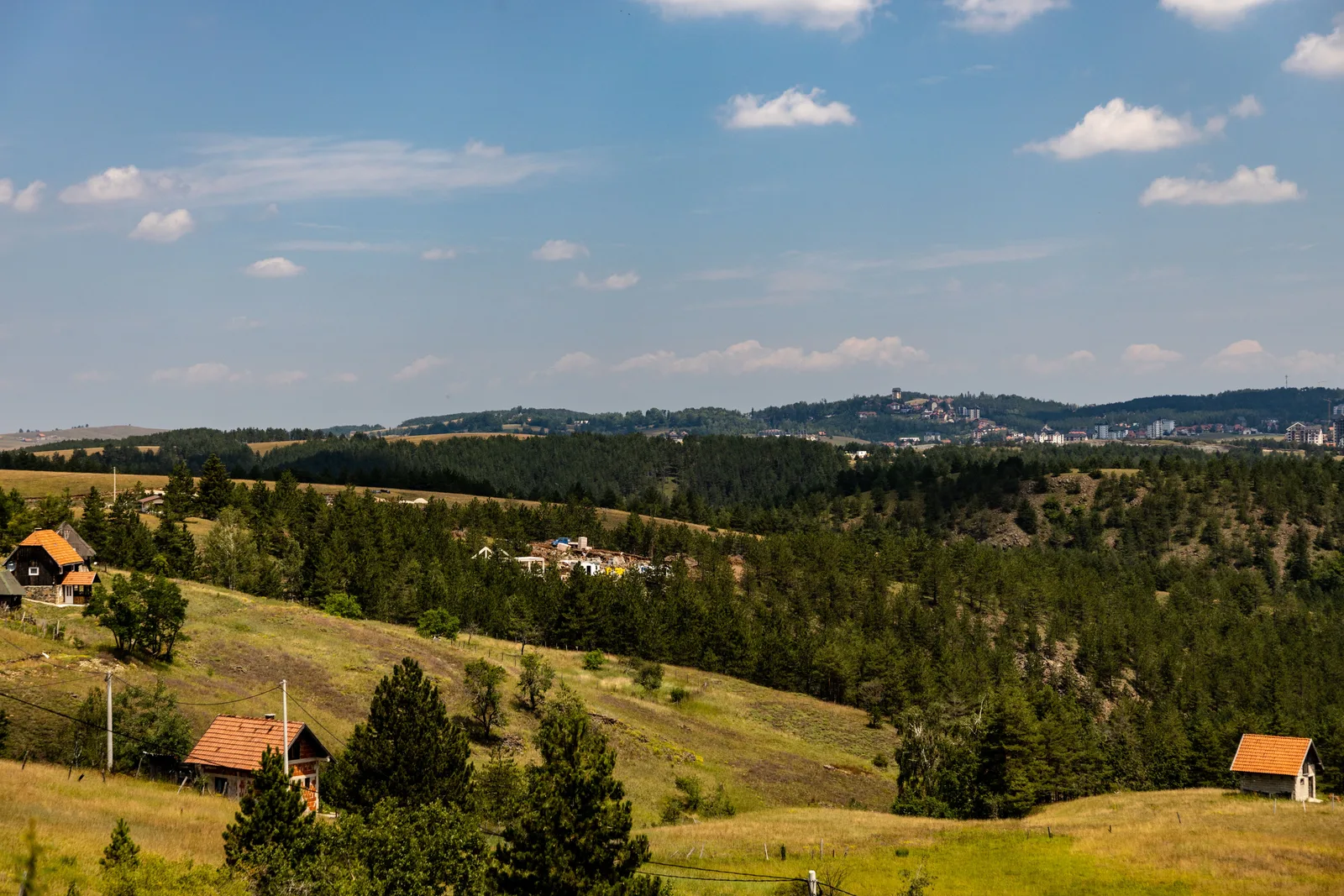
Mountain pastures, pine forests and Tara National Park with its gorge above the Drina. Brown bears, lynx and wolves still live here.
Đerdap / Iron Gate
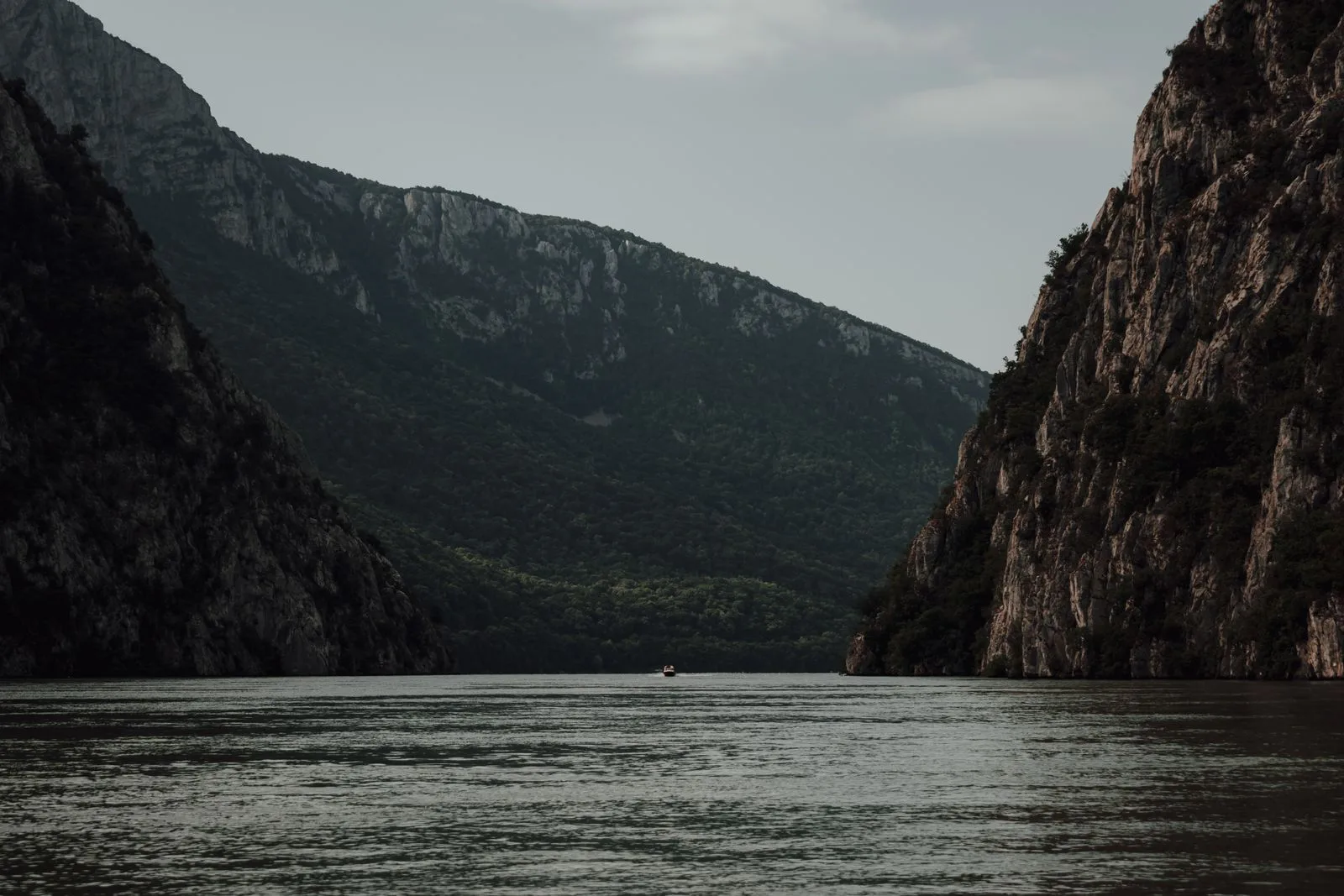
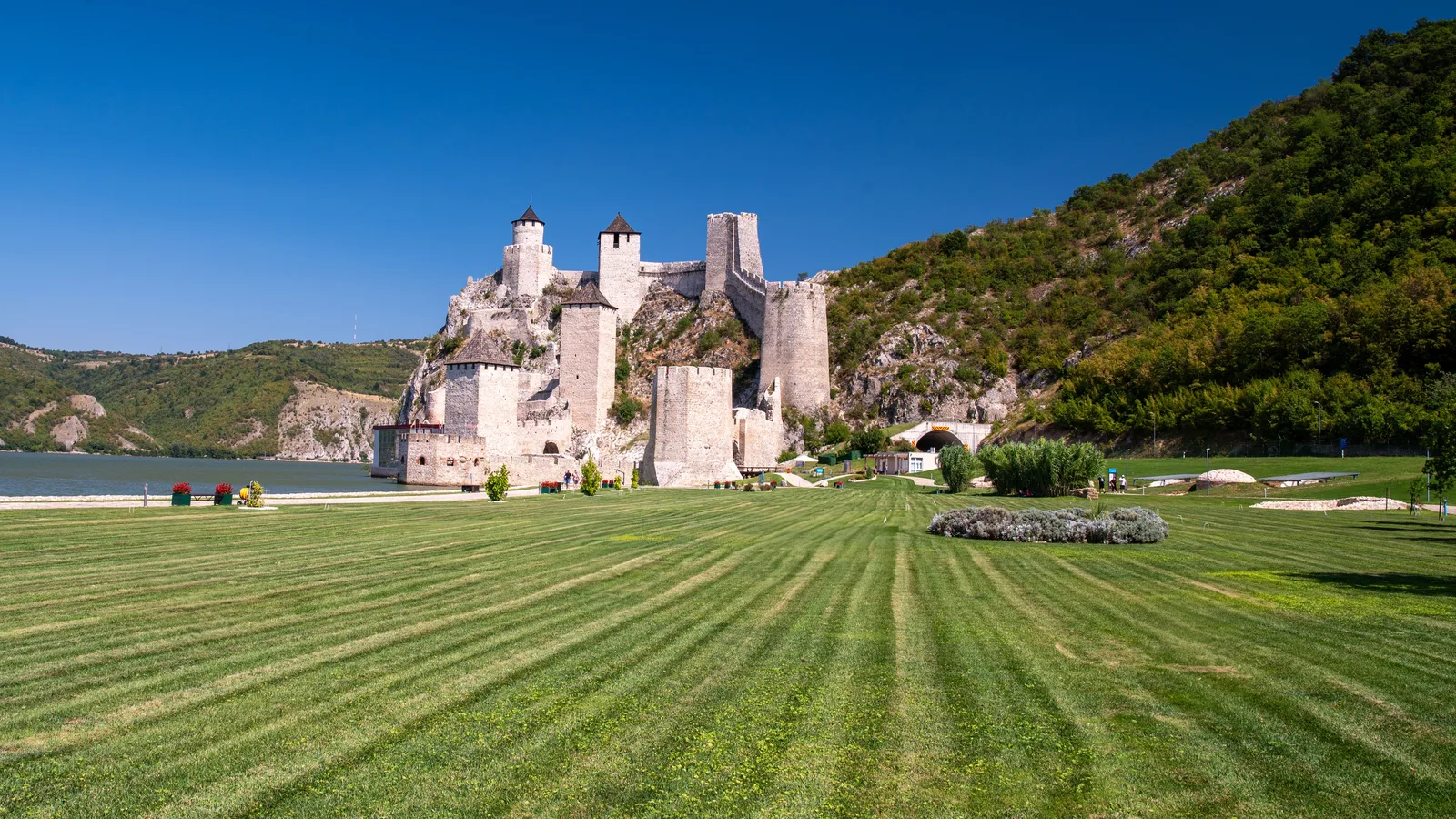
Where the Danube is squeezed between Serbia and Romania into the narrowest, deepest passage of the whole river, cliffs on both sides, the medieval fortress of Golubac standing guard.
Šumadija
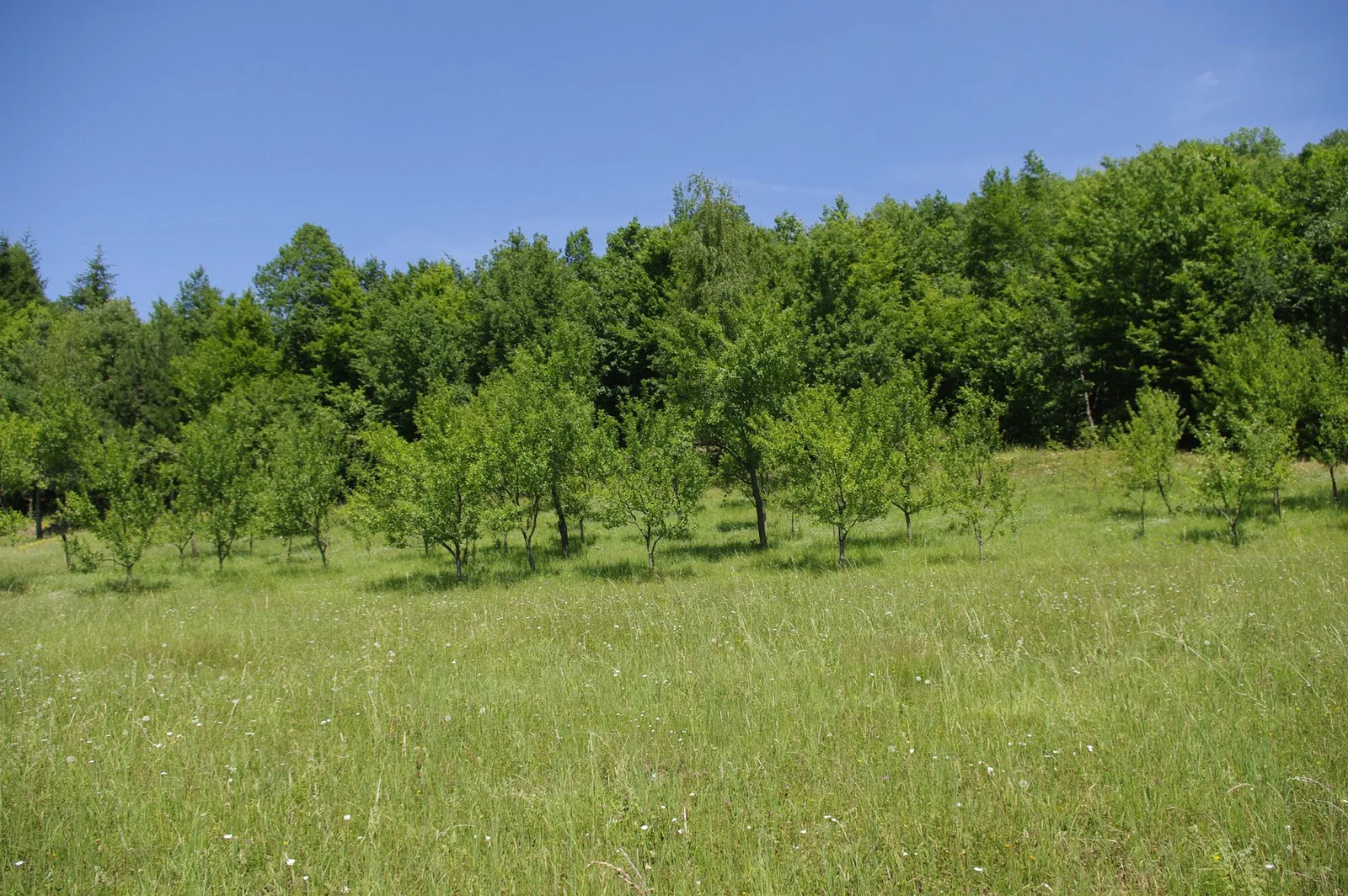
The rolling heart of the country, known for its rakija orchards and emerging wineries. Less visited than Fruška Gora, just as worthwhile.
The Đerdap Gorge, where the Danube forces its way between Serbia and Romania, the narrowest passage of the entire river.


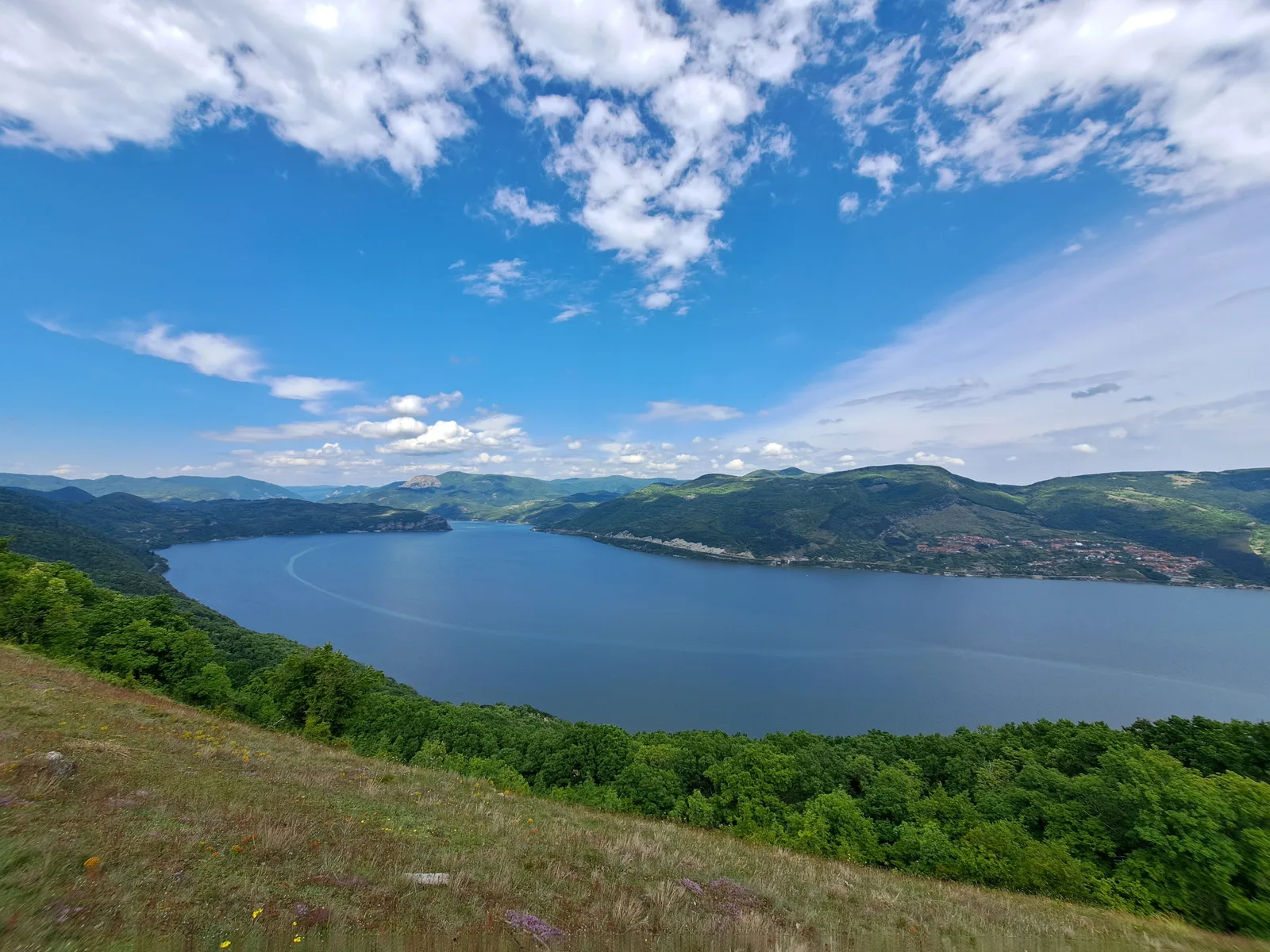
Wilder than the map suggests.
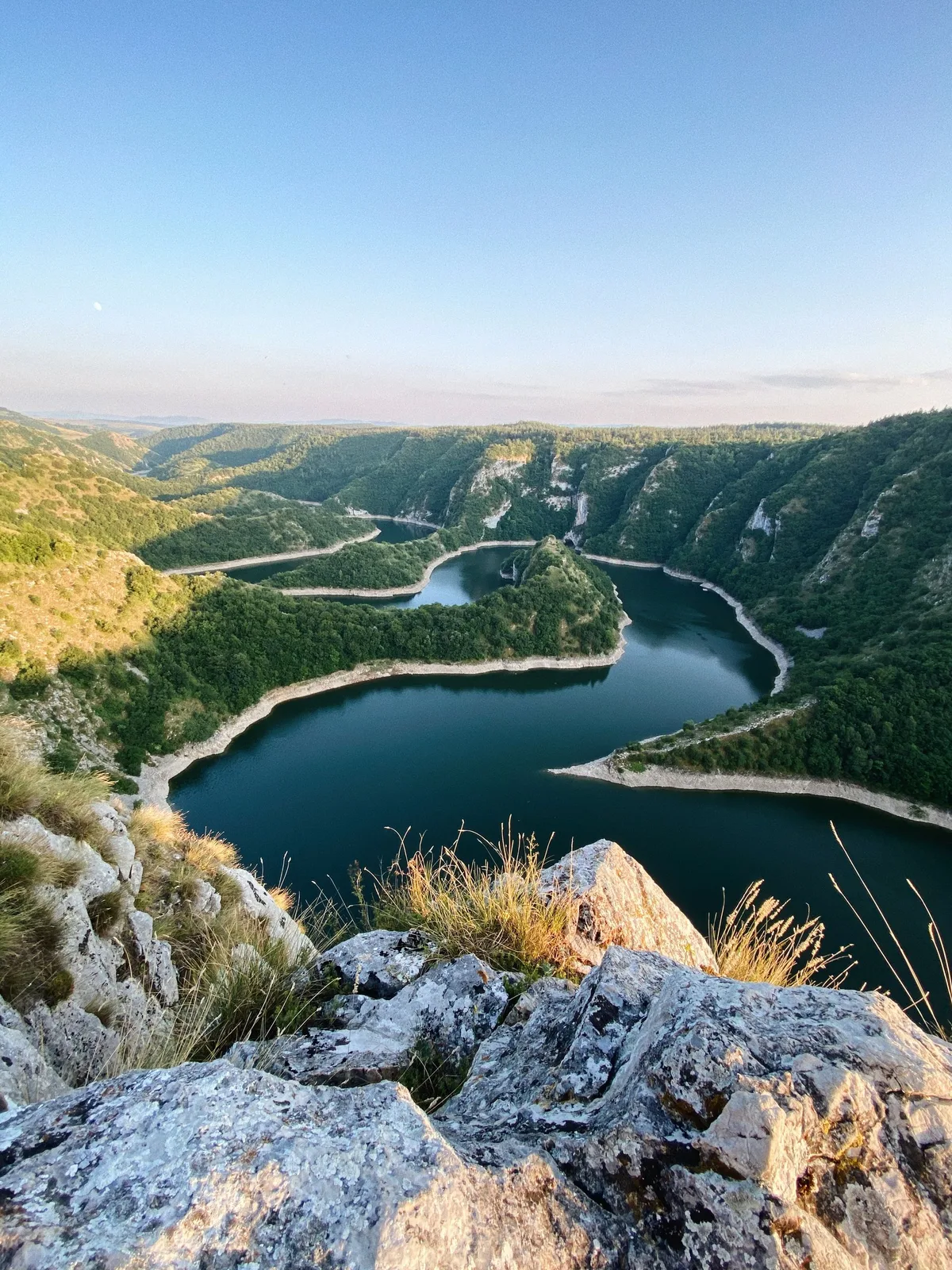
The Uvac Meanders
A river that curls so sharply it draws a chain of loops from above, with griffon vultures circling the thermals above the gorge, one of the last breeding grounds of the species left in south-east Europe.
Tara
Pine forests and limestone gorges above the Drina, where brown bears, lynx and wolves still live. Walking trails without the crowds.
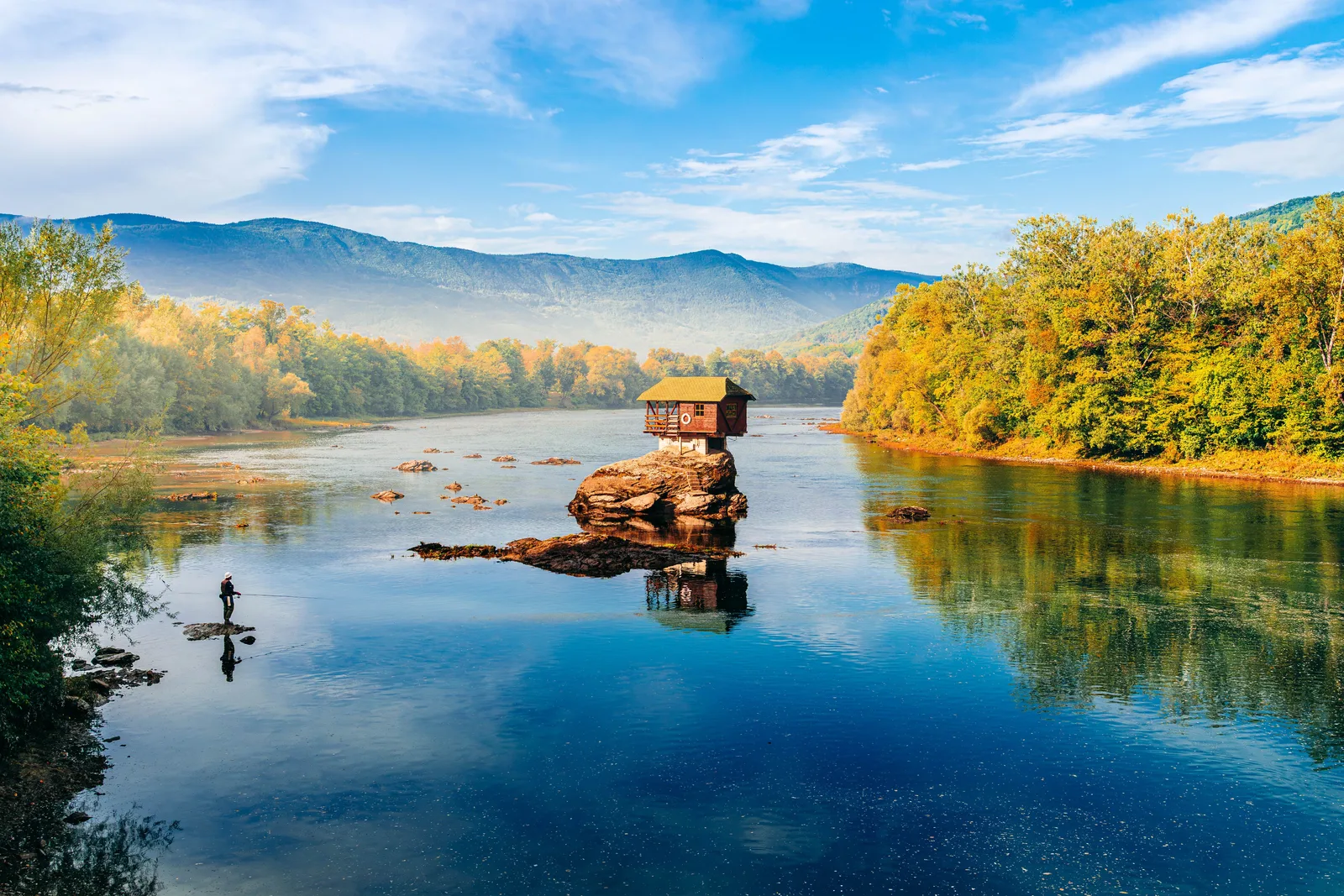
The house on the Drina
At Bajina Bašta stands Serbia's most photographed little house, built on a rock in the middle of the river. Not an architect's plan, but the work of swimmers who once turned the rock into a shelter.
A splav thumping until sunrise, and a fresco that hasn't been disturbed for centuries, two sides of the same country, less than two hours' drive apart.


No set itinerary. Just a country full of starting points.
Serbia doesn't fit into a fixed route. It's a collection of possibilities you combine yourself, from river to monastery to kafana.
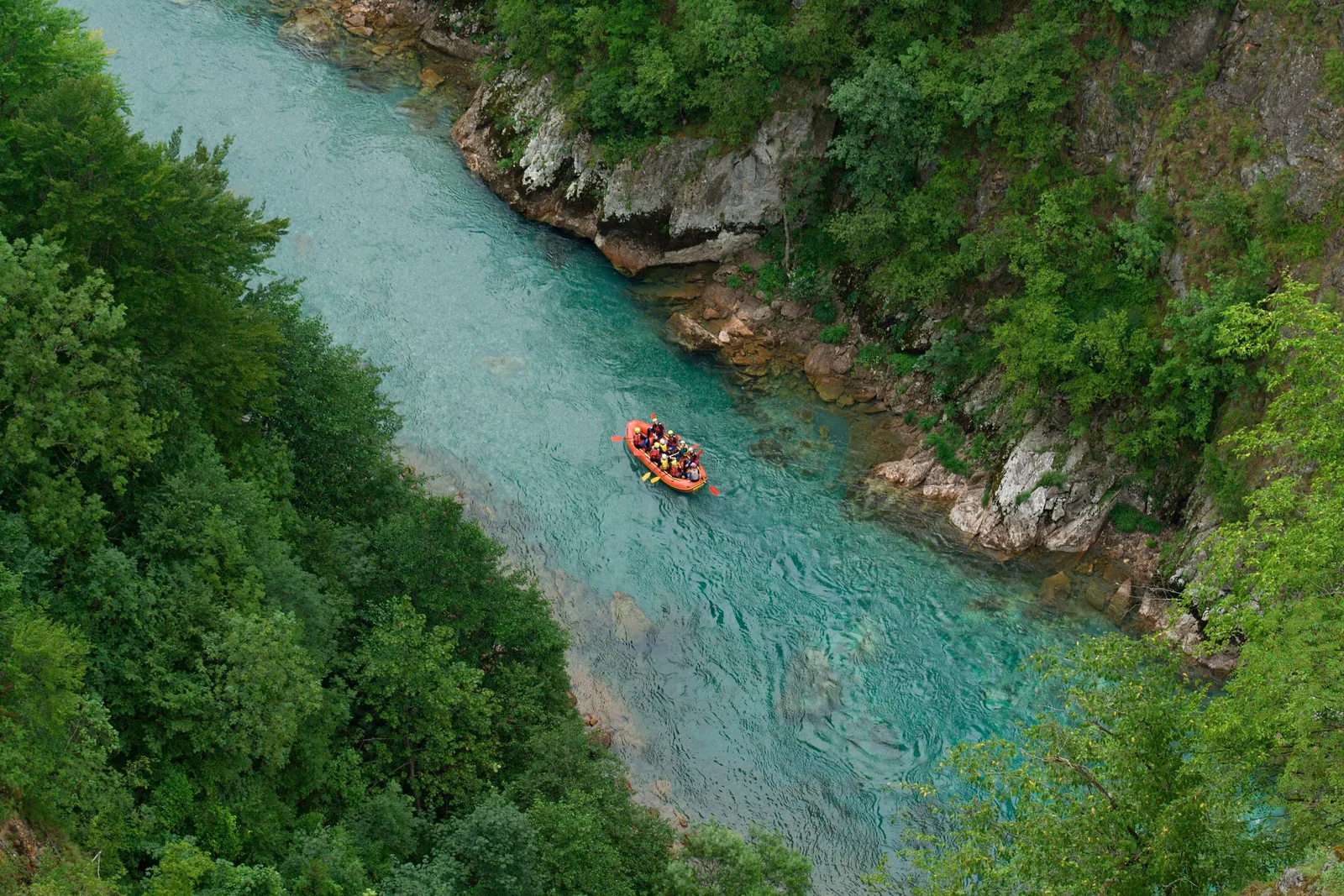
Rafting on the Drina
The Drina runs here through a gorge with walls up to around a thousand metres high. White water without the crowds of the better-known Alpine rivers.
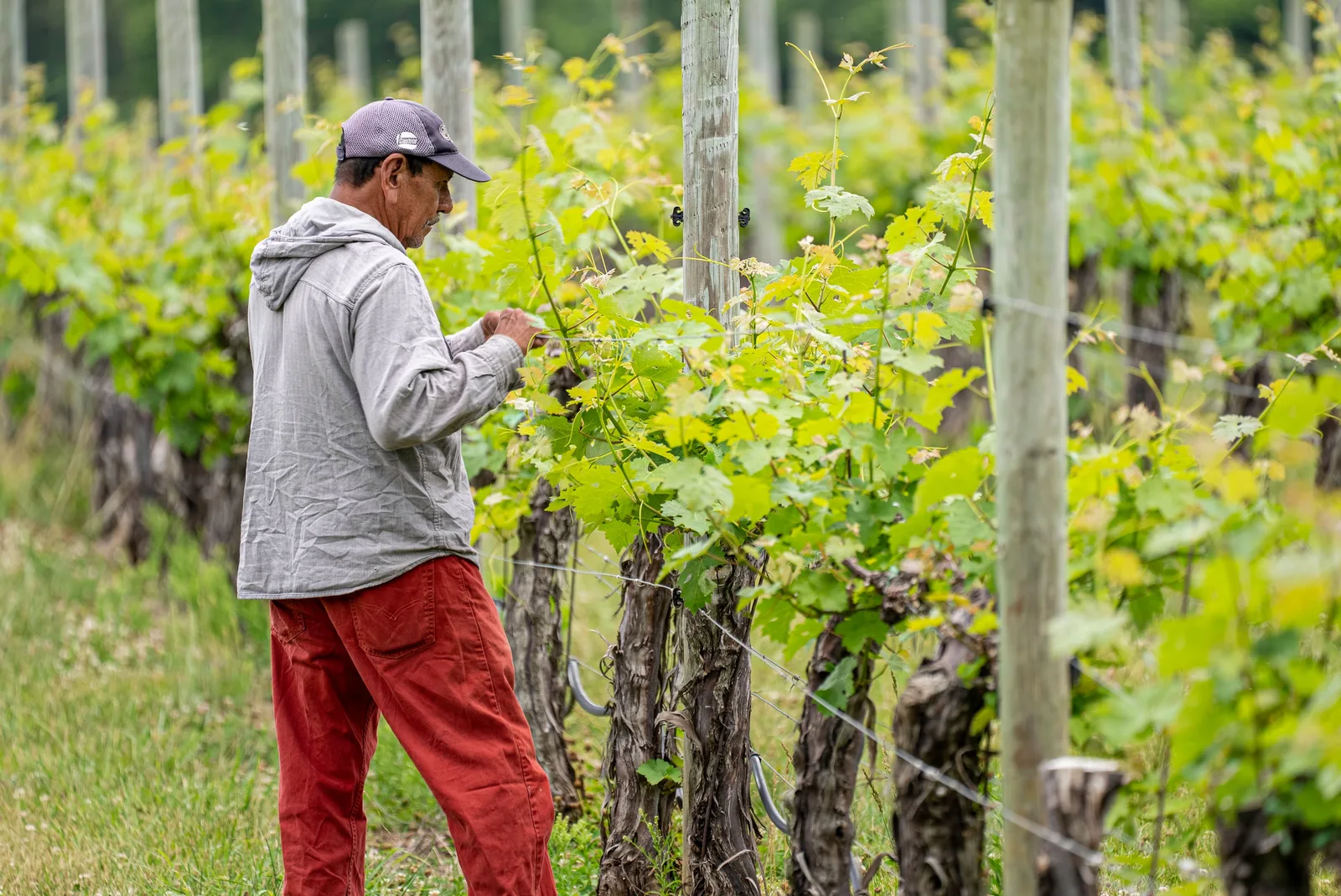
Wine tasting in Šumadija and Fruška Gora
Small wineries that have only gained international attention in recent years, with the red prokupac grape as the local speciality.
Visiting monasteries with a local guide
The frescoes of Studenica and Sopoćani, both UNESCO-listed, only truly reveal themselves with someone who knows the symbolism.
Sailing through the Đerdap Gorge
A boat trip on the Danube between cliffs over 300 metres high, with the Decebalus rock relief as an unexpected landmark.
Exploring Novi Sad and the Petrovaradin Fortress
Underground tunnels, a clock tower with a crooked face, and views over the Danube, without the bustle of Belgrade.
Combine it however suits you: a weekend in the capital, a week of mountains and rivers, or everything together.

When you go decides which Serbia you see.
May, June and September are the most versatile months: pleasant for the mountains of Zlatibor and Tara, not yet too hot for the monastery routes in Fruška Gora, and Belgrade is already in full outdoor swing. July and August are the warmest months, good for the river and the nightlife, but less pleasant for exploring the interior on foot.
October brings the wine harvest in Šumadija and the first autumn colours in the gorges. In winter, Kopaonik is the country's ski resort, a completely different Serbia to the river and terrace season.
Best time to visit Serbia
Who else is at their best in these months?
April May June September October
Use the contact form to discuss your travel dates and preferences with us.
Practical, without the noise.
A few things that make planning easier.
Getting there
Direct flights from Brussels to Belgrade, about 2 hours.
Documents
Serbia isn't an EU member and isn't in the Schengen area, but a valid ID card is enough for EU citizens for a short stay.
Language & script
Serbian is written in both Cyrillic and Latin script. You'll come across both everywhere.
Health
No mandatory vaccinations, tap water is drinkable in most cities.
Pace
Distances are short on the map, but mountain roads through Zlatibor and Tara take longer than the hour count suggests.
Frequently asked questions
Is Serbia a member of the European Union?
No, Serbia is a candidate member state and uses the dinar as its currency. The country isn't in the Schengen area, but EU citizens don't need a visa for a short stay.
Is Serbia safe to visit?
Yes. The war years of the 1990s are long behind the country, and Serbia is considered one of the safer destinations in the region today.
Is English spoken?
Plenty in Belgrade and Novi Sad, less so in the countryside. The hospitality usually bridges the language gap faster than you'd expect.
Can Serbia be combined with other countries?
Certainly. Its location makes it easy to combine with Bosnia and Herzegovina, Montenegro or North Macedonia in a single route.
- Flight time
- About 2 hours from Brussels to Belgrade
- Language
- Serbian: Cyrillic and Latin script side by side
- Time difference
- None, Serbia is in the same time zone
- Currency
- Serbian dinar
- Elevation
- From the Pannonian Plain to 2,169 metres on Midžor
- Combines with
- Borders Bosnia, Montenegro and North Macedonia, among others