
An island that never tidied away its history.
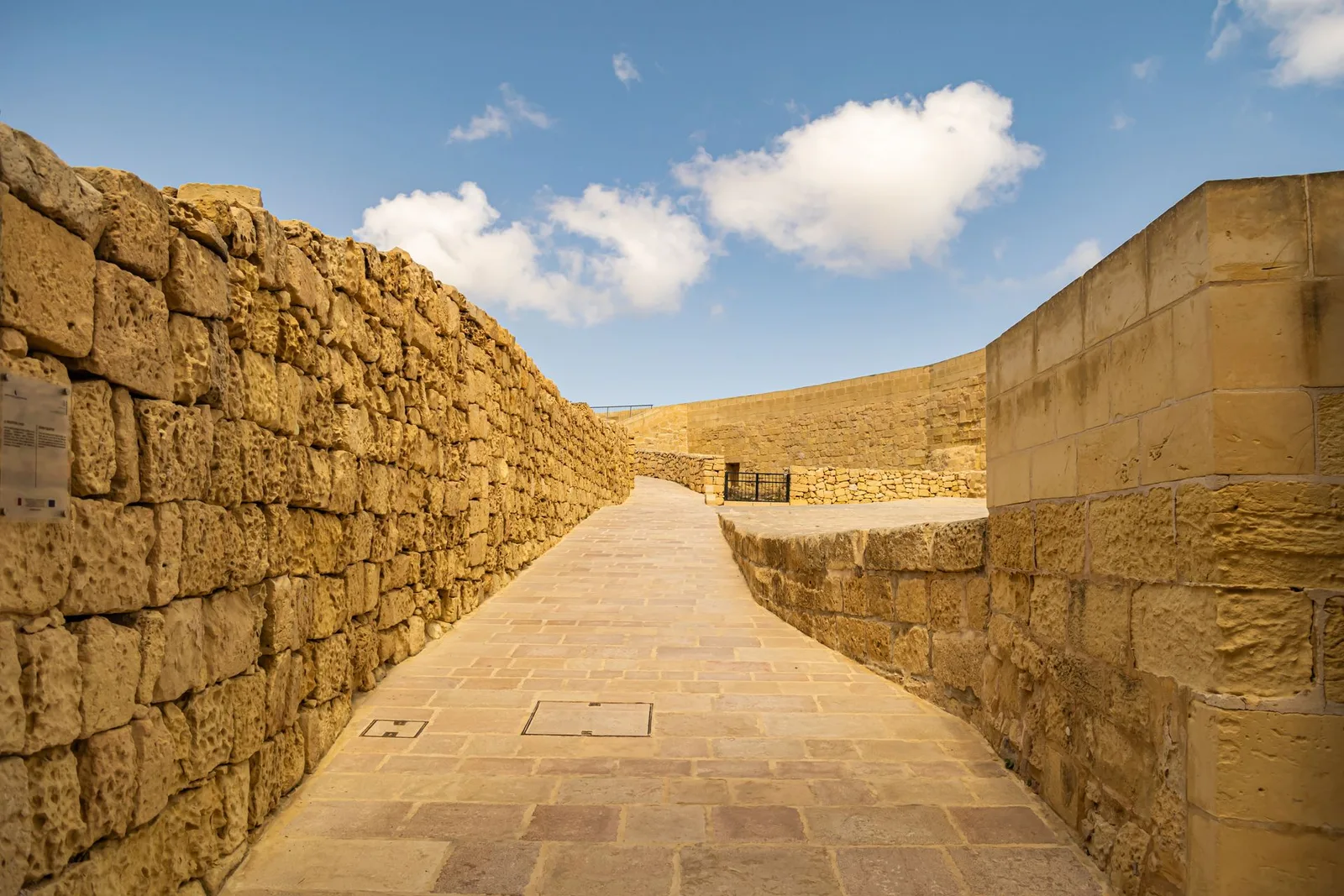
Malta is an island of limestone and fortress walls where every layer of history is still legible.
Malta is small enough to drive round in a morning, yet more is packed into it than countries ten times its size. Across the islands stand temples thousands of years older than Valletta. Later came a fortress city built by the Order of Malta to never again be besieged. Between the two lie centuries of Phoenicians, Arabs, Sicilians, French and British, each leaving something still visible today: a word in Maltese, the shape of a balcony, a road that keeps to the left.
Those layers don't sit neatly one after another. They lie on top of each other. In Mdina you can walk in the evening through streets without cars, while half an hour away Valletta is simply a capital with offices, washing on balconies and a harbour that still works. The limestone changes colour with the light, greyish in the morning, honey-toned by evening, and that might be the one thing the whole island has in common.
Anyone who comes here for sun and sea alone misses what Malta does best: a country that reads well once you take the time to look.
In short
Best time to go
April to June, and September and October: pleasantly warm and quieter than July and August, when it is hot and crowded. For swimming, September and October are best, as the sea is still warm.
How long
A week to ten days, with part of the time on Gozo. Distances are small, but busy, narrow roads slow you down, so two bases work better than driving around every day.
Who it suits
For travellers who love history in layers, from prehistoric temples to the fortified city of Valletta, and who want to combine it with walking and swimming on quieter Gozo.
What sets it apart
Maltese is the only Semitic language with official status in the EU, and it is written in the Latin alphabet. The megalithic temples on Malta and Gozo are older than the pyramids of Egypt.
Three islands, five different paces.
Malta, Gozo and Comino are a boat ride apart, yet each feels different. Where you stay doesn't just shape the view. It shapes the pace of your whole trip.
Valletta
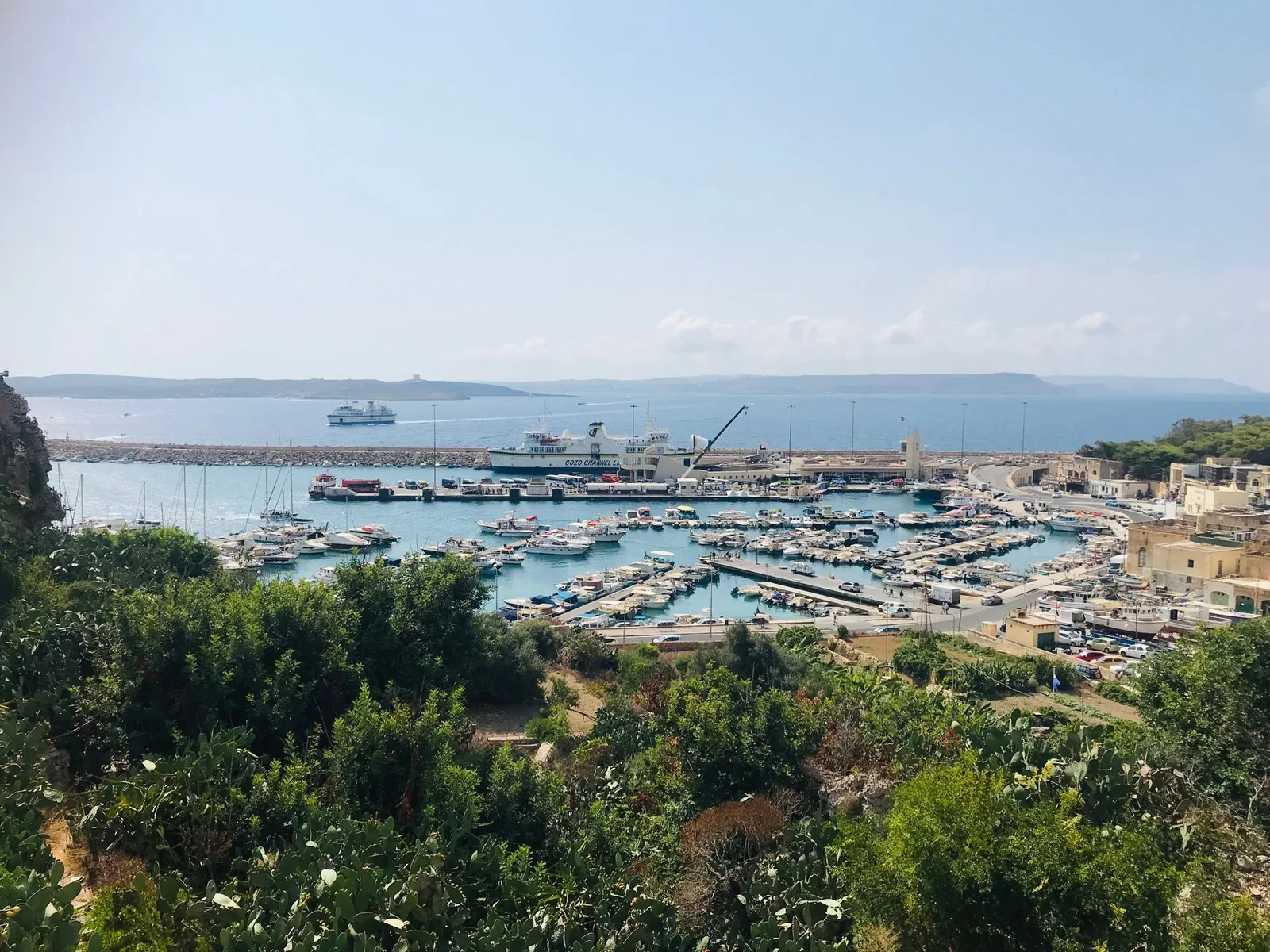
A fortress city on a peninsula, built after the Great Siege of 1565 and still within the same walls today. Narrow streets with washing lines on wrought-iron balconies, a harbour where ferries and fishing boats moor side by side, and a skyline that shifts as the sun moves across the bastions.
Mdina and Rabat
The former capital, left largely undisturbed since the sixteenth century. A few hundred people still live within the walls, and no car may enter after dark. Rabat, just outside, is livelier: an ordinary Maltese town with a market and catacombs beneath its streets.
Marsaxlokk and the south
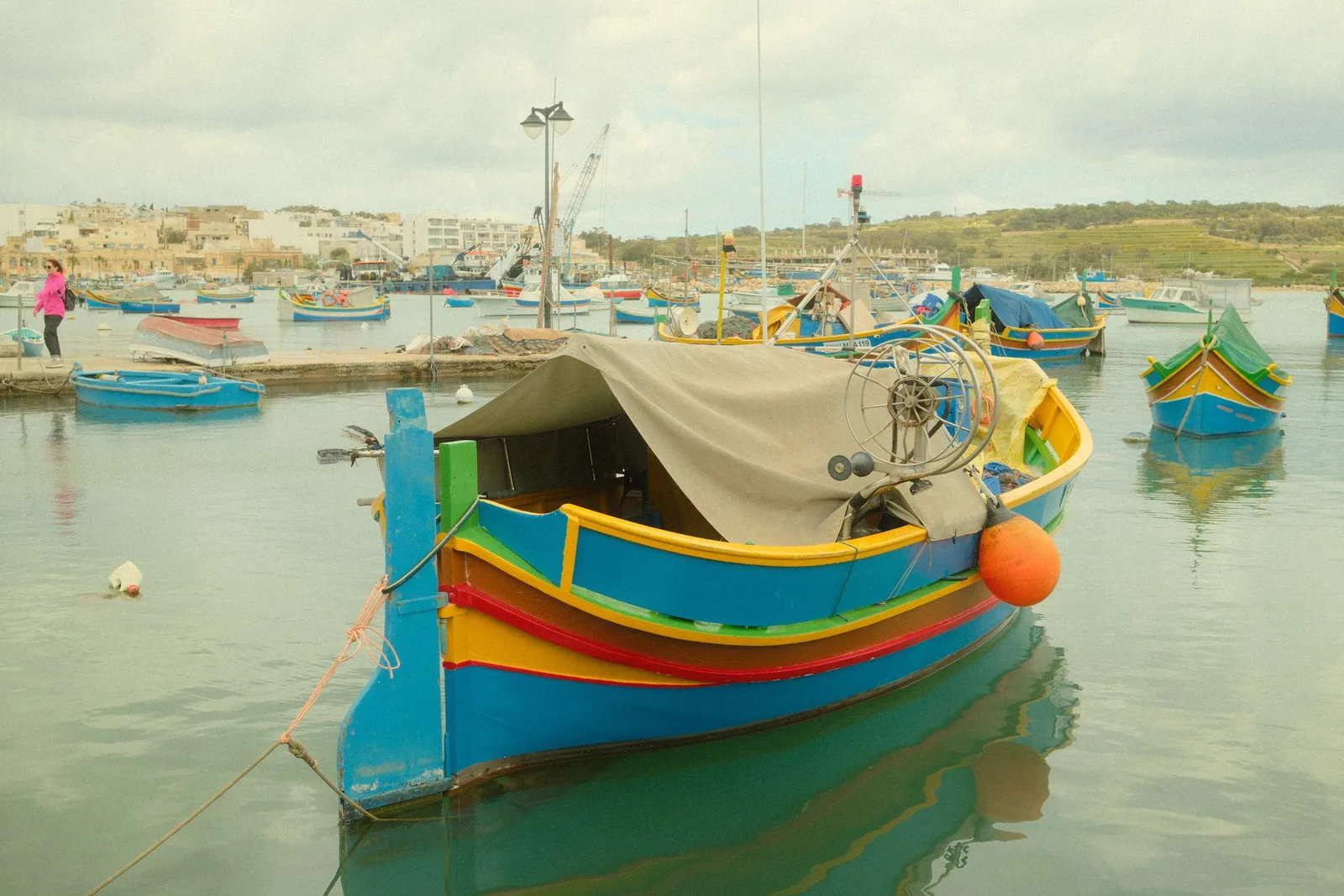
A fishing harbour with brightly painted luzzu boats and a market on the quay every Sunday. The south of the island is more industrial than the rest, a refinery, a power station, but unpolished precisely because of it.
Gozo
Smaller, greener, slower. Terraces of vines, salt pans at Xwejni, and a pilgrimage church at Ta' Pinu visible from a distance. Stay here and within a day you notice Gozo runs to a different rhythm from the main island.
Comino
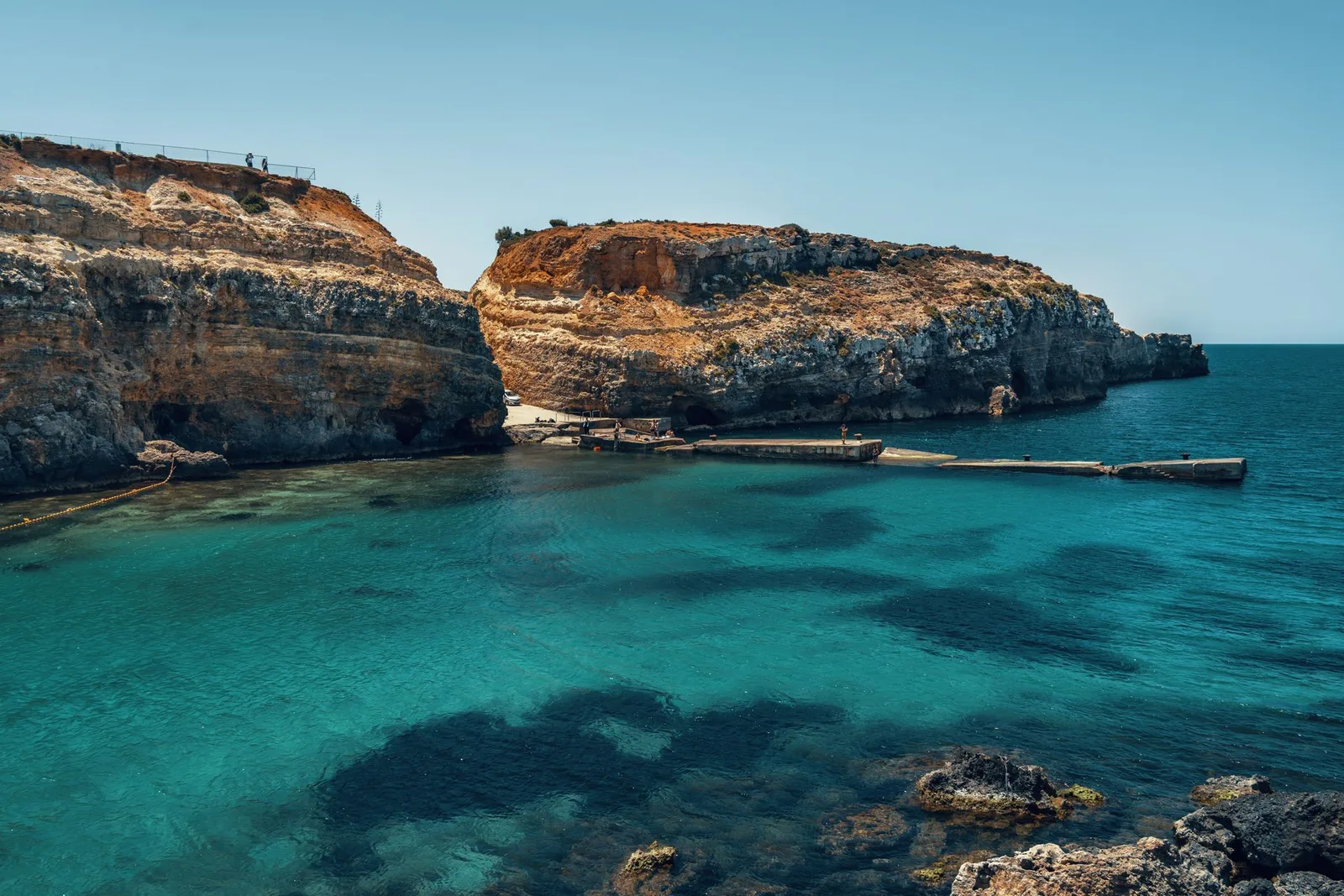
Almost uninhabited, save for a handful of people. The Blue Lagoon is one of the busiest spots in the country by midday. Early in the morning, before the first boats arrive, it's simply a bay.


Why we don't sell Malta as a sun island.
Small is an advantage, not a limitation. 316 km² sounds limited, but it means you can stand in a fortress town in the morning and on a cliff at the other end of the island by afternoon. We plan around that deliberately, not to fit more in, but because the distances allow you to stay longer somewhere.
History here doesn't disappear, it stacks up. In most of Europe, one period dominates. On Malta, neolithic temples, Arab street plans, knightly architecture and British telephone boxes sit literally on top of each other. That calls for looking slowly, not ticking off a checklist of sights.
The language betrays where the country comes from. Maltese is the only Semitic language written in the Latin alphabet: an Arabic base threaded with Sicilian and English loanwords. One sentence carries the trace of three trade routes.
Crowds concentrate, so we deliberately avoid those spots. Sliema and St Julian's draw the bulk of visitors. We don't send people there. We look for the side of the island where a balcony is still just a balcony, not a photo spot.
A cuisine shared across three continents.
Maltese food can never be explained by one tradition alone. Pastizzi, crisp pastry parcels filled with ricotta or peas, are eaten early in the morning, standing up, at a stall. Fenkata, a rabbit stew with garlic and wine, is a Sunday family tradition rooted in centuries of hunting rights. Ftira, the flat Maltese bread, is topped in ways that owe as much to Sicily as to North Africa.
On Gozo you taste the difference straight away: local wine from the terraces around Victoria, goat's and sheep's cheese still made on the farm. A Sunday lunch there easily runs to three hours, and no one thinks that excessive.
Malta doesn't let itself be ticked off in a day trip.It reads layer by layer.
A street too narrow for two cars. A bay without sunloungers.


Malta rewards exploring on foot and on water.
No fixed programme. But there are a number of things that typify the island and that we often build in, depending on what draws you.
Walking the Victoria Lines
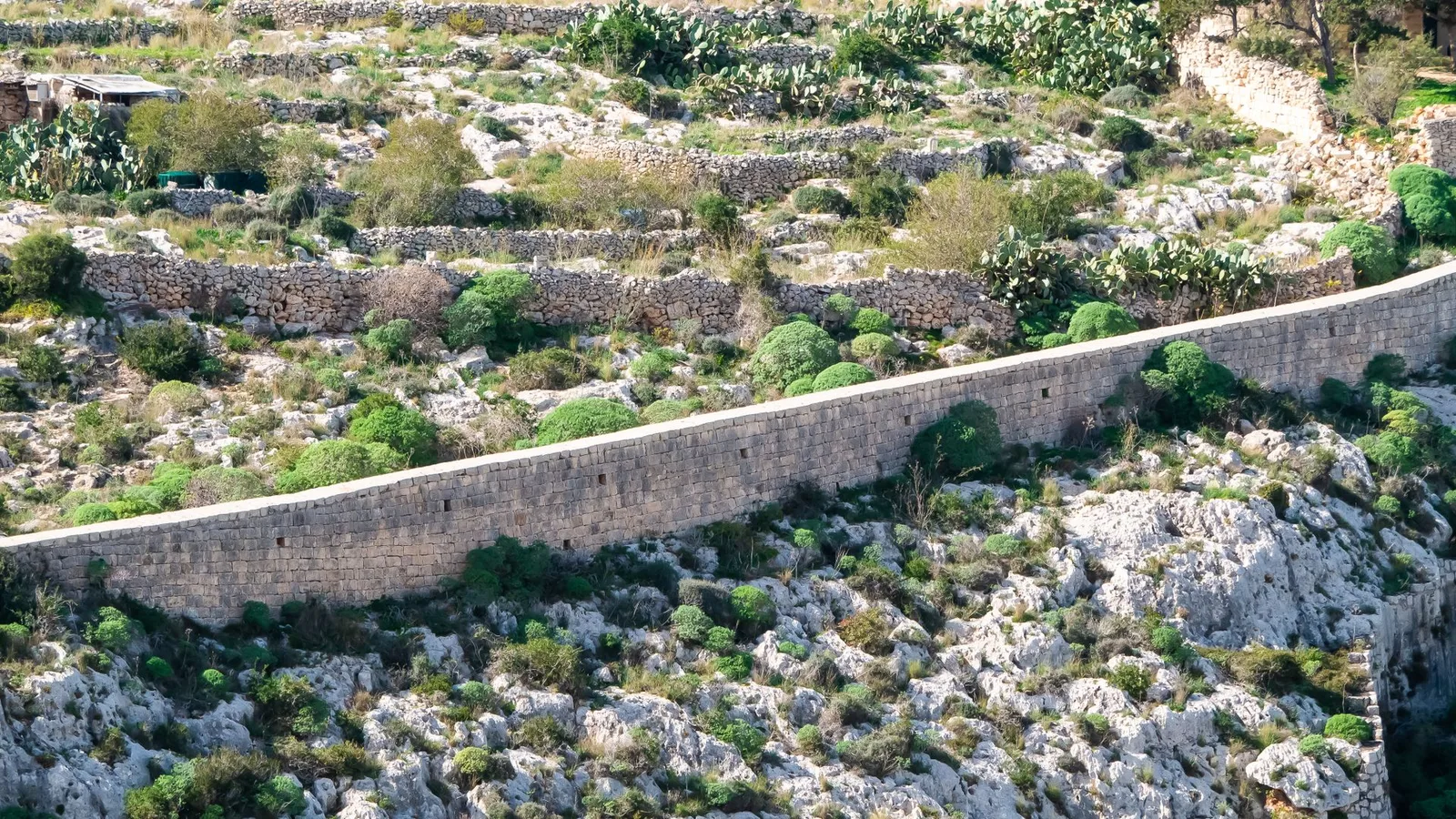
A nineteenth-century British defensive line running across the island, now a footpath with views over fields and villages instead of enemy troops.
A morning at the temples of Ħaġar Qim
Megalithic structures older than Stonehenge and the pyramids of Giza, perched on the edge of a cliff above the sea. Early in the day, before the coaches arrive, you often have them almost to yourself.
Crossing to Comino before the crowds
A short boat ride from Cirkewwa, ideally before nine in the morning, while the Blue Lagoon is still a bay and not yet a destination.
Diving or snorkelling the wrecks of Gozo
Reqqa Point and the wreck of the Xlendi make Gozo one of the quieter diving destinations in the Mediterranean.
A Sunday in Marsaxlokk
The weekly fish market on the quay, followed by lunch with fish landed that same morning, no staging for tourists, simply how the village has worked for generations.
What we build into this depends on who's travelling and what they're looking for. These are directions, not a route.
When to travel to Malta
Malta has a mild Mediterranean climate: dry, hot summers and mild, rainy winters. July and August are the busiest and hottest months. Temperatures above 35°C are not unusual, and the islands fill with day-trippers from cruise ships.
April to June and September to October offer the best balance: warm enough to swim from late May, quieter on the streets and in the temples, and evening light that shows the limestone at its best. Winter is mild. Rain comes in showers, not lingering cold. And that's exactly when Valletta feels most like itself: a city people live in, not just visit.
Best time to visit Malta
Who else is at their best in these months?
April May June September October
Use the contact form to discuss your travel dates and preferences with us.
Practical, without the noise.
A few things that make travelling in Malta easier.
Getting there
Direct flights from Brussels, about 3 hours.
Driving
Drive on the left, as in the United Kingdom. And the roads are narrower than the distances on the map suggest.
Language
Maltese and English are both official; English will get you everywhere.
Pace
Distances look small on paper, but think in travel time, not kilometres: a 20 km drive can involve traffic and winding roads.
Accessibility
Many historic centres, such as Valletta and Mdina, are car-free or paved with cobblestones. Comfortable shoes are not an unnecessary luxury.
- Flight time
- About 3 hours from Brussels
- Languages
- Maltese and English, both official
- Time difference
- None: same time zone as Belgium
- Area
- 316 km² spread across three islands
- Best time to visit
- April to June and September to October