
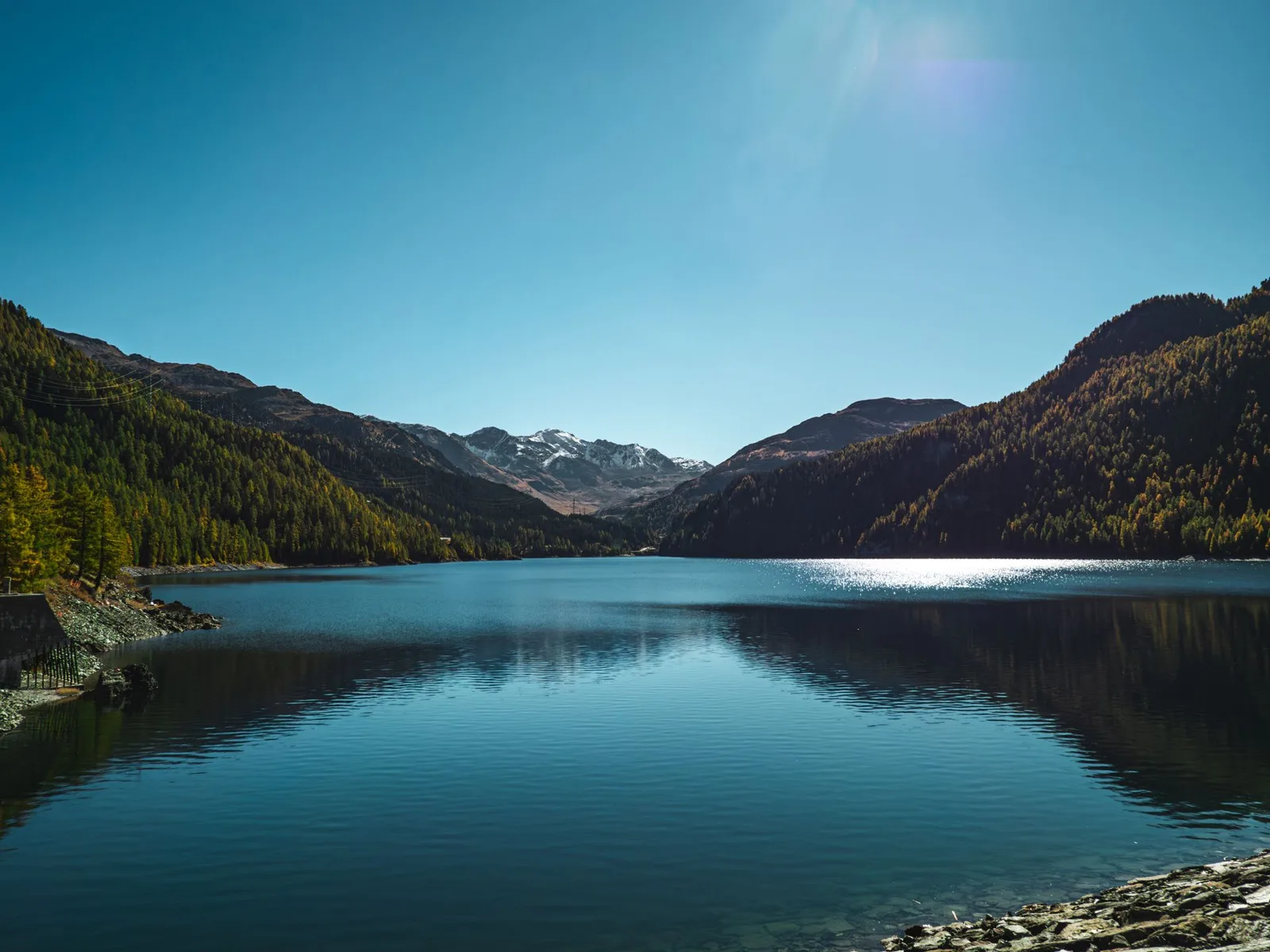
In Switzerland the mountains don't ask for attention, and order is almost a feature of the landscape.
Order here isn't strictness. It's simply how the valley works.
The mountains are always there, on every side, but they aren't posing. They sit exactly as they have for centuries: high, quiet, unannounced. What stands out isn't the view, which takes care of itself soon enough, but how matter-of-factly everything around it works. The train to Andermatt leaves at the minute printed on the board, even if nobody gets on. The path to the hut is marked, not advertised. Someone, somewhere, decided that's how it should be, and the rest of the country agreed.
That makes Switzerland easy to underrate as a destination: too tidy, too predictable, too expensive, or so it seems to people who never got further than Lucerne or a cable car station. But behind every pass lies a valley with its own language, its own cheese and its own way of staying unnoticed. We would rather go to that valley than to the viewpoint next door.
In short
Best time to go
From June to September most mountain paths are free of snow and July afternoons reach around 24 to 27 degrees in Zurich and Geneva, with frequent afternoon thunderstorms in the mountains. December to March brings snow.
How long
A week for one or two regions, such as the Bernese Oberland and Valais. Ten days to two weeks to add Ticino or the Engadine; trains, boats and PostBuses reach the side valleys too.
Who it suits
Travellers who want to walk from hut to hut, travel without a car, take children into the mountains, or see German, French and Italian-speaking valleys in one trip.
What sets it apart
The hiking network runs to some 65,000 kilometres, with yellow signposts showing walking times. At about 23 kilometres, the Great Aletsch Glacier is the largest in the Alps and part of the Jungfrau-Aletsch World Heritage site.
One country, six very different valleys
Switzerland isn't so much a country as a sum of valleys, and each one has its own language, pace and dish. These six give a good sense of just how much variety a small country can hold.
Engadin
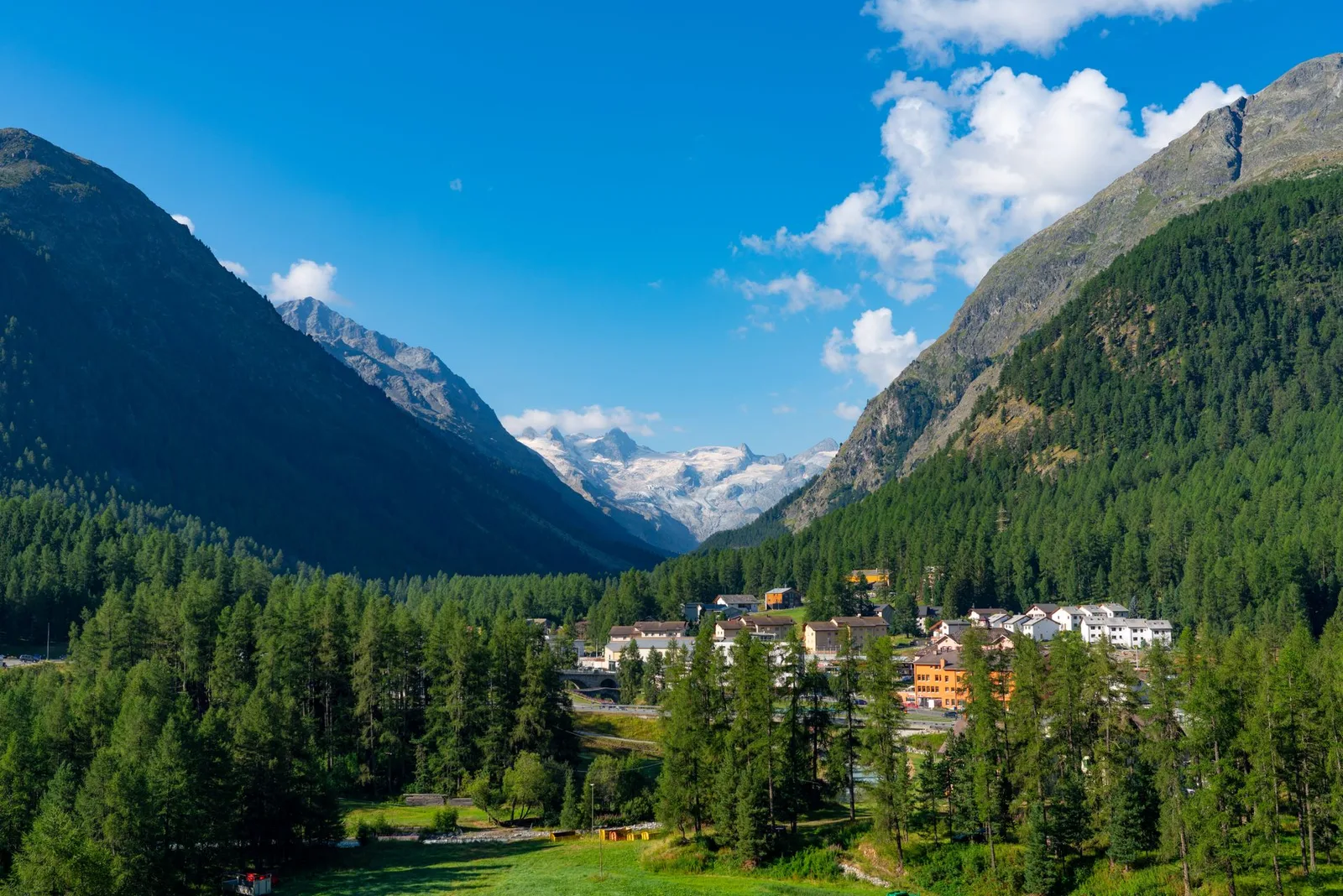
St Moritz draws the attention, but the Engadin is a long, high valley taking in Zernez and the Val Müstair, where Romansh is still the everyday language and the Swiss National Park has been left undisturbed since 1914.
Bernese Oberland
Below the Eiger and the Jungfrau lies Lauterbrunnen with its seventy-two waterfalls, but a valley further on, around Kandersteg, the scenery is just as striking and a good deal quieter.
Valais
The Matterhorn view from Zermatt is the country's best-known image, but Valais is really a valley of steep vineyard slopes, Fendant and Cornalin wine, and side valleys like Val d'Anniviers where the villages are still built from wood and slate.
Ticino
South of the Gotthard tunnel the language turns Italian, palm trees grow along Lake Lugano, and the Val Verzasca holds granite villages that were hard to reach for centuries.
Jura
A rolling, wooded border region where watchmakers have been producing precision work for three centuries, with villages that rarely see a tourist and a landscape that looks more like the Ardennes than postcard Switzerland.
Appenzell
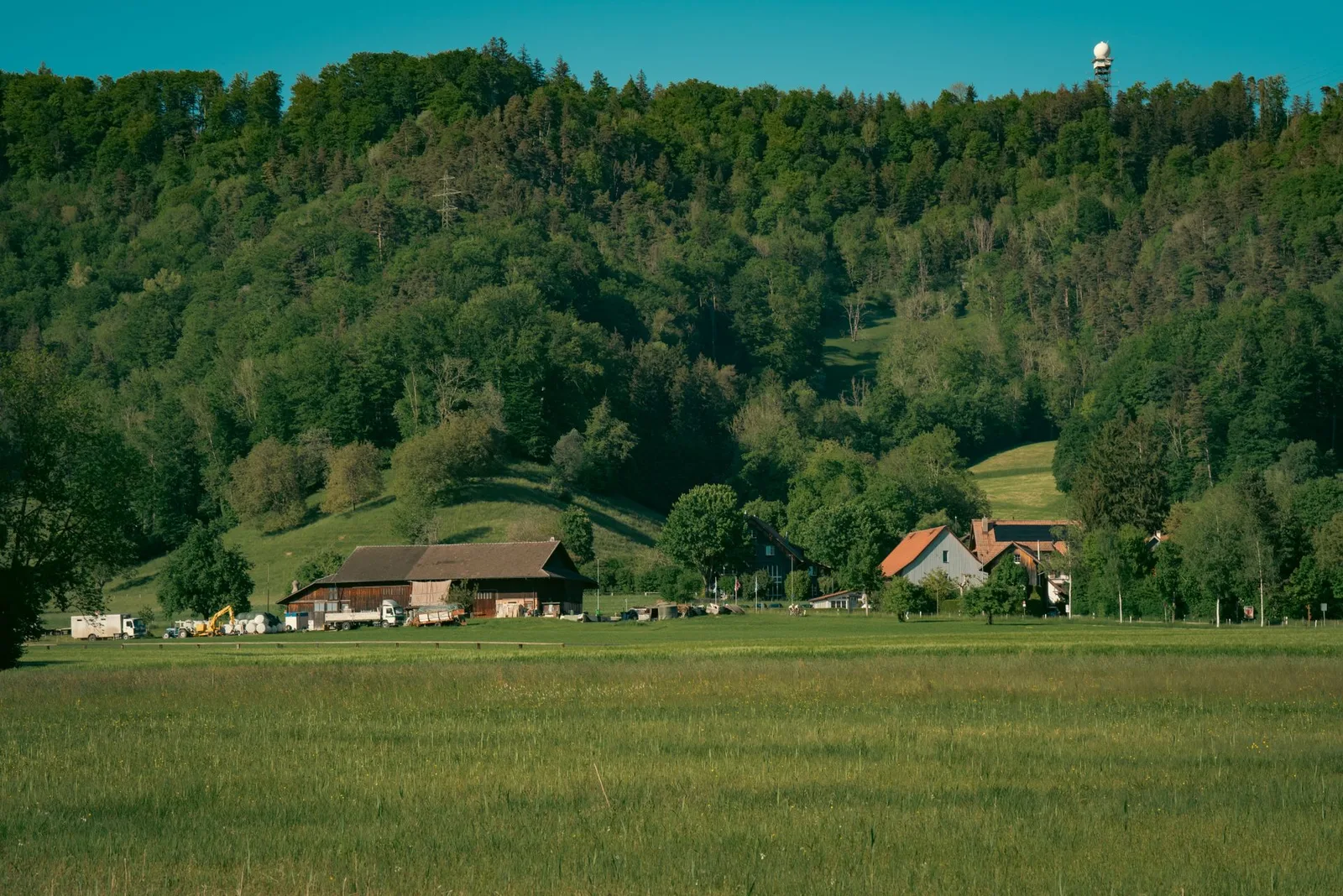
Painted farmhouses, cows still led up to the alpine pastures in May wearing flower garlands, and villages where the Landsgemeinde, voting by show of hands on the village square, is still very much alive.
Switzerland doesn't reveal itself from the cable car,but in the village where the train just happens to stop.



Four languages, and nobody thinks it's remarkable
German, French, Italian and Romansh don't sit side by side here as a tourist curiosity, but as four ways of inhabiting the same country. Drive from Zurich to Lugano and the announcements on the train switch language somewhere around the Gotthard, without anyone remarking on it. It isn't a display of diversity. It's simply how the country has worked for centuries.
That same practicality shows up in government: major decisions still regularly go to a referendum, and in some cantons people literally vote by raising a hand on the village square. Order and a say in things aren't at odds here. Spend a while in a valley and you notice that the precision isn't coldness but a form of care: for the path, for the train, for the neighbour.

Water, ice and sixty-five thousand kilometres of trail
Lakes
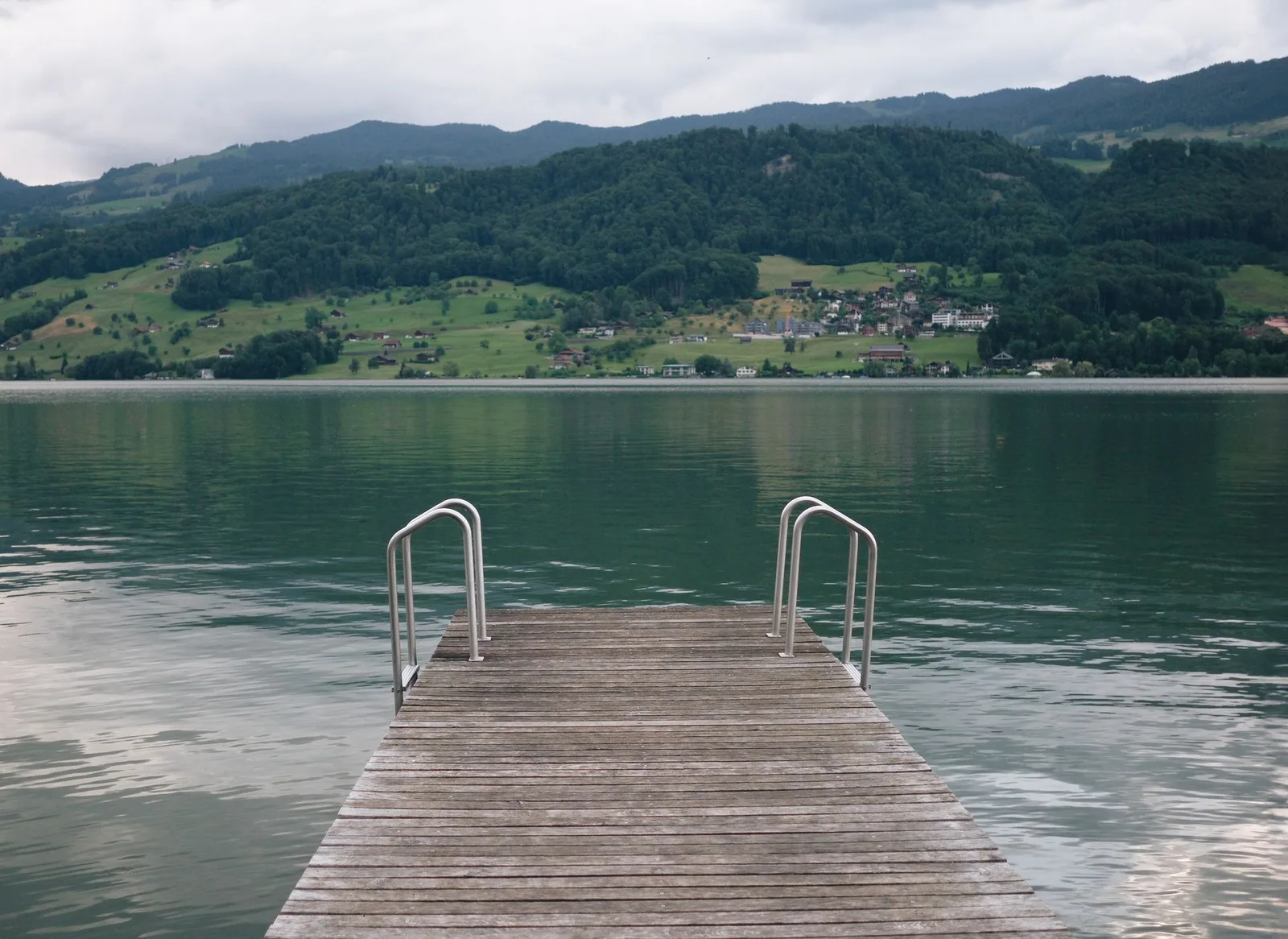
Lake Geneva and Lake Lucerne are so clear that you can see the depth before you reach it. Between the lakeside villages, a boat runs as a matter of course, the way a bus would anywhere else.
Glaciers
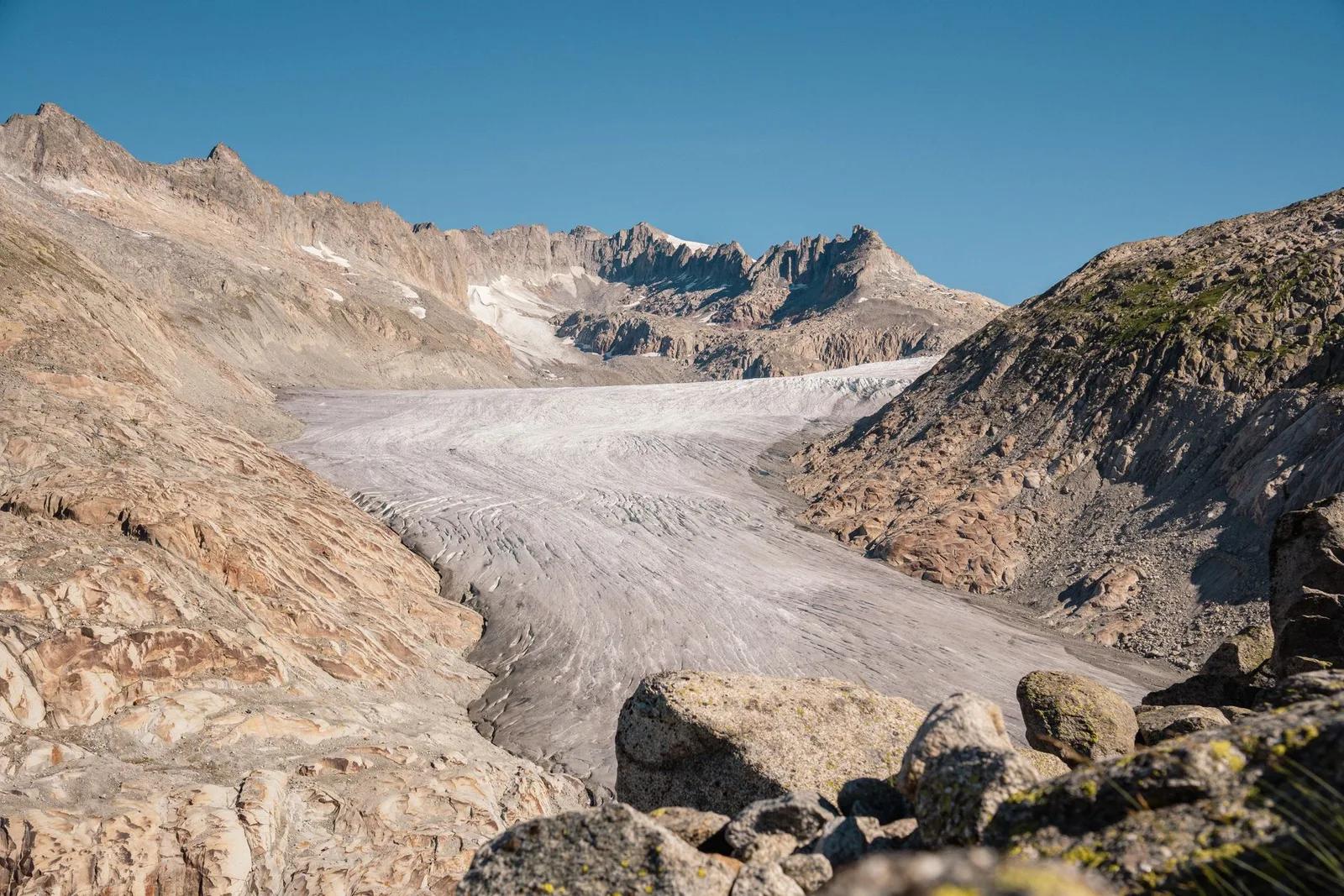
The Aletsch Glacier is the largest in the Alps, some twenty-three kilometres of ice on the UNESCO list. You see it best from Bettmeralp, not from the busy Jungfraujoch, and usually on your own.
Trails
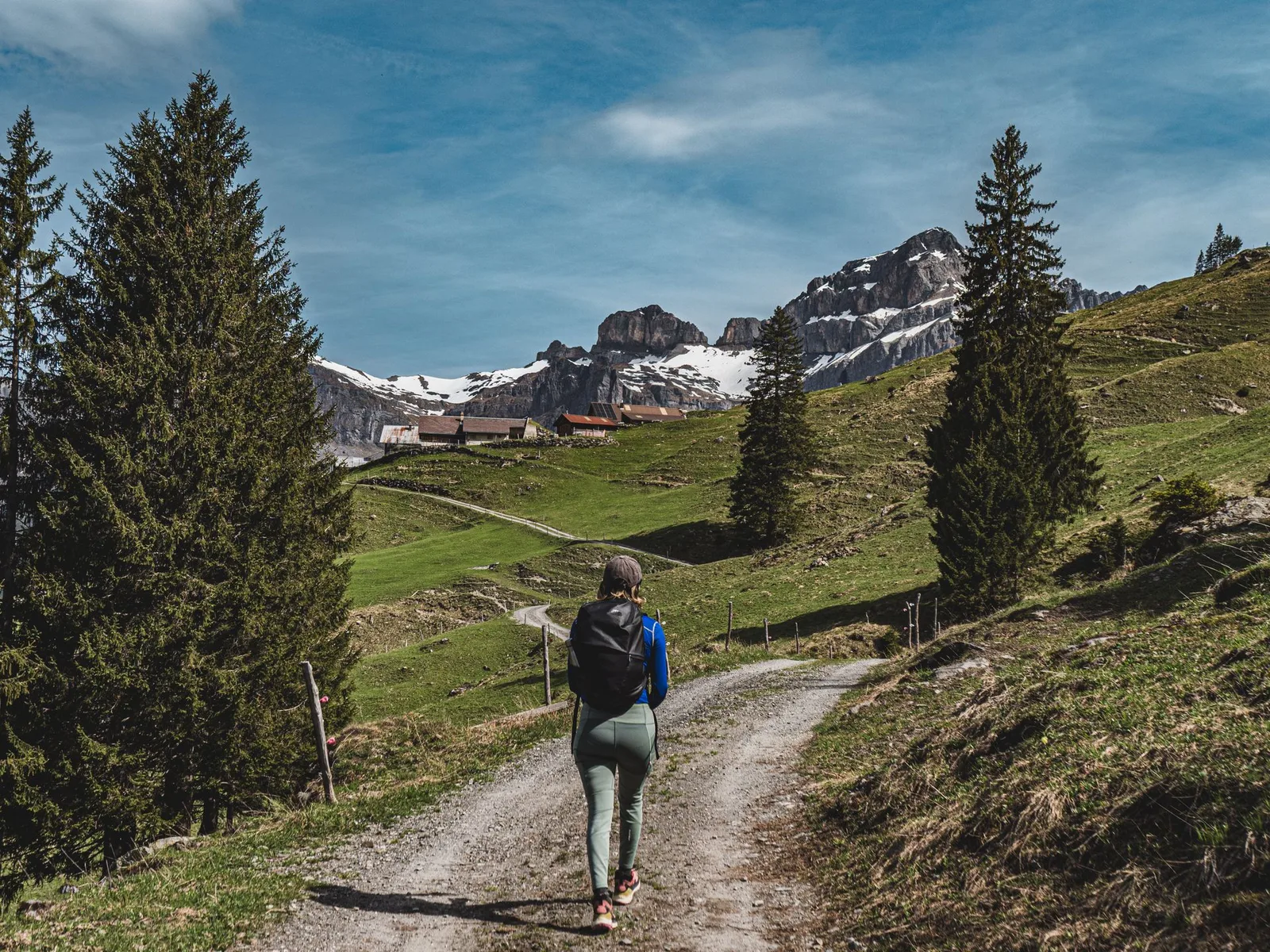
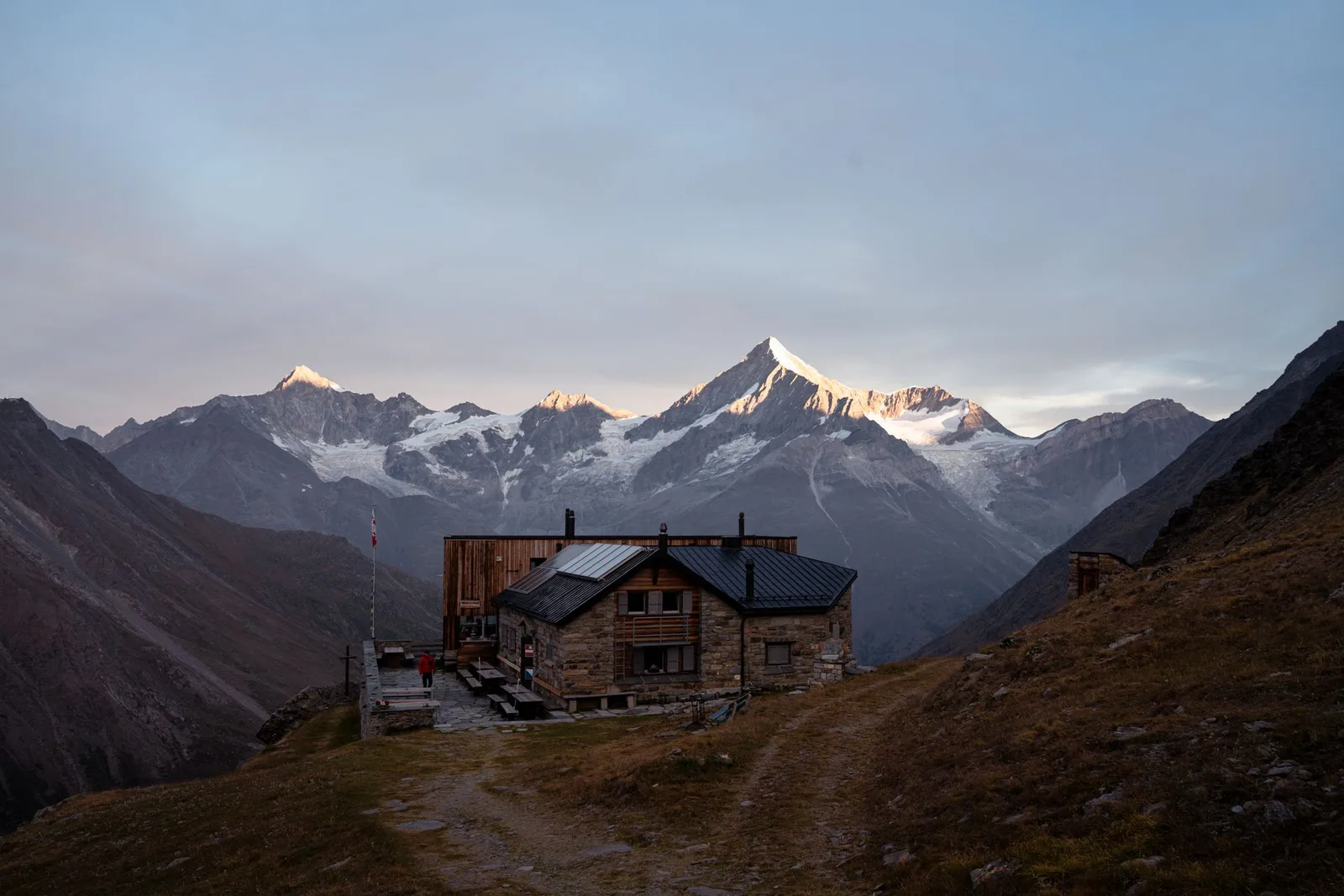
More than sixty-five thousand kilometres of marked trail connect mountains with alpine pastures and staffed huts where a hot meal is cooked in the evening. A hut-to-hut trek needs no car, just a good pair of legs.
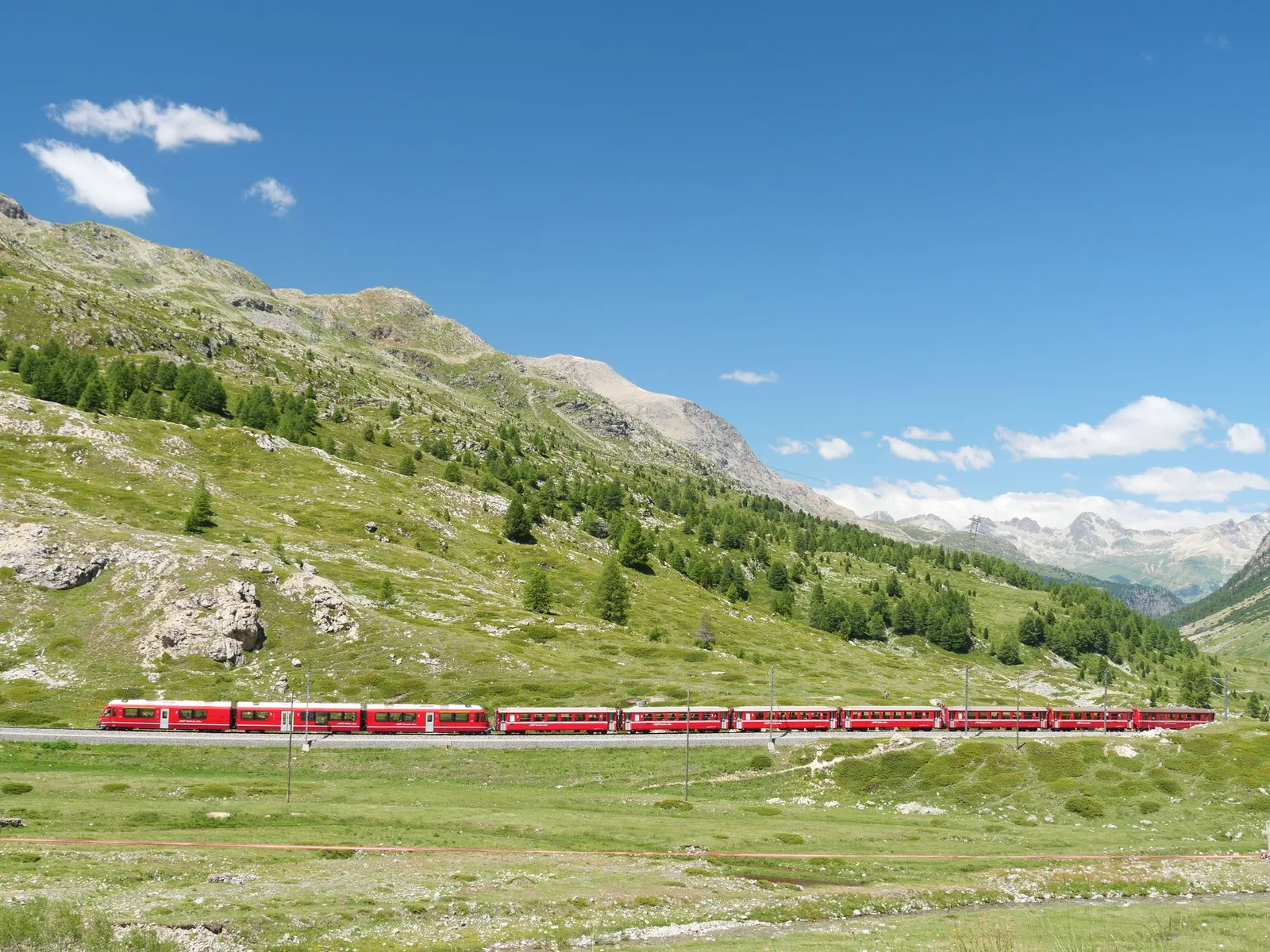
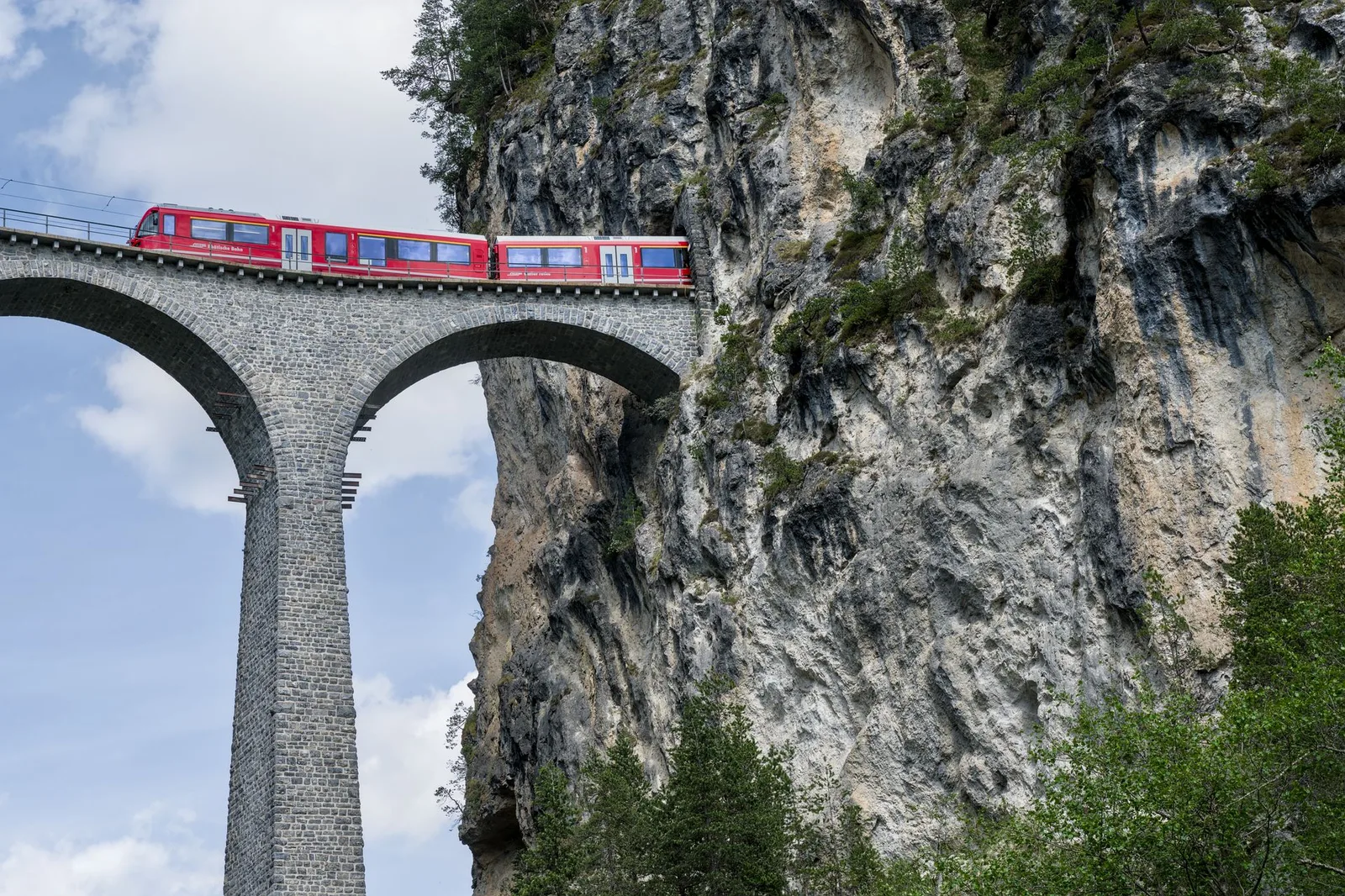
A train that doesn't announce how beautiful the route is. It simply leaves, on the minute, and the view takes care of itself.

No set programme, but a country full of starting points
This isn't a checklist of highlights to tick off, but a sense of what's possible when you give one valley your time instead of racing through five.
Hut to hut
Multi-day walks between staffed mountain huts, with a hot meal waiting in the evening and a new valley opening up each morning.
The mountain pass as transport
Taking a route like the Bernina or Furka pass the way the train is meant to be used: simply to get somewhere, not as an attraction with a running commentary.
Tasting with the winemaker
An afternoon with a small winemaker in Valais or Ticino, on slopes where the work is still done by hand.
Sailing between villages
Crossing a lake on the scheduled boat, from one lakeside village to the next, the way locals have done for a hundred years.
A village without a shop window
Stopping somewhere the centre is a bakery and a church, not a row of souvenir shops, and simply staying for the afternoon.
What you do exactly, we decide together, based on what draws you in, not on a fixed route.


When to visit Switzerland
The highest trails and staffed huts are open from June into September. That's when the country shows itself most openly. In winter, from December to March, the focus shifts to snow, with a calm that has just as much to offer as the summer bustle.
The shoulder seasons are less predictable: in April there's still snow at altitude and in November it hasn't arrived yet, while the valleys themselves are already accessible. Travellers flexible about route and altitude can still find quiet, rewarding moments then.
Best time to visit Switzerland
Who else is at their best in these months?
June July August September
Use the contact form to discuss your travel dates and preferences with us.
Practical, without the noise.
A few things that make planning easier.
Getting there
A flight of just over an hour to Zurich, Geneva or Basel, or the train via Paris, with one change and around five to seven hours on the way
Documents
An identity card is enough; Switzerland isn't an EU member but is part of the Schengen area
Health
No special precautions needed; above 2,500 metres you may feel a little more short of breath, otherwise a basic level of fitness is enough
Pace
Public transport is notably punctual; high-altitude walking routes do call for some fitness and the right footwear
Payment
The Swiss franc is the currency, not the euro; card payment is accepted almost everywhere
- Travel time
- Just over an hour by air, or five to seven hours by train via Paris
- Languages
- German, French, Italian and Romansh
- Time difference
- None
- Elevation range
- From 193 to 4,634 metres
- Best time to visit
- June to September for the mountains, December to March for snow